Author Archives: Great Wall of China Travel Guide

About Great Wall of China Travel Guide

I have a deep passion for the Great Wall of China and have explored many of its sections, from the well-known to the hidden wild parts. Over the years, I’ve studied its history, architecture, and the legends that surround it. Through my writing, I hope to share this knowledge and help travelers see the Great Wall not just as a landmark, but as a symbol of China’s culture and strength.

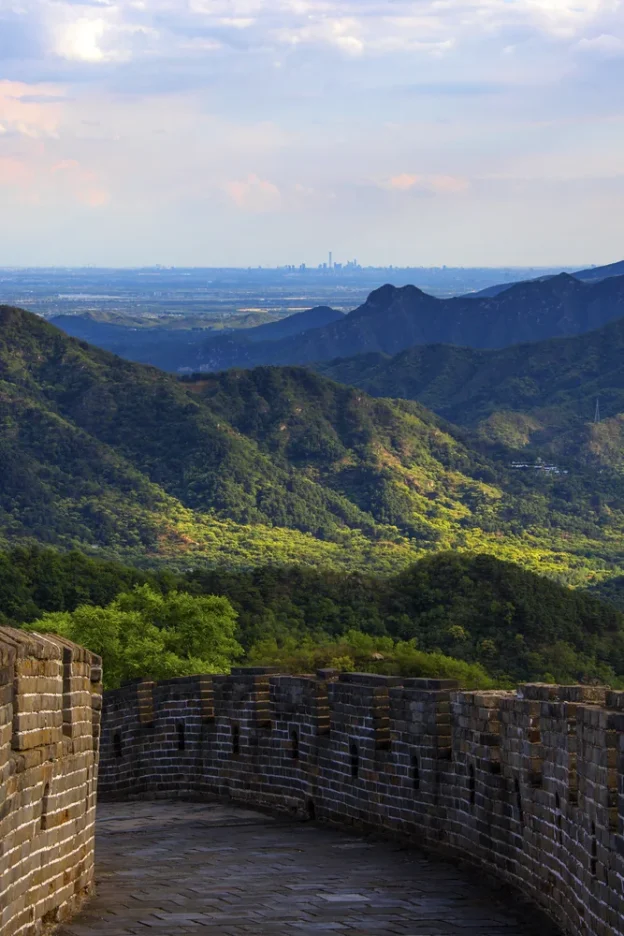
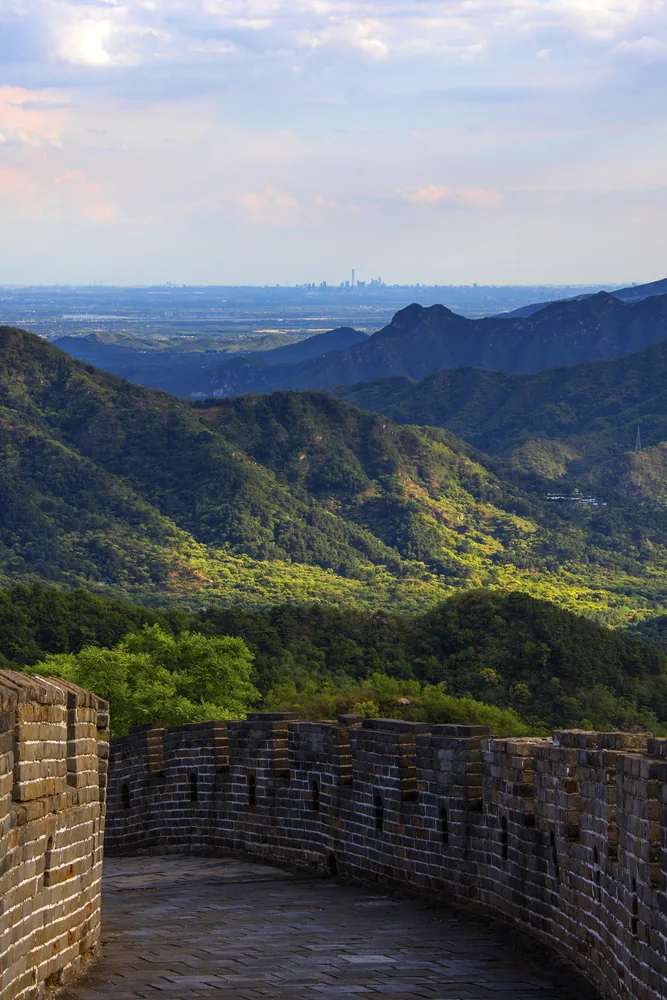
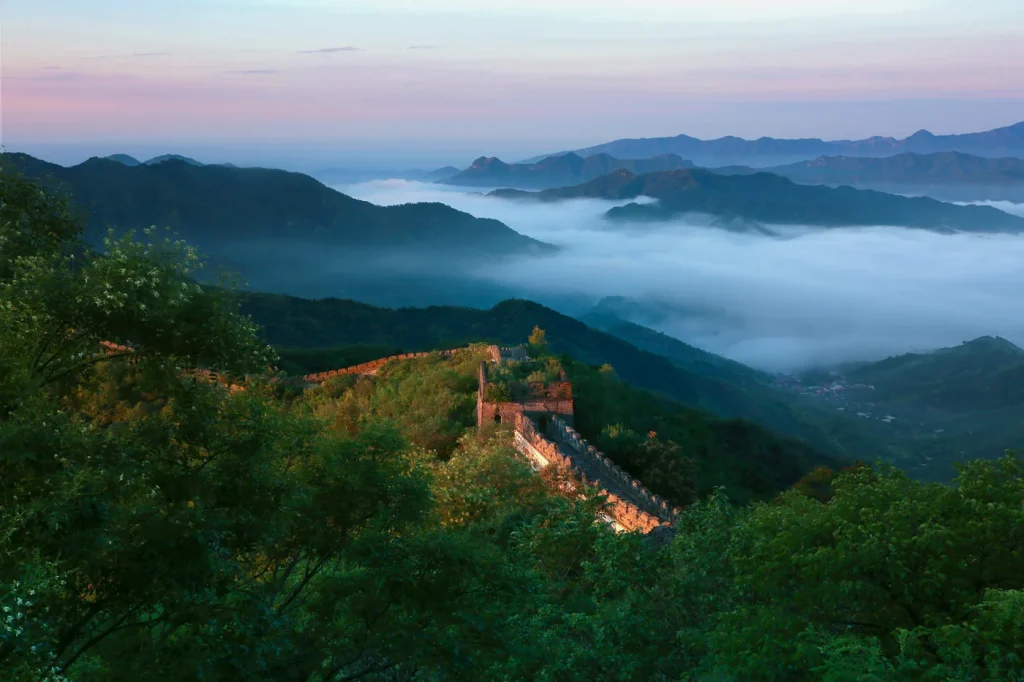
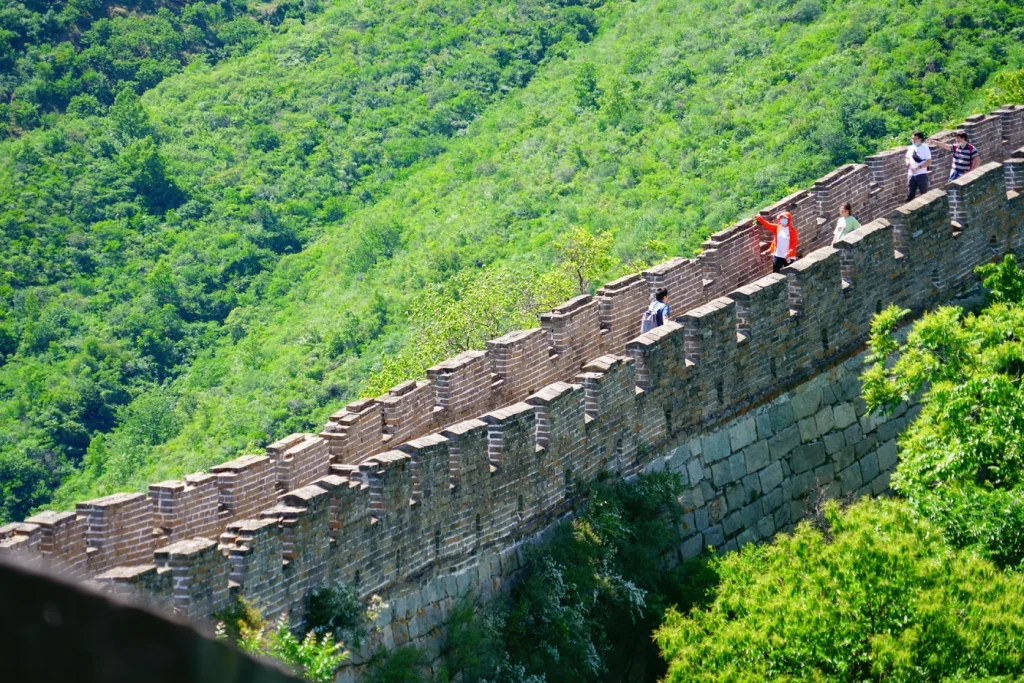
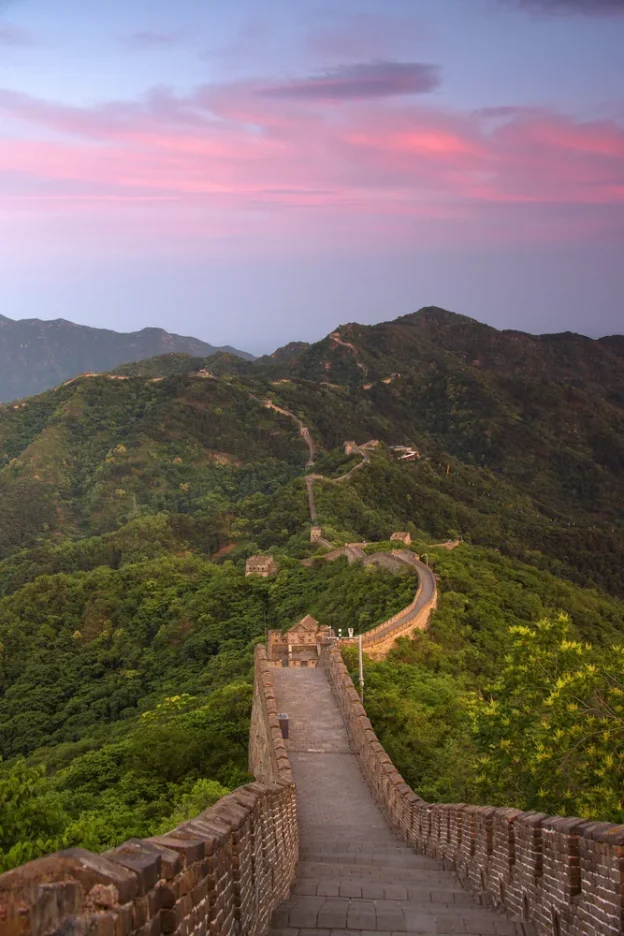
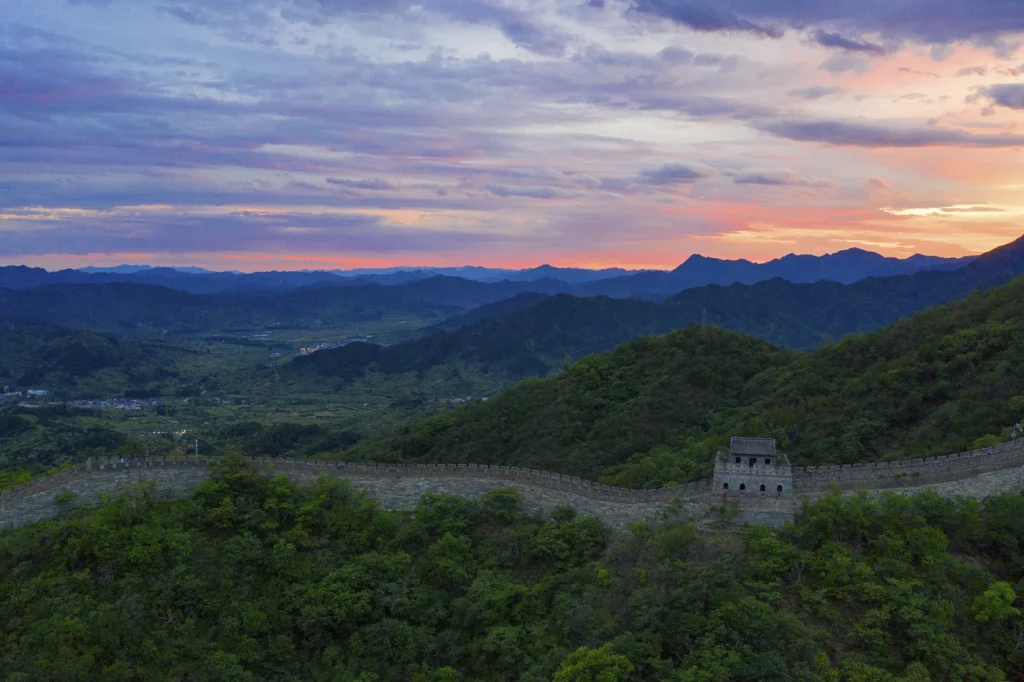
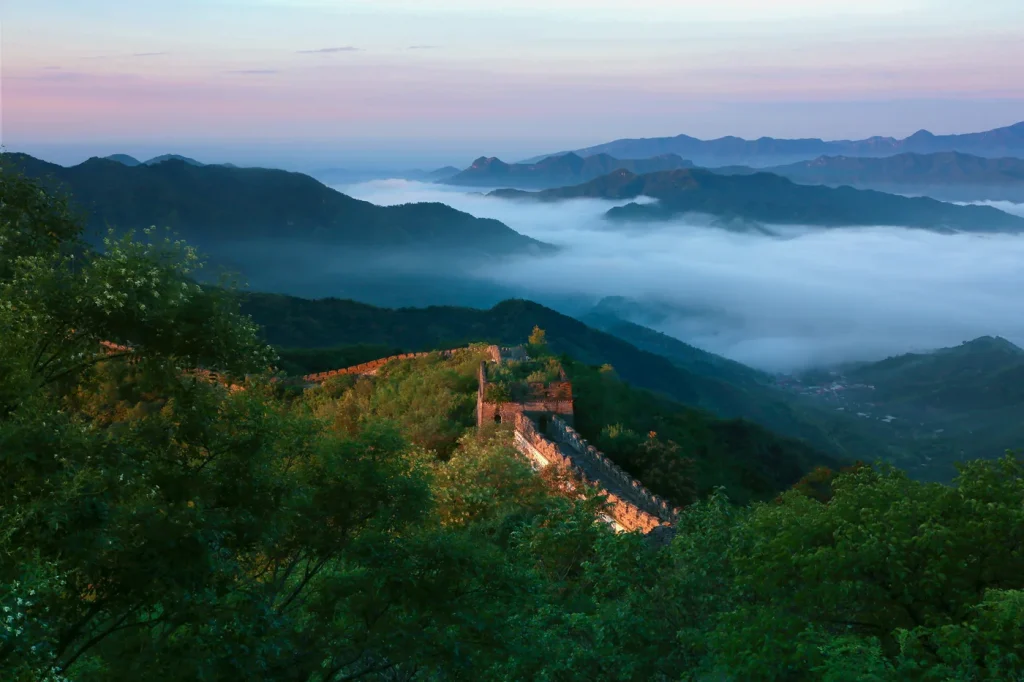
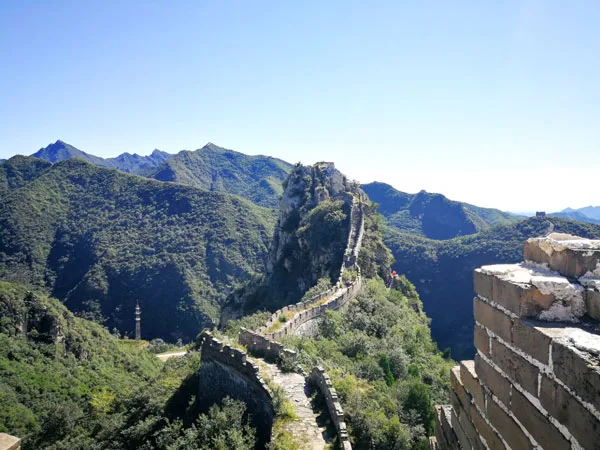
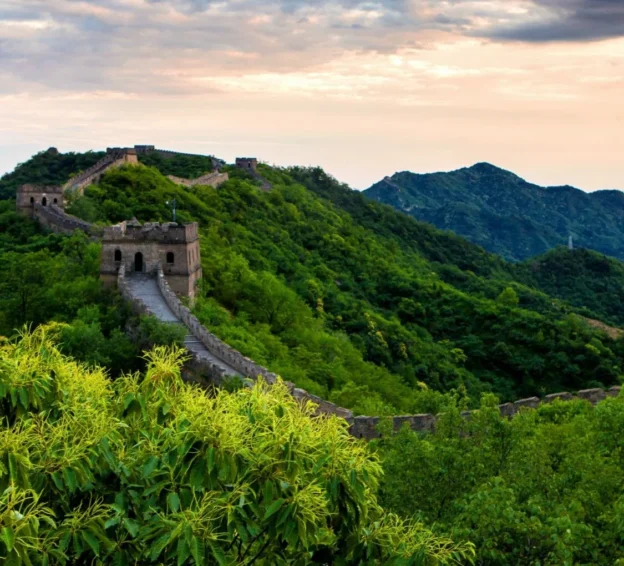
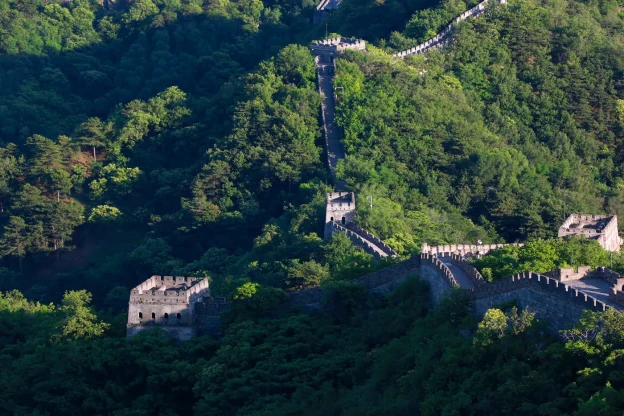
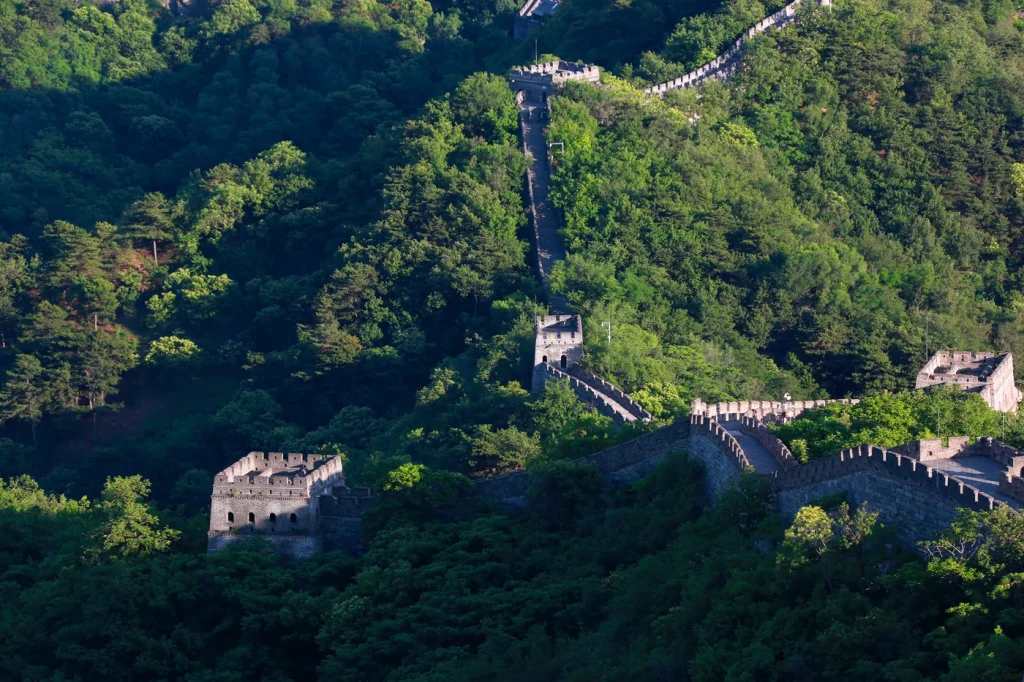
Green Mutianyu Great Wall ridge in May near Beijing

Visiting Mutianyu and the Great Wall in May: Beijing Planning Guide

May is one of the best months for an English-speaking visitor to plan a Great Wall day trip from Beijing. The hills are usually green, the air is warmer than early spring, and the weather is still more comfortable than the hot, humid weeks of July and August. For most first-time international travelers, Mutianyu Great Wall is the safest default choice in May because it balances scenery, restored paths, cable-car options, and a less intense tour-group feel than Badaling.

Information check: this guide was reviewed on May 13, 2026. Weather notes are based on long-term Beijing May patterns, while holiday rules, ticketing, transport, and scenic-area operations should still be checked through official channels before visiting because rules can change during holidays, storms, high winds, maintenance, or peak seasons.
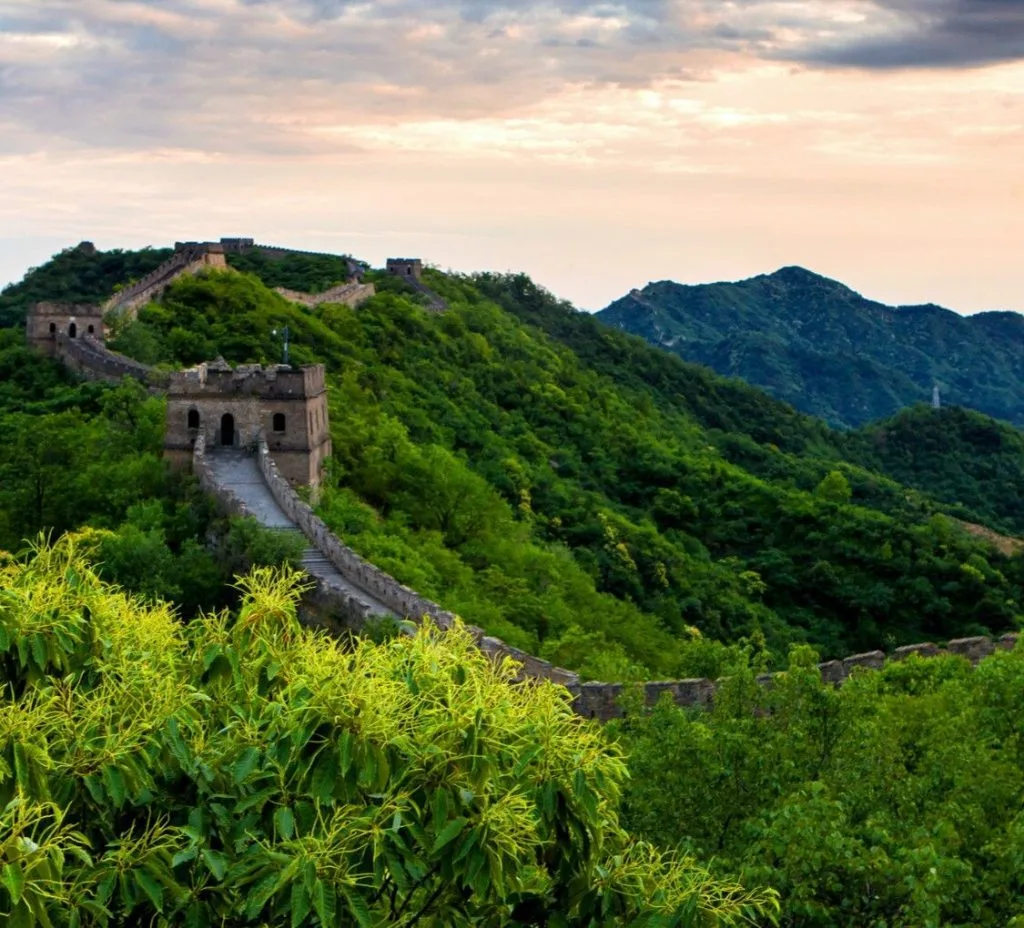
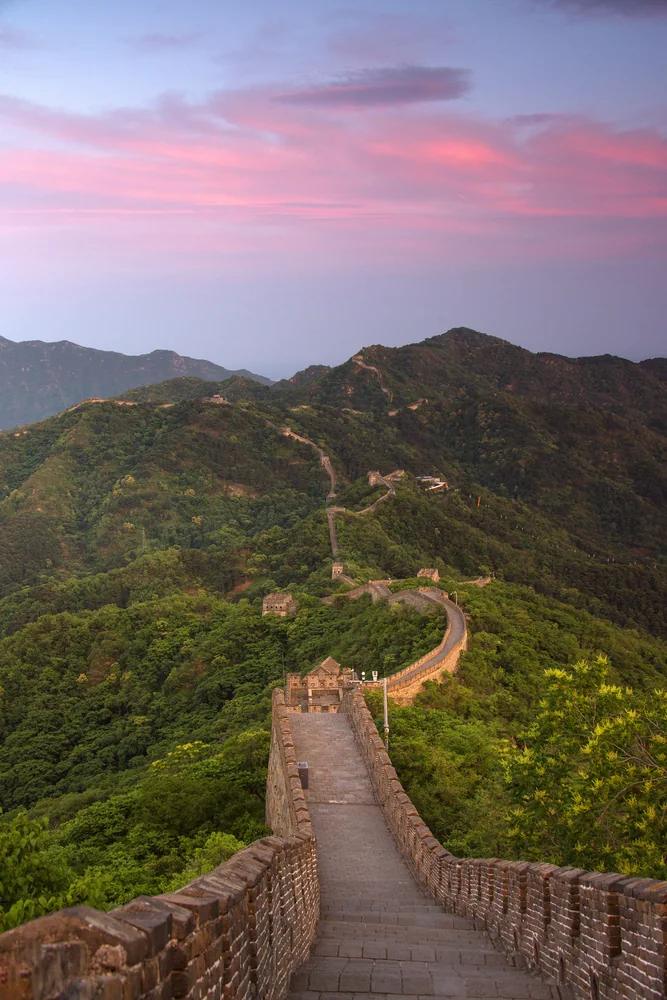
Green Great Wall ridges in May near Beijing
Green ridges and clear views make May one of the most scenic months for a Great Wall trip from Beijing.

Quick Planning Snapshot

  • Best default section: Mutianyu Great Wall for most foreign first-time visitors.
  • Best for hiking and photography: Jinshanling if you can spend a full day and handle longer transfers.
  • Most famous but most crowd-sensitive: Badaling, especially around holidays and weekends.
  • Typical visit length: half day to full day from Beijing, depending on transport and section choice.
  • Main May risk: Labor Day holiday crowds, stronger sun, and occasional rain.

Why Mutianyu Is Usually Best in May

For inbound travelers, May planning is less about finding a dramatic wall section and more about choosing a section that is scenic, manageable, and realistic after an international flight or a packed Beijing itinerary. Mutianyu is usually the best answer. It has restored wall, strong mountain scenery, cable car and chairlift options, and enough walking flexibility for families, couples, seniors, and first-time visitors who do not want a technical hike.

Mutianyu is also a better fit than Badaling for many foreign independent travelers who want a classic Great Wall view without feeling locked into the busiest domestic-tour route. Badaling is important and well-serviced, but its fame can work against it during Chinese holiday periods. If you are choosing between the two, read the Badaling vs Mutianyu comparison before committing.

May Weather at the Great Wall

Beijing-area May weather is usually warm but not yet peak-summer hot. Long-term climate summaries put May daytime highs broadly in the mid-20s Celsius, with cooler mornings and evenings. Weather Spark’s Beijing May data shows daily highs rising through the month, roughly from the low-20s Celsius at the start toward the high-20s Celsius near the end. Rain risk also increases as the month moves toward summer, so late May can feel more humid and unsettled than early May.

On the wall itself, the feeling can be different from downtown Beijing. Open ridges are windier, stone steps reflect heat in the sun, and shaded watchtowers can feel cooler after rain. Pack as if you will face both spring and early-summer conditions: a light layer for the morning, sun protection for exposed steps, and shoes with reliable grip.
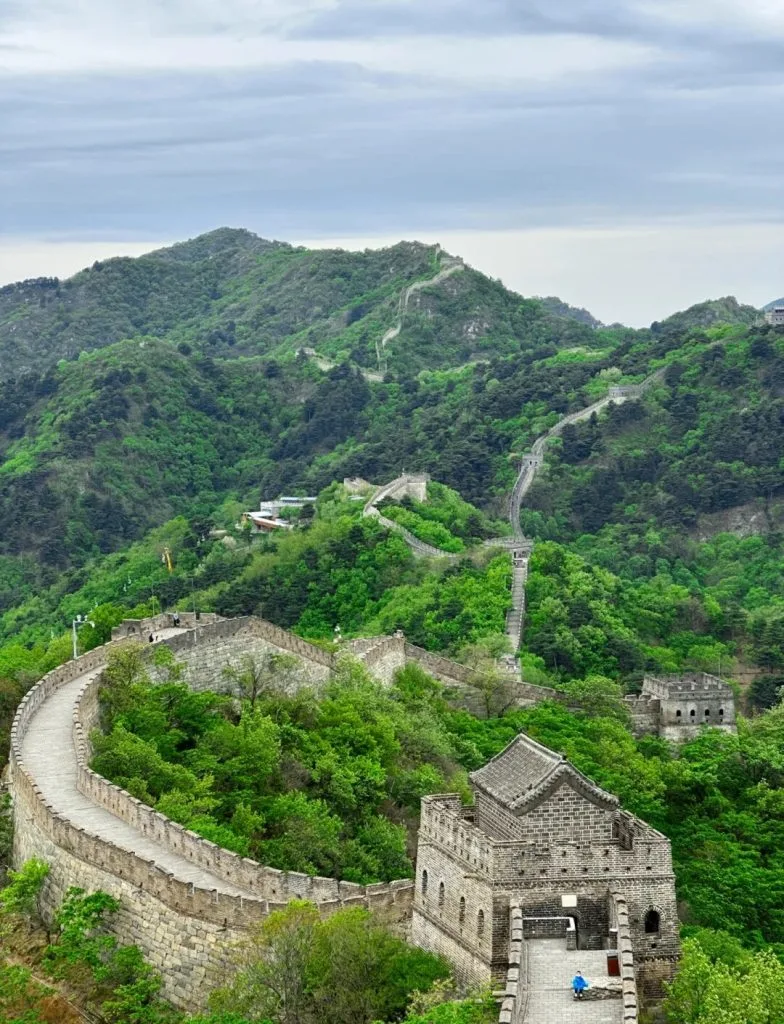
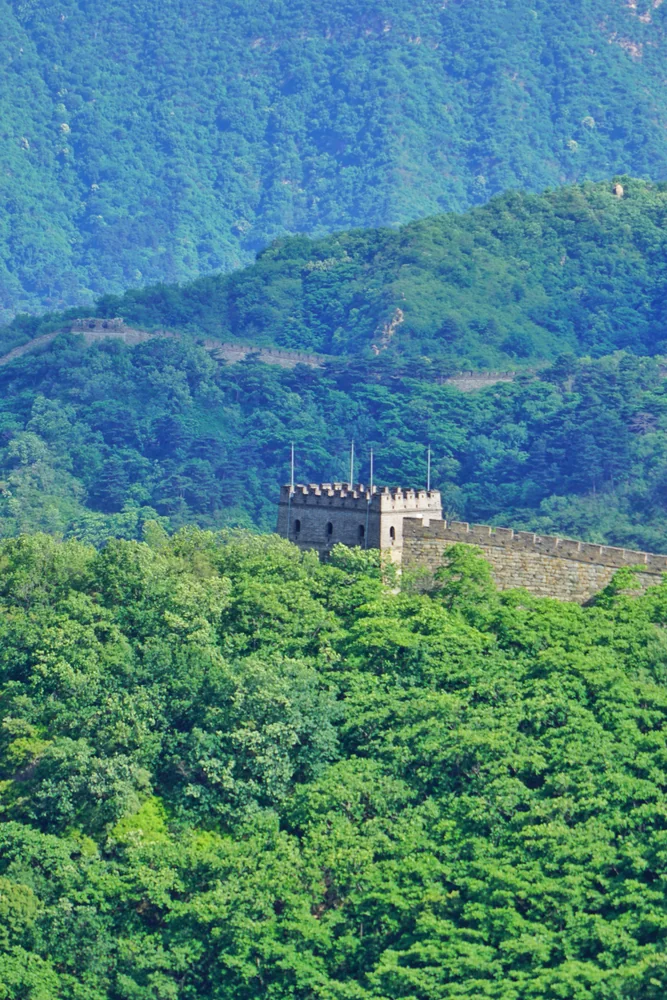
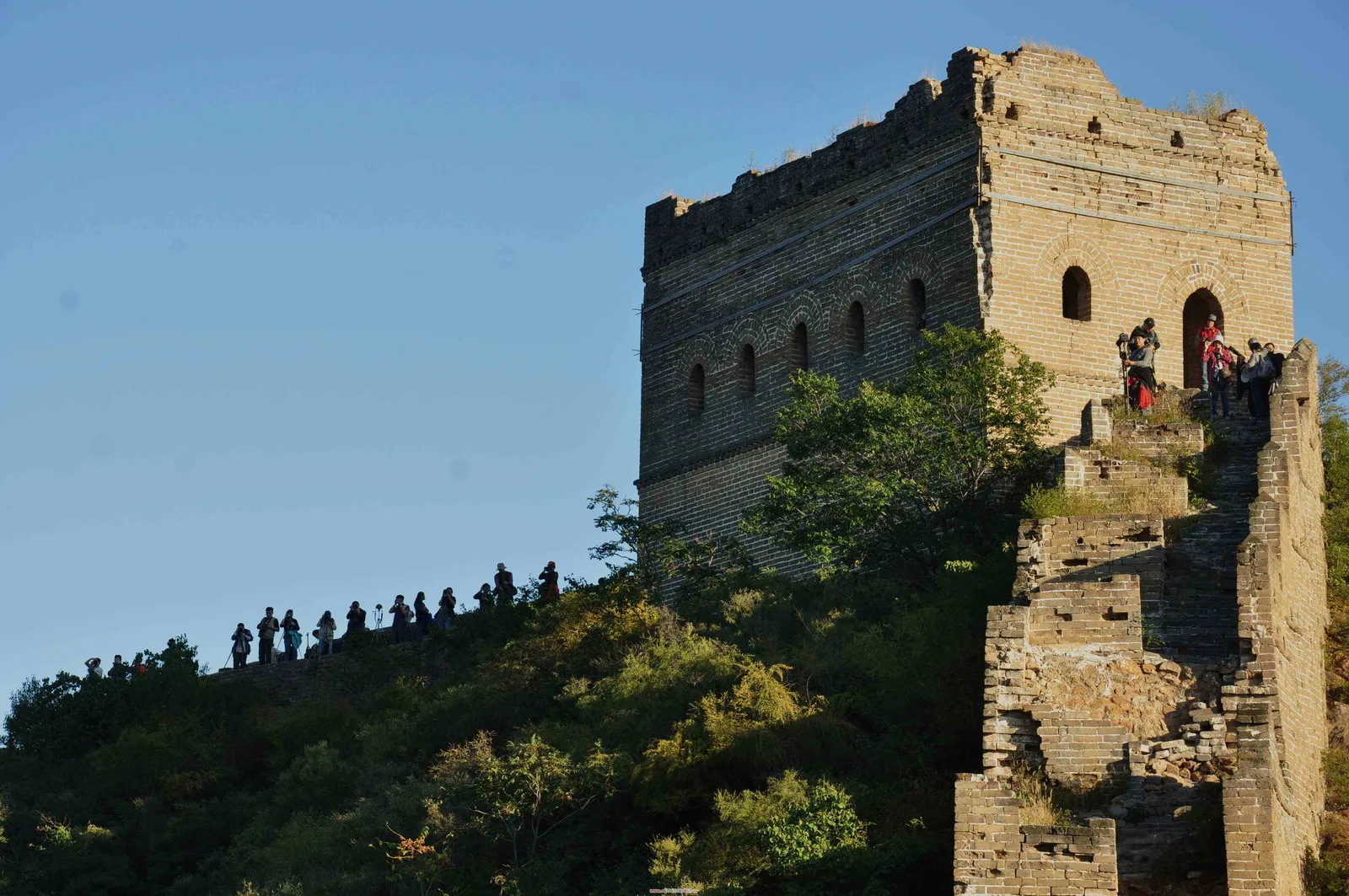
Great Wall watchtower with green spring slopes
Restored Great Wall sections such as Mutianyu are more comfortable in May, but holiday timing still matters.

What the Great Wall Looks Like in May

In May, the Great Wall usually has a fresh green look. Hillsides around Mutianyu, Jiankou, Jinshanling, Gubeikou, and other mountain sections have far more color than in March, while the heavy summer humidity has not fully arrived. Early May can still show a mix of spring green and dry mountain tones; late May is often greener and fuller.

For photos, May is especially useful after rain or a windy day, when visibility improves and the ridges look sharper. Midday sun can be harsh, so early morning and late afternoon are better for softer light. If photography is your main goal and you are comfortable with a longer day, Jinshanling can be stronger than Mutianyu because the wall line, watchtowers, and ridgelines feel more varied.

Crowds: The Main May Problem

The biggest May planning issue is not the weather; it is the holiday calendar. Beijing’s public holiday information lists the 2026 Labor Day break from May 1 to May 5. During that window, famous scenic spots near Beijing can see a heavy domestic travel surge. Badaling is usually the most crowd-sensitive section because it is famous, accessible, and heavily promoted. Mutianyu is often more manageable, but it should not be treated as quiet during the holiday.

If your schedule is flexible, avoid May 1-5. If you must visit during the holiday, book ahead, go very early, and choose your section carefully. For transport planning, start with this guide to getting from Beijing to the Great Wall. Private transfers can reduce uncertainty for first-time visitors, while public transport requires more patience and schedule checking.

Best Great Wall Sections in May

Mutianyu is the best default for most international visitors. Choose it if you want a balanced first Great Wall experience, good scenery, restored paths, and flexible ways to shorten the walking route. It is especially suitable for families, first-time visitors, and travelers who want a classic Great Wall day without making logistics too hard.

Jinshanling is one of the better May choices for hikers and photographers. The green hills, longer views, and more varied watchtowers make it a strong option on clear days. It is less convenient than Mutianyu from central Beijing, so it works best if you can dedicate a full day and accept a longer transfer. For a more hiking-focused plan, see the Gubeikou to Jinshanling hiking route.

Badaling is convenient and well-serviced, with strong official infrastructure and visitor facilities. It can make sense if you prioritize accessibility, public-transport simplicity, or the fame of the most iconic section. For many foreign independent travelers, though, the crowd level can matter more than the convenience.

Jiankou and wild sections can look dramatic in May, but they are not simple sightseeing choices. Loose stones, steep slopes, and post-rain conditions can make wild-wall routes risky. Do not treat Jiankou as a casual DIY alternative to Mutianyu; use a legal, realistic route and avoid hiking after rain if the trail is slippery.
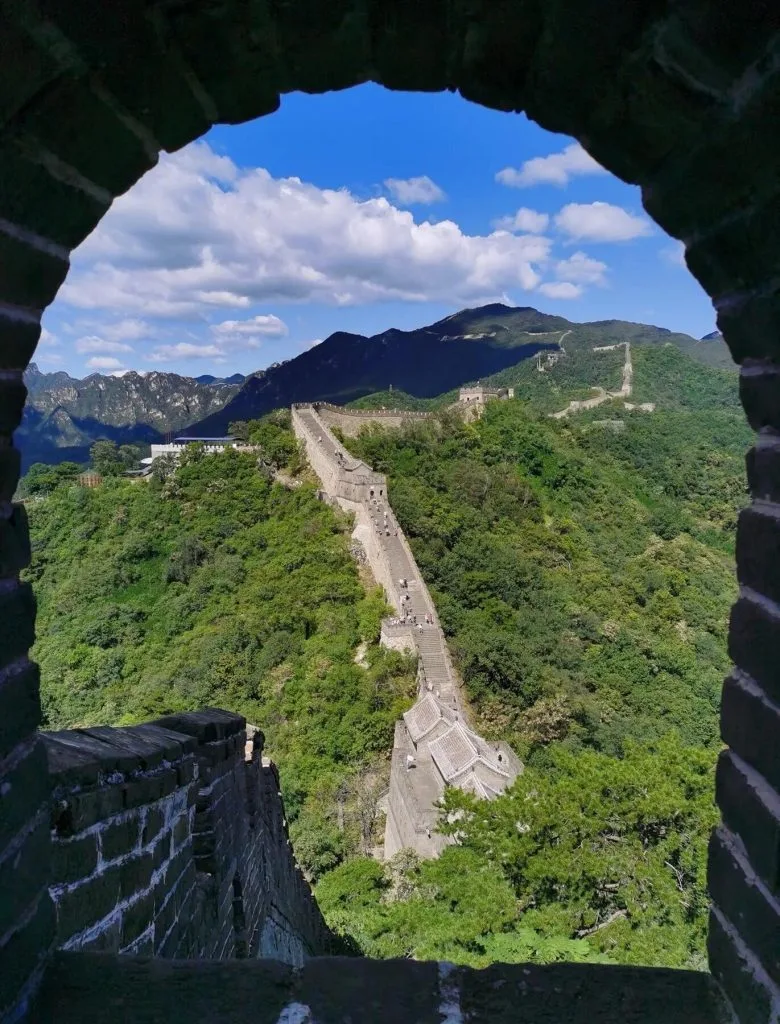
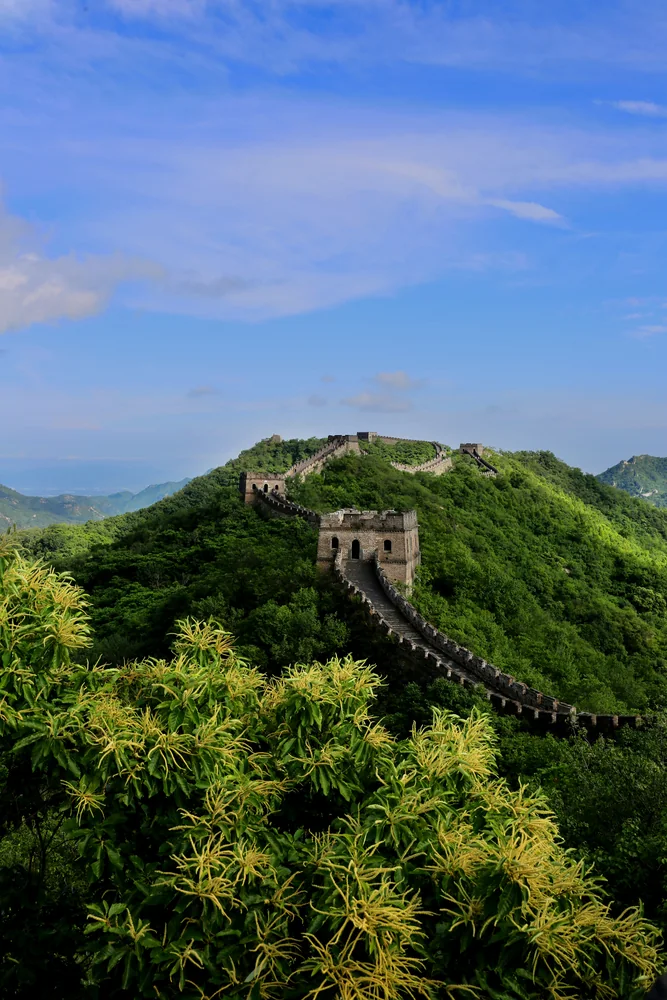
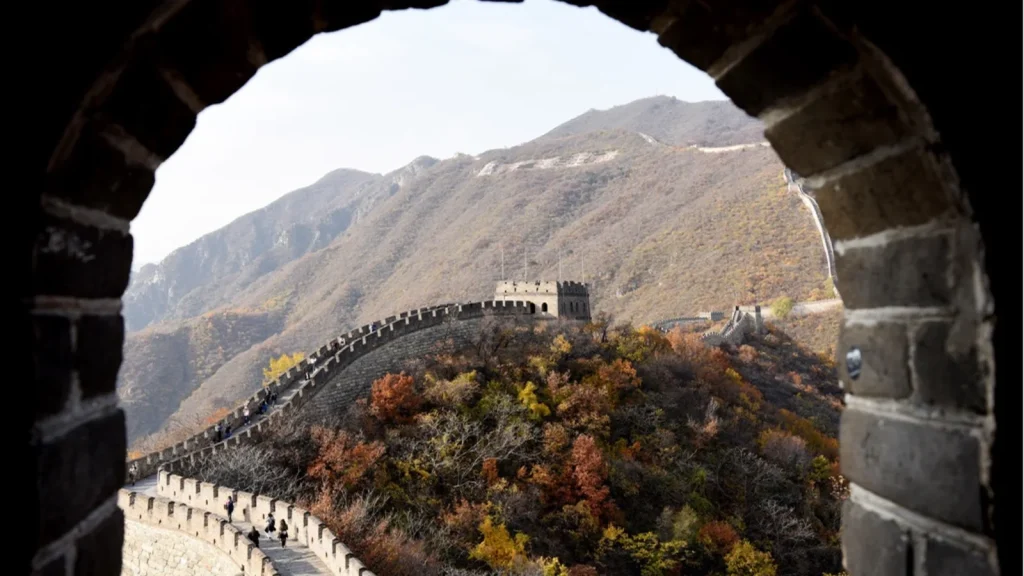
Great Wall in May seen through a watchtower arch
May can work well for longer hikes when the forecast is dry and the route is realistic.

Recommended May Itinerary from Beijing

For a first visit, plan Mutianyu as a relaxed day trip rather than trying to combine too many Beijing sights. Leave Beijing early, reach the scenic area before the main late-morning crowd, choose a cable car or chairlift route if you want to save energy, and spend your best walking time between the restored towers with open mountain views. Return to Beijing in the afternoon before evening traffic becomes too tiring.

If you are a stronger walker or photographer, use Jinshanling as a full-day plan instead. Do not squeeze it into a half day. May light, green hills, and longer views can be excellent, but the reward only makes sense if you allow enough time for transport, walking, rest breaks, and weather changes.

Transport Advice

For foreign visitors who are new to Beijing, the easiest May plan is usually a private transfer, organized day tour, or a carefully checked public-transport route to Mutianyu. Public transport can work, but route details, transfer points, and payment methods can change. Check current instructions shortly before travel, especially around holidays. If you want to compare options, use the main Beijing to Great Wall transport guide first, then narrow the plan by section.

Where to Stay or Pause

Most first-time visitors can stay in central Beijing and visit Mutianyu as a day trip. You do not need to sleep near the wall unless you want a slower pace, sunrise photography, or a second section the next day. For Jinshanling, an overnight near the scenic area can make sense for photographers or hikers. For Simatai, the overnight logic is usually tied to Gubei Water Town and the night-view experience rather than a simple day trip.

What to Wear and Pack

Wear breathable clothes and bring a light jacket or overshirt for early starts. For a fuller checklist, see this Great Wall packing guide. Use walking shoes with grip rather than smooth city sneakers. Bring sunscreen, sunglasses, a hat, enough water, and a compact rain shell if the forecast is unstable. If you are visiting with children, seniors, or anyone who struggles with steep steps, choose a restored section with cable car or shuttle options and keep the route short.

Before-You-Go Checklist

  • Check the official scenic-area notice before departure.
  • Confirm whether holiday, weather, or crowd-control rules affect ticketing or entry.
  • Recheck transport timing the day before you travel.
  • Start early, especially on weekends or around May 1-5.
  • Bring sun protection, water, and shoes with grip.
  • Avoid wild-wall hiking after rain or without reliable local route knowledge.

Practical Verdict

May is one of the best months for a Great Wall trip when planned around the calendar. Choose Mutianyu for a balanced first visit, Jinshanling for scenery and hiking, and Badaling only when convenience or fame matters more than crowd control. Check the latest weather and official scenic-area notices before departure, especially around May 1-5, after heavy rain, or on windy days.

Sources Checked

Compare Every Month

Still choosing travel dates? Use the month-by-month Great Wall guide to compare weather, crowds, scenery, and section choice from January through December.
Green Mutianyu Great Wall ridge in June summer conditions

Visiting the Great Wall of China in June: Heat, Rain, and Section Choice

June is the start of real summer conditions at the Great Wall near Beijing. The mountains are green, daylight is long, and photo conditions can be excellent after clear weather. At the same time, June brings stronger sun, rising humidity, warmer afternoons, and a higher chance of showers or thunderstorms than spring. For most foreign visitors, the safest June plan is a flexible day at Mutianyu, with an early start and a weather backup.

Information check: this June guide was reviewed on May 17, 2026. Weather, holiday dates, scenic-area notices, shuttle arrangements, cable-car operations, and ticketing rules can change. Check official channels and the local forecast before visiting.

Quick planning snapshot

  • Best for: visitors who want green mountain scenery and can handle warm summer walking.
  • Use this guide for: choosing a Great Wall section, start time, packing list, and weather backup for June.
  • Planning focus: avoid hot midday walking, watch for rain or thunder, and check Dragon Boat Festival holiday timing.
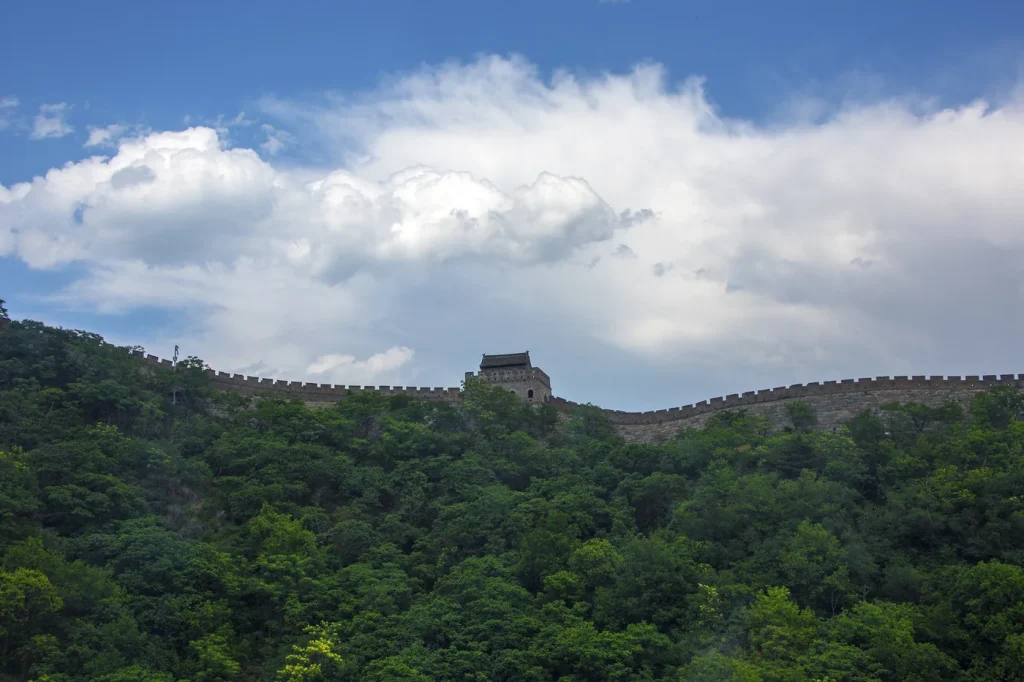
Green Mutianyu Great Wall ridge in June summer conditions
June brings dense green mountain scenery around Mutianyu, but heat and humidity need planning.

Is June a Good Month to Visit the Great Wall?

June can be a good month to visit the Great Wall if you plan around summer conditions. Compared with July and August, early June can still feel manageable on many days, especially if you start early. Compared with April and May, it is warmer, greener, and more humid. The tradeoff is that weather becomes less predictable: hot sun, haze, rain, and thunderstorm risk all need more attention.

For a first Great Wall day from Beijing, June is usually better than deep winter but less comfortable than the best spring and autumn windows. The month works best for travelers who want lush scenery, are comfortable walking in warm weather, and can adjust the schedule if the forecast turns poor.

Best Great Wall Sections in June

Mutianyu is the best default for many foreign visitors in June. It has classic mountain views, restored walking, enough facilities, and uphill/downhill options that can reduce heat fatigue. Families, first-time visitors, and travelers who want a lower-stress day should usually start with Mutianyu. Use the Beijing to Mutianyu transport guide and the Mutianyu first-visit guide before finalizing the day.

Badaling can work in June if infrastructure and public transport matter most. It has strong facilities, but it can feel crowded and exposed in hot weather. If you are deciding between the two most common sections, compare Badaling vs. Mutianyu before choosing.

Jinshanling is attractive for hikers and photographers, but June weather makes timing more important. Exposed ridges can feel hot, and storms are more serious on long walking routes. Choose Jinshanling only if you have a full-day plan, good forecast, enough water, and realistic hiking ability. Wild or rough routes are not ideal during unstable summer weather.

Mutianyu Great Wall under summer clouds in June
Cloud build-up can make June views dramatic, but it also means families should watch the forecast.

June Weather: Heat, Humidity, and Rain

June weather around Beijing often shifts from late-spring comfort toward summer heat. Morning can be pleasant, while midday and early afternoon can feel much hotter on stone steps. The wall is exposed, shade is limited on many sections, and reflected heat from stone can make the walk more tiring than the city temperature suggests.

Rain is another planning issue. June can bring showers and thunderstorms, and mountain weather can change faster than a city itinerary. A light shower does not always ruin the day, but thunder, heavy rain, slippery steps, or poor visibility should change your plan. Read the rainy-day Great Wall guide before deciding whether to continue in bad weather.

Best Time of Day in June

Start early. Morning is usually the best time for a June Great Wall visit because temperatures are lower, crowds are lighter, and families have more energy. Aim to be moving toward the wall before the strongest afternoon heat. If you use a private driver or shuttle, choose a departure time that avoids both Beijing traffic and midday walking.

Late afternoon can be beautiful, but it is riskier if storms are forecast or if transport back to Beijing is uncertain. Do not plan the return too tightly. June weather can slow walking, queues, shuttles, and road traffic.

Dragon Boat Festival and June Crowds

June sometimes includes the Dragon Boat Festival holiday period, depending on the lunar calendar. In 2026, the holiday falls in June. Famous attractions near Beijing can become busier during public holidays and adjacent weekends, so check the official holiday calendar before booking transport or tickets.

If your dates are flexible, avoid public-holiday windows and choose a weekday. If your schedule is fixed, start early, pre-check ticketing requirements, and avoid trying to combine too many other sights with the Great Wall on the same day.

Sunny Mutianyu Great Wall watchtower and green summer mountains
On sunny June days, the Great Wall can be beautiful but exposed, so start early and protect against heat.

What to Pack for June

  • Breathable walking clothes and comfortable shoes with grip.
  • Sun hat, sunglasses, and sunscreen.
  • More water than you would carry in spring or autumn.
  • Light rain shell or compact umbrella for visitor areas, not for exposed ridge walking in storms.
  • Portable charger and mobile data for weather, maps, ticketing, and transport communication.
  • Small snacks, tissues, and a bag for trash.

Do not overpack, but do not treat June like a mild spring walk. The right gear is simple: sun protection, water, rain awareness, and reliable phone access. For a fuller list, use the Great Wall packing guide.

Who Should Be More Cautious in June?

Families with young children, seniors, and travelers sensitive to heat should choose an easier route and avoid long exposed hikes. Mutianyu with cable-car or chairlift planning is usually more sensible than a long hiking section. If children are part of the trip, use the Mutianyu with kids guide to keep the day realistic.

Photographers and hikers can still have a strong June trip, especially after rain clears the air, but they should not ignore storm risk. If thunder is possible, do not continue on exposed ridges. Choose safety over itinerary completion.

Recommended June Plan from Beijing

For most first-time foreign visitors, the best June plan is: leave Beijing early, visit Mutianyu, use assisted uphill or downhill transport if needed, walk a moderate restored section, and return before late-afternoon fatigue or storm risk becomes a problem. This gives you green mountain views without turning the day into a heat-stress test.

If you have already visited Mutianyu and want a more hiking-focused June plan, consider Jinshanling only with a strong forecast and a full-day schedule. If public transport convenience matters more than atmosphere, Badaling remains practical but may feel busier and more exposed.

Vigorous green summer scenery at Mutianyu Great Wall
Vigorous summer greenery is the main visual reward of a June Great Wall trip.

Before-You-Go Checklist

  • Check the weather forecast for both Beijing and the Great Wall section.
  • Check official holiday timing and avoid Dragon Boat Festival crowds if possible.
  • Confirm ticketing, shuttle, and cable-car or chairlift operation before leaving.
  • Start early and avoid the hottest part of the day.
  • Carry enough water and sun protection.
  • Use a shorter plan if traveling with children, seniors, or heat-sensitive travelers.
  • Do not walk exposed ridges in thunder or heavy rain.

Practical Verdict

June is a green, lively, and sometimes beautiful month for the Great Wall, but it is not the easiest month. The best plan is early, flexible, and weather-aware. Mutianyu is the strongest default for most foreign visitors because it balances scenery, facilities, and route flexibility. Choose Badaling for infrastructure, Jinshanling for serious hiking and photography, and avoid wild routes when heat or storms are a concern.

Related planning guides

Sources Checked

Compare Every Month

Still choosing travel dates? Use the month-by-month Great Wall guide to compare weather, crowds, scenery, and section choice from January through December.
Green Mutianyu Great Wall ridge in July summer conditions

Visiting the Great Wall of China in July: Heat, Humidity, and Storm Planning

July is one of the hottest and most humid months to visit the Great Wall near Beijing. The mountains are fully green, daylight is long, and views can be dramatic after rain clears the air. But July also brings the highest summer caution: strong sun, heavy humidity, school-holiday crowds, and a real risk of afternoon showers or thunderstorms. For most foreign first-time visitors, July is still possible, but it needs an early start and a conservative section choice.

Information check: this July guide was reviewed on May 20, 2026. Weather, scenic-area operations, cable car or chairlift status, shuttle rules, tickets, and crowd-control measures can change during summer storms, heat alerts, maintenance, or holiday periods. Check official channels and the local forecast before visiting.

Quick planning snapshot

  • Best for: travelers who want lush green mountain scenery and can handle hot, humid walking.
  • Use this guide for: deciding whether July suits your group, which section to choose, when to start, and what to pack.
  • Planning focus: avoid midday heat, watch thunderstorm risk, and choose restored sections with flexible uphill/downhill options.
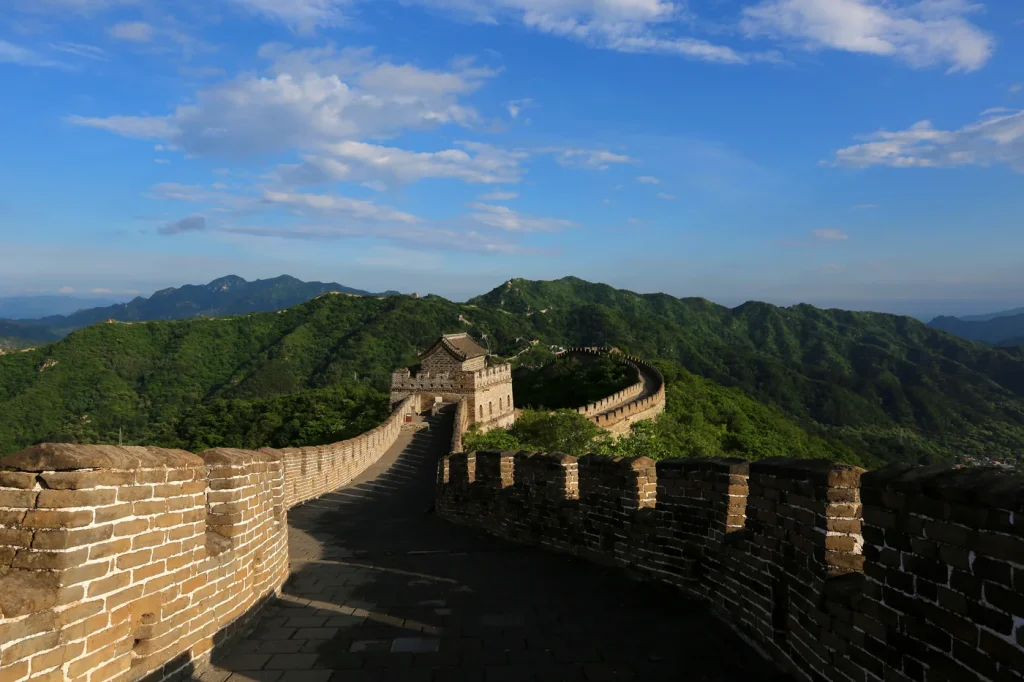
Green Mutianyu Great Wall ridge in July summer conditions
July gives lush green views at Mutianyu, but the heat and humidity change how the day should be planned.

Is July a Good Time to Visit the Great Wall?

July is not the easiest month, but it can still be rewarding if you plan carefully. The visual advantage is clear: the mountains around Beijing-area sections are green, vegetation is dense, and the wall can look more alive than in dry winter or early spring. After a clean rain, views may open beautifully across the ridges.

The downside is comfort and safety. July heat can make exposed stone steps tiring, especially for children, seniors, and visitors who are not used to humid summers. Afternoon showers and thunderstorms are also more likely than in the best spring or autumn windows. If your dates are flexible, spring and autumn are easier. If you are already in Beijing in July, choose a practical section and avoid overambitious hiking.

Best Great Wall Sections in July

Mutianyu is the best default for many foreign visitors in July. It is restored, scenic, and flexible. Families can shorten the walk, and many visitors can reduce fatigue by using uphill or downhill options when current operation allows. Mutianyu is also usually more comfortable than choosing a long wild-wall hike in unstable summer weather. Use the Mutianyu first-visit guide and the Beijing to Mutianyu transport guide before finalizing the day.

Badaling can work if you want the most famous section, broad facilities, and easier public-transport recognition. The main issue is crowd pressure and exposed summer walking. In July, Badaling may feel busy because of domestic summer travel and school vacation timing. If you are choosing between the two most common sections, read Badaling vs. Mutianyu first.

Jinshanling is better for hikers and photographers than for casual first-timers, but July demands caution. Long exposed ridges, limited shade, and storm risk make it less forgiving than a simple Mutianyu visit. Choose Jinshanling only with a reliable forecast, early departure, enough water, and a realistic full-day plan.

Cloud sea and green mountains near Mutianyu Great Wall after summer rain
Rain and cloud can improve visibility after clearing, but thunderstorm risk should change your route plan.

July Weather: Heat, Humidity, and Thunderstorm Risk

July around Beijing is usually hot and humid compared with spring and autumn. The wall is exposed, shade is inconsistent, and stone surfaces can make the walk feel hotter than expected. Even if the city forecast looks manageable, climbing steps on an open ridge can feel different from walking in central Beijing.

Rain is the second major factor. July can bring showers, heavy rain, and thunderstorms. Light rain may only require a shorter plan, but thunder, slippery steps, poor visibility, or strong wind should be treated seriously. Do not continue on exposed ridges in thunder. If the forecast is unstable, read the Rainy Day Guide to the Great Wall before deciding whether to go.

Best Time of Day in July

Start as early as your transport plan allows. Morning is the best window because temperatures are lower, queues are lighter, and the group has more energy. A July Great Wall day should not be built around a relaxed late start followed by a midday climb. That plan creates heat stress and leaves less room if weather changes.

Late afternoon can sometimes be cooler and photogenic, especially after weather clears, but it is harder to recommend for first-time visitors unless transport and ticketing are very clear. Afternoon storms, slower return traffic, and uncertainty around scenic-area operations can make a late plan less reliable.

Summer Crowds and School Vacation

July does not usually have the same national-holiday pressure as Labor Day or National Day, but it can still be busy because of summer travel and school vacation. Famous sections near Beijing can attract families, student groups, and domestic tourists, especially on weekends and good-weather days.

If you want a calmer July visit, choose a weekday, leave early, and avoid stacking too many attractions into the same day. Do not assume that a hot day means empty paths. Many visitors still choose the Great Wall during summer trips to Beijing.

Dense green summer vegetation along Mutianyu Great Wall in July
Dense summer greenery is the main July reward, but shade on the wall itself is limited.

What to Pack for July

  • Breathable clothing that dries quickly.
  • Comfortable shoes with grip; wet stone can be slippery after rain.
  • Sun hat, sunglasses, and sunscreen.
  • More water than you would carry in April, May, September, or October.
  • Light rain shell or compact rain gear for visitor areas and transport, not for exposed thunderstorm walking.
  • Small snacks, tissues, and a bag for trash.
  • Portable charger and reliable mobile data for weather, maps, and return communication.

For families, July packing should also include child-friendly snacks, extra water, and realistic expectations. If you are traveling with children, use the Mutianyu with kids guide and keep the walking route shorter than you would in cooler seasons.

Who Should Be More Cautious?

Children, seniors, travelers with limited mobility, and anyone sensitive to heat should be careful in July. The goal should be a memorable visit, not a long endurance walk. For these groups, Mutianyu is usually better than Jinshanling or wild-wall routes because the plan can be shortened more easily. Also compare the Great Wall accessibility guide before deciding.

Hikers should be especially conservative. July can be tempting because the mountains are green, but heat, humidity, and storm risk make long exposed routes harder. If thunder is possible, choose a restored section or postpone the hike.

Recommended July Plan from Beijing

For most first-time foreign visitors, the best July plan is simple: go to Mutianyu, leave Beijing early, use a reliable transfer or shuttle, choose a moderate walking section, and return before heat or storms dominate the day. If cable car, chairlift, or other assisted options are part of the plan, confirm current operation before leaving.

Badaling is reasonable if infrastructure and easy recognition matter more than atmosphere. Jinshanling is better for active travelers with a full-day plan and a strong forecast. Wild sections are not the best July choice for most visitors.

Mutianyu Great Wall watchtower surrounded by green July mountains
A shorter restored-section walk is usually better than a long exposed route in July heat.

Before-You-Go Checklist

  • Check the current forecast for heat, rain, thunder, and wind.
  • Check official scenic-area notices before leaving Beijing.
  • Start early and avoid long midday walking.
  • Choose Mutianyu for the most balanced July first visit.
  • Carry enough water, sun protection, and phone power.
  • Use a shorter plan for children, seniors, or heat-sensitive travelers.
  • Do not walk exposed ridges during thunder or heavy rain.

Practical Verdict

July is a visually strong but physically demanding month for the Great Wall. The green mountains can be beautiful, especially at Mutianyu, but heat, humidity, storms, and summer crowds need real planning. For most foreign first-time visitors, Mutianyu with an early start is the best July choice. Choose Badaling for infrastructure, Jinshanling for serious hiking only with a good forecast, and avoid wild routes when weather is unstable.

Related planning guides

Sources Checked

Compare Every Month

Still choosing travel dates? Use the month-by-month Great Wall guide to compare weather, crowds, scenery, and section choice from January through December.
Late-summer Mutianyu Great Wall ridge in August conditions

Visiting the Great Wall of China in August: Heat, Rain, and Late-Summer Planning

August is late summer at the Great Wall near Beijing. The mountains are still green, the scenery can be dramatic after rain, and the wall can look lush in a way that spring and winter do not. But August also asks for careful planning: heat, humidity, storm risk, school-holiday crowds, and slippery steps after rain can all affect the day. For most foreign visitors, August is workable if you start early, choose a restored section, and keep the route flexible.

Information check: this August guide was reviewed on May 22, 2026. Weather, scenic-area notices, shuttle arrangements, cable car or chairlift operation, ticketing, and crowd-control rules can change during storms, heat alerts, maintenance, or busy summer travel periods. Check official channels and the local forecast before visiting.

Quick planning snapshot

  • Best for: visitors who want green late-summer scenery and can handle warm, humid walking.
  • Use this guide for: choosing a Great Wall section, start time, weather backup, and packing plan for August.
  • Planning focus: avoid the hottest part of the day, watch rain and thunder, and choose a section that can be shortened.
Late-summer Mutianyu Great Wall ridge in August conditions
August keeps the Mutianyu mountains green, but late-summer heat still shapes the day.

Is August a Good Time to Visit the Great Wall?

August can be a good month if you value green scenery and are realistic about summer conditions. Compared with July, August can still be hot and humid, but the late-summer feel may bring slightly more changeable skies and occasional clearer views after rain. Compared with September or October, it is less comfortable for walking and more weather-sensitive.

The main question is not whether the Great Wall is worth visiting in August. It is. The real question is how to keep the day safe and comfortable. Choose the right section, leave early, avoid exposed long hikes in unstable weather, and build in enough time for slower walking.

Best Great Wall Sections in August

Mutianyu is the best default for many foreign first-time visitors in August. It has strong scenery, restored walking, flexible uphill and downhill options, and enough visitor facilities to make a hot or humid day easier to manage. If this is your first Great Wall trip, start with the Mutianyu first-visit guide and the Beijing to Mutianyu transport guide.

Badaling is practical if you want the most famous section, strong infrastructure, and easier public-transport recognition. The tradeoff is that crowds and exposed walking can feel more tiring in summer. If you are choosing between the two most popular Beijing-area sections, compare Badaling vs. Mutianyu.

Jinshanling can be rewarding for photographers and hikers, especially when rain clears the air, but it is not the easiest August choice. Long exposed ridges, heat, and storm risk require a conservative plan. Choose Jinshanling only if the forecast is stable, you have a full day, and your group is comfortable with more walking.

Green Mutianyu Great Wall watchtower in August
Restored sections with clear route choices are more practical than rough wild-wall hikes in August.

August Weather: Late-Summer Heat and Rain

August weather near Beijing is still summer weather. Expect warm to hot conditions, humidity, and a need for sun protection. The wall itself is exposed, and shade can be limited. A city forecast can feel less demanding than the reality of climbing steps on stone under direct sun.

Rain and thunderstorm risk also matter. August showers can make stone steps slippery, reduce visibility, and interrupt cable car or chairlift operations. A light shower may only require a shorter route, but thunder, heavy rain, or strong wind should change the plan. Use the Rainy Day Guide to the Great Wall if the forecast looks unstable.

Best Time of Day in August

Morning is usually the best time. Start early enough to reach the wall before the strongest heat and before crowds build. This is especially important for families, seniors, and visitors who are not used to humid summer weather. A late start can turn a manageable day into a tiring one.

Late afternoon may bring softer light and cooler air, but it is riskier if storms are forecast or if your return transport is uncertain. If you plan a late visit, confirm ticketing, shuttle timing, and return arrangements carefully. Do not rely on a vague plan to find transport after everyone is tired.

August Crowds and Summer Travel

August can be busy because of school-holiday travel and family trips. It may not have the same pressure as major national holidays, but famous sections near Beijing can still attract domestic tourists, student groups, and families. Weekends are more crowd-sensitive than weekdays.

If your dates are flexible, choose a weekday and go early. If you must visit on a weekend, keep the route simple and do not add too many other attractions. The best August Great Wall day is focused and realistic.

Evening summer valley view around Mutianyu Great Wall in August
Late-summer light can be beautiful, but afternoon plans need extra weather and transport checks.

What to Pack for August

  • Breathable clothing and comfortable shoes with grip.
  • Sun hat, sunglasses, and sunscreen.
  • Enough water for warm exposed walking.
  • Light rain protection for visitor areas and transport connections.
  • Portable charger, mobile data, and offline map support.
  • Small snacks, tissues, and a trash bag.
  • A backup plan if thunder, heavy rain, or heat makes the route unsafe.

August packing is similar to July, but do not assume late summer means cool weather. It is still a hot-season visit. For a broader list, use the Great Wall packing guide.

Families, Seniors, and Heat-Sensitive Travelers

Families with children and older travelers should avoid long exposed routes in August. A shorter Mutianyu plan is usually better than a long hike. Use assisted uphill or downhill options if current operations allow, rest before everyone is exhausted, and avoid the hottest part of the day.

If children are part of your trip, read the Mutianyu with kids guide. If mobility, knee comfort, or fatigue is a concern, compare the Great Wall accessibility guide before choosing between Mutianyu, Badaling, or another section.

Recommended August Plan from Beijing

For most foreign first-time visitors, the best August plan is: choose Mutianyu, leave Beijing early, use a reliable transfer or shuttle, walk a moderate restored section, and keep the day flexible if heat or rain builds. This gives you the green mountain scenery without taking unnecessary risk on long exposed routes.

Choose Badaling if infrastructure or the famous name matters most. Choose Jinshanling only if the forecast is stable and hiking is the main goal. Avoid wild-wall plans when storms, heat, or poor visibility are possible.

Mist and green mountains after summer rain near Mutianyu Great Wall
After summer rain, the wall can look dramatic, but slippery steps and thunder risk need caution.

Before-You-Go Checklist

  • Check current weather for heat, rain, thunder, and wind.
  • Check official scenic-area notices and ticketing before leaving Beijing.
  • Start early and avoid long midday walking.
  • Choose Mutianyu for the most balanced first visit.
  • Carry water, sun protection, rain awareness, and phone power.
  • Use a shorter route for children, seniors, and heat-sensitive travelers.
  • Do not continue on exposed ridges in thunder or heavy rain.

Practical Verdict

August is a late-summer Great Wall month: green, dramatic, and possible, but not effortless. The best plan is early, flexible, and weather-aware. Mutianyu is the best default for most foreign visitors because it balances scenery, facilities, and route flexibility. Badaling works for infrastructure, Jinshanling works for experienced hikers with good weather, and wild routes should be avoided when storms or heat are a concern.

Related planning guides

Sources Checked

Compare Every Month

Still choosing travel dates? Use the month-by-month Great Wall guide to compare weather, crowds, scenery, and section choice from January through December.
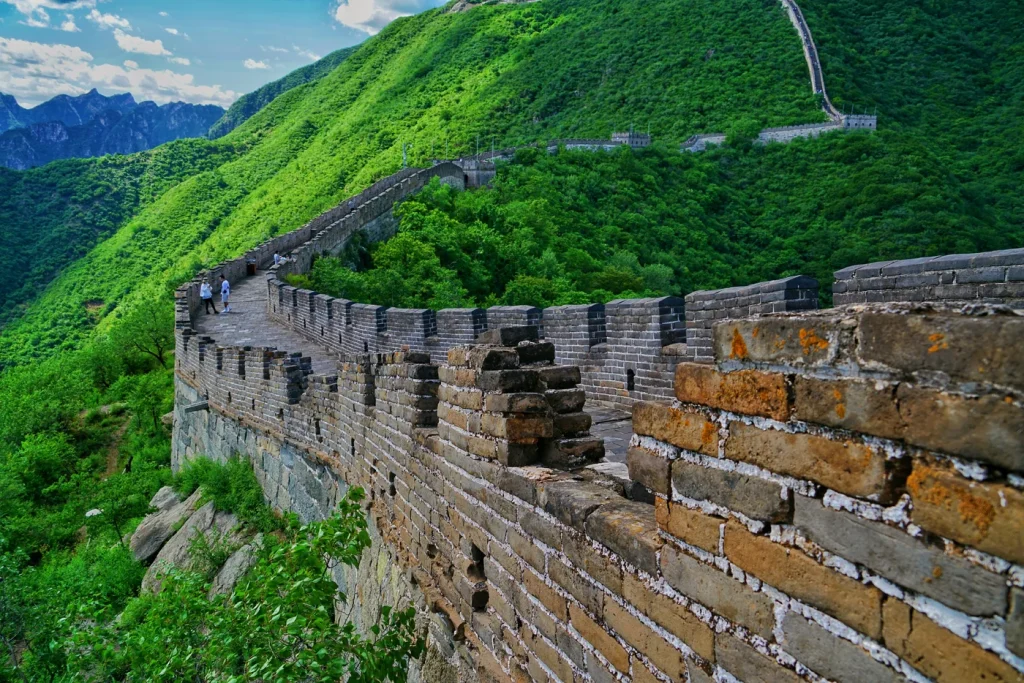
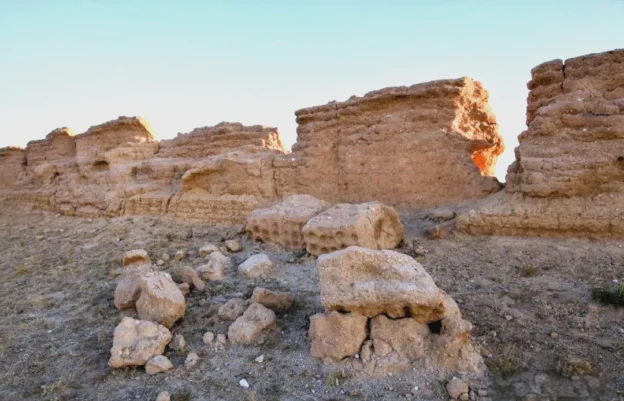
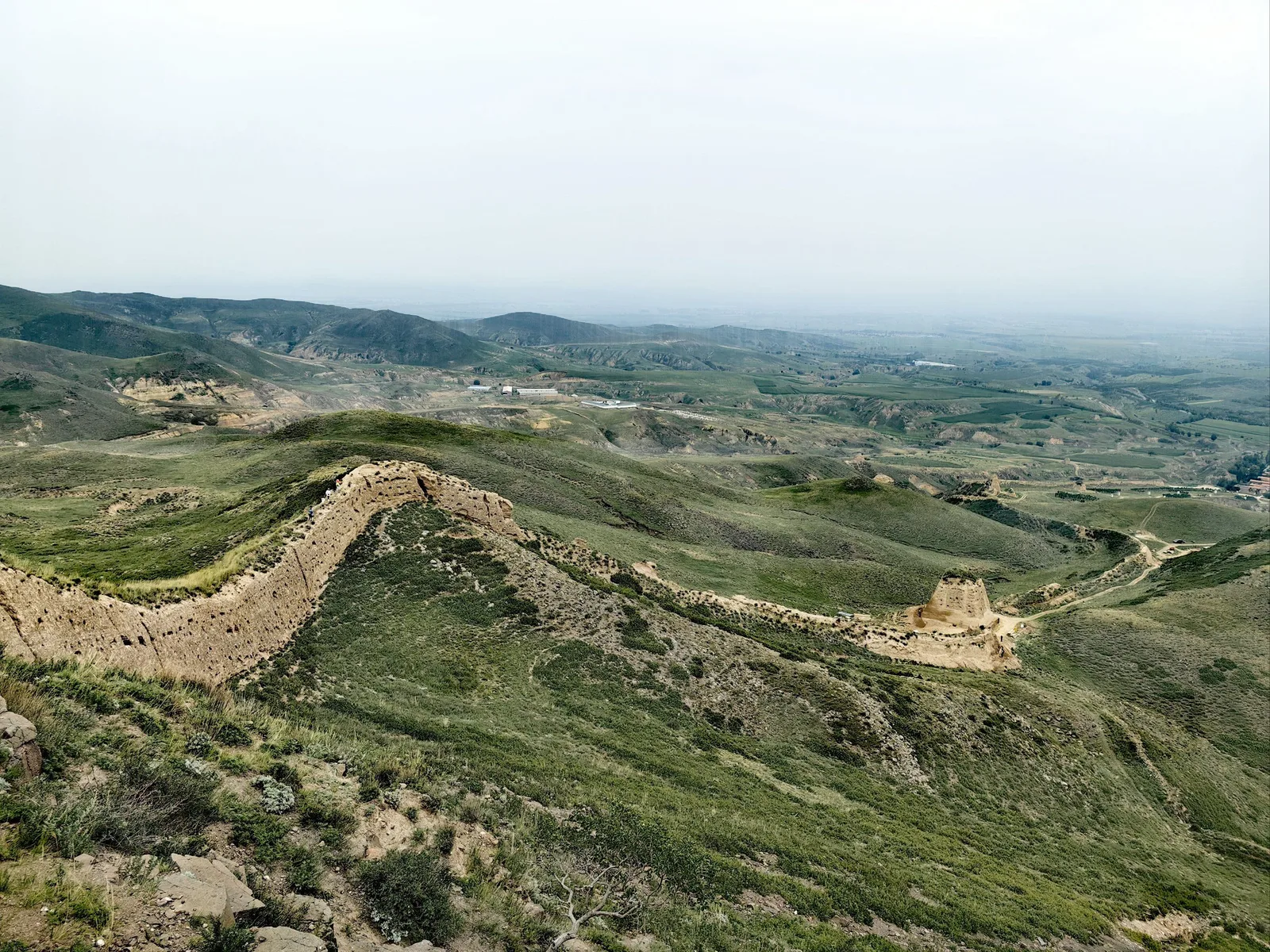
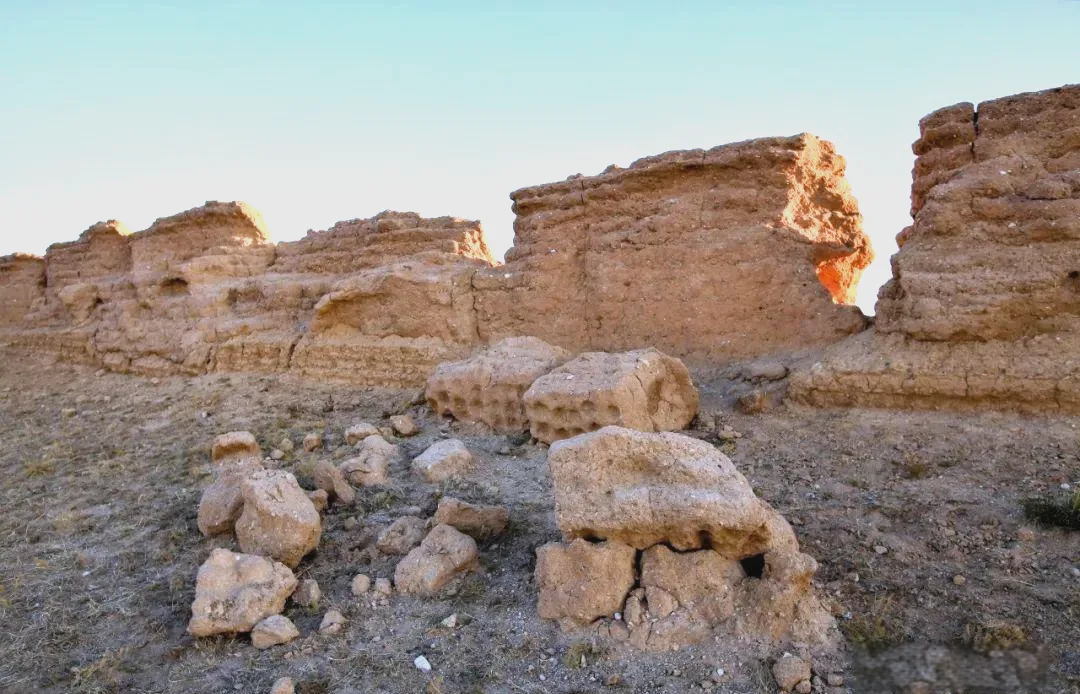
Rammed-earth Great Wall ruins in northern China

Jin Dynasty Great Wall Innovations

The Jin Dynasty’s most distinctive Great Wall contribution was not a new brick tower style. It was the use of boundary trenches, earthworks, forts, and defensive lines as part of frontier control. That makes the word “innovation” tricky: the Jin system was innovative less because of one machine or material and more because of how trench systems were used within a broader military landscape.

Quick planning snapshot

  • Best for: readers who want to understand Jin boundary trench defenses.
  • Main point: trenches and earthworks could be central defensive tools.
  • Travel context: not a standard tourist wall, but useful for understanding non-Ming Great Wall forms.

Trenches as defense

A trench can slow movement, expose attackers, channel traffic, and mark a controlled frontier. When paired with earth banks, forts, patrols, and terrain, it becomes a defensive system. The Jin Boundary Trench is a good example because it is remembered less as a high wall and more as a ditch-and-earthwork frontier. This challenges the tourist habit of imagining the Great Wall only as a stone walkway.
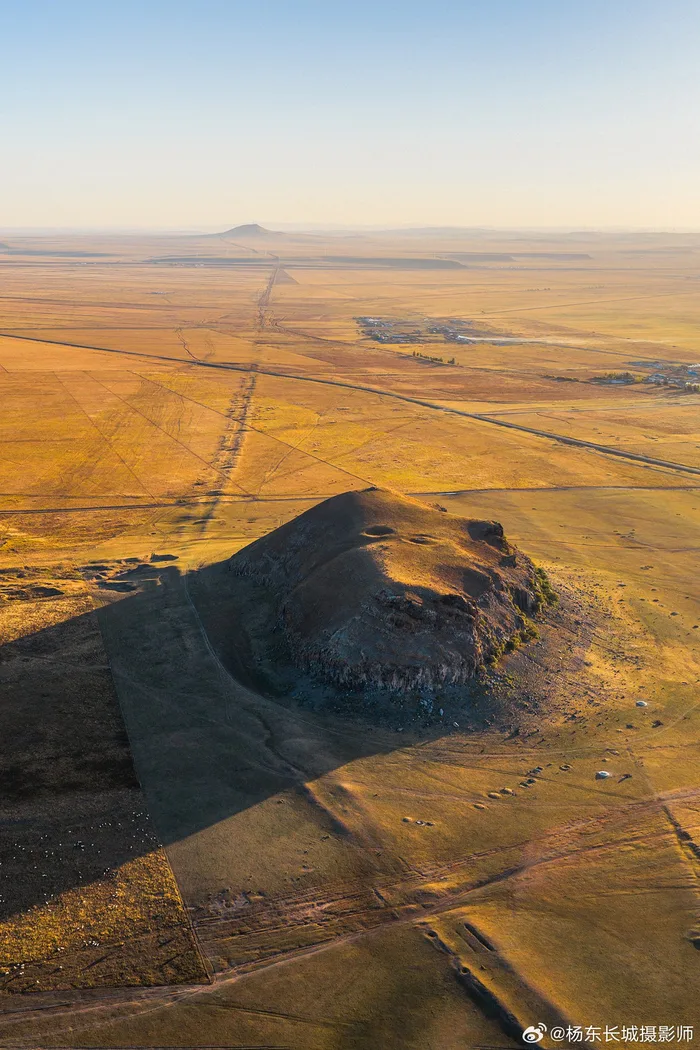
Jin Dynasty earthwork remains on a dry plain
Jin frontier defenses often used long earthworks and boundary lines rather than the brick Ming walls visitors know best.

Why this is different from a restored wall

At Mutianyu or Badaling, visitors see a restored Ming masonry wall with steps and towers. A Jin trench system may be lower, wider, and more integrated with open terrain. It may not feel like the iconic Great Wall, but it can still be historically important. This is why captions and article text must be honest: do not use a Ming tower photo to claim it shows a Jin trench unless the caption explains it is a comparison image.

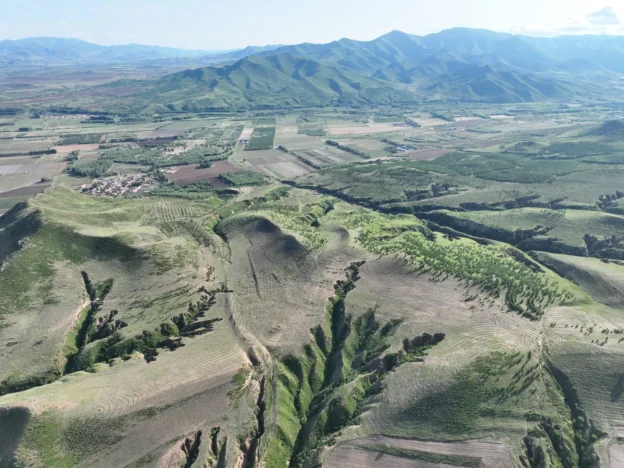
Jin Great Wall remains stretching over low hills
Open ridges and frontier plains help explain why Jin defenses relied on terrain as much as masonry.
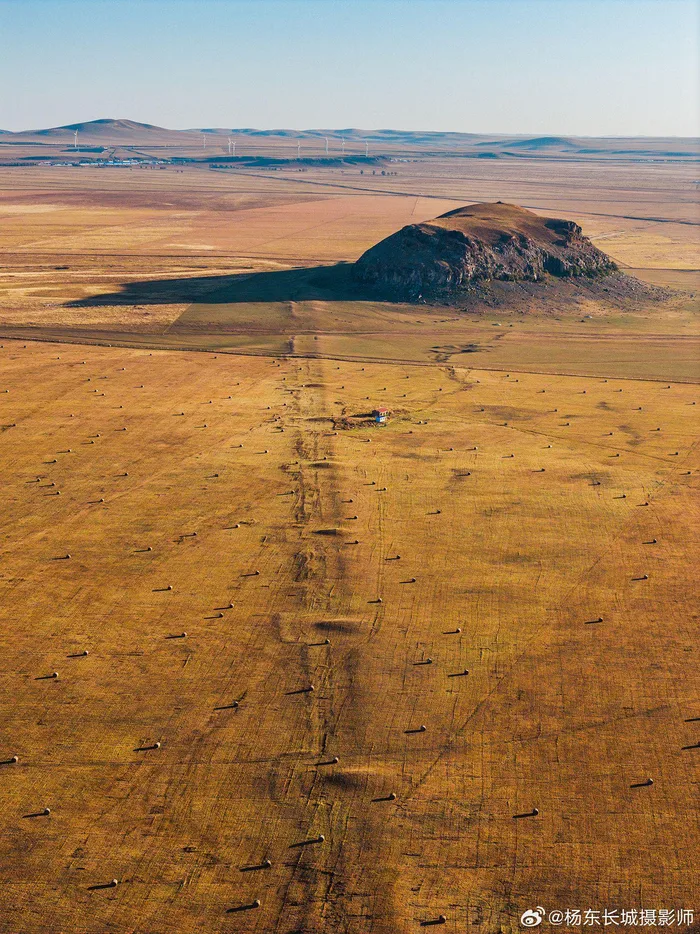
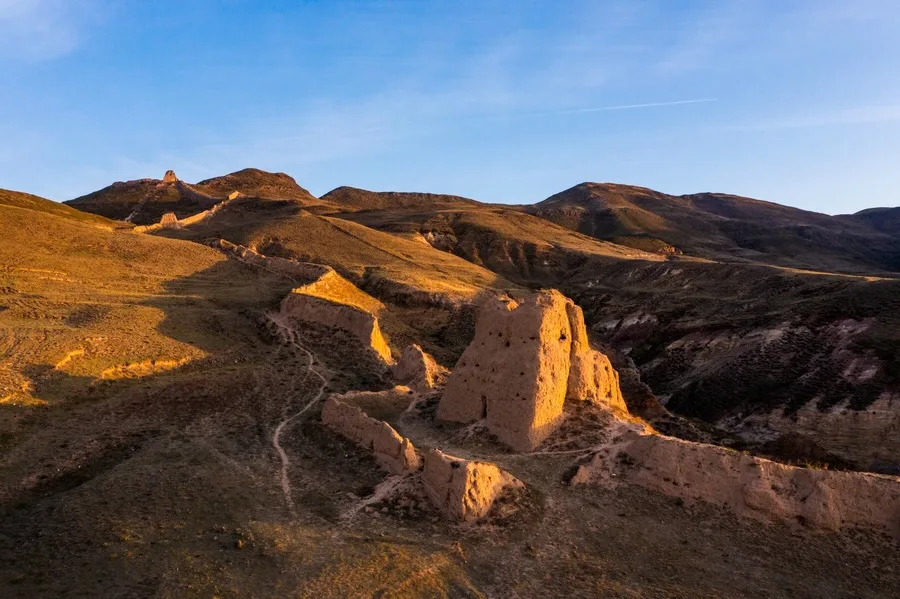
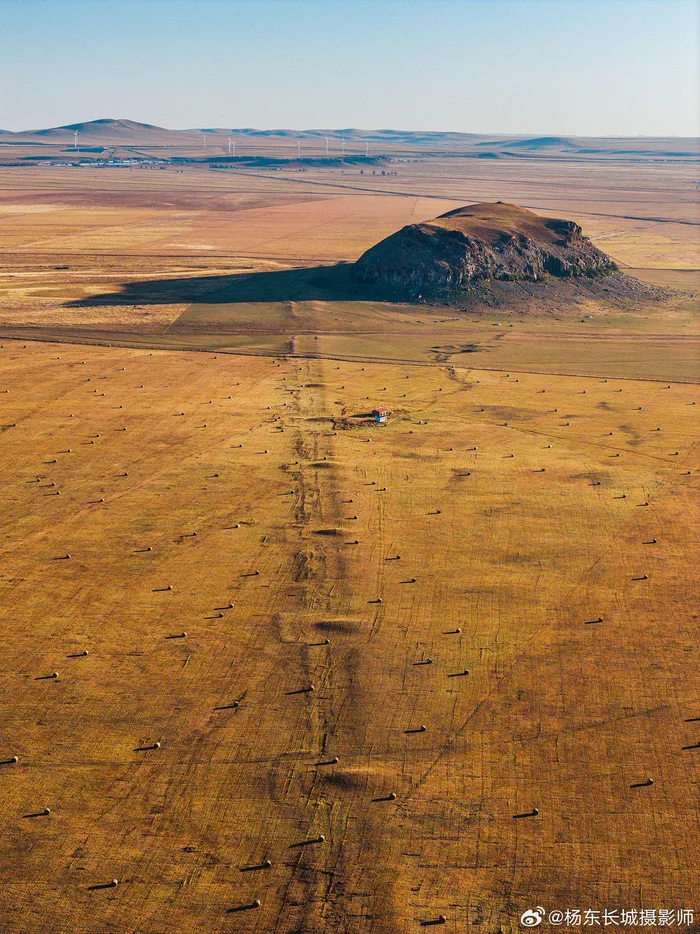
Jin boundary trench line crossing open grassland
Jin frontier defenses included boundary trenches and earthworks across open landscapes.

What counted as innovation?

The innovation was strategic integration. Ditches, banks, forts, signal points, patrol routes, and natural terrain worked together. A ditch alone cannot defend a frontier, but a ditch within a managed border zone can slow movement and make military response more effective. This is also why modern readers should avoid comparing every dynasty by wall height alone.

How this page should support the site

This article should link Jin history with broader construction and defense pages. It explains why the Great Wall could be a trench system in one region and a brick mountain wall in another. For travelers, it adds nuance: the wall’s form changes because terrain, threat, dynasty, and budget change.

Sources and next reads

For context, compare China Daily government service page on the Jin Boundary Trench, Britannica’s Jin dynasty overview, and Britannica’s Han-through-Yuan Great Wall overview. Then read Who Built the Great Wall?, Why Was the Great Wall Built?, and How Long Is the Great Wall?.

Why trenches count as technology

Technology does not always mean machinery. In frontier defense, technology can mean a practical system: the shape of a ditch, the bank beside it, the placement of forts, the use of terrain, and the way patrol routes connect to warning lines. The Jin Boundary Trench is useful because it shows military design working through landscape modification rather than iconic tower construction.

What a trench could do

A trench could slow horsemen, interrupt easy movement, expose crossing points, and force traffic toward controlled gaps. It could also mark an administrative frontier. When defenders knew where movement was most likely, they could place patrols, forts, and signals more efficiently. The defensive value came from the whole system, not from a ditch alone.

How to write about it accurately

Avoid calling the Jin trench a “wall” in the same visual sense as Mutianyu. It is better to call it a Great Wall-related boundary trench or frontier earthwork. That wording helps readers understand why it belongs in Great Wall history while still respecting the difference in form, material, and visitor experience.

How this page should connect internally

This article should be used as a specialist support page for broader construction and defense content. It gives detail to readers who ask how a trench could belong to Great Wall history. It should link back to the main Jin Dynasty page and forward to articles about construction methods and military defense. That keeps it from becoming an isolated narrow fact page.

Bottom line

The Jin Dynasty’s boundary trench was innovative because it used terrain modification as part of a managed frontier system. It was not a scenic wall for modern visitors, but it was a real defensive technology in its historical context.

Limits of the trench system

A boundary trench was useful, but it was not absolute protection. Weather, erosion, maintenance, manpower, and political conditions all affected its value. A trench could slow movement and organize patrol response, but it could not replace soldiers, intelligence, supply, and command. This is important because “innovation” should not be exaggerated into a claim that the system was unbeatable.

Comparison with Ming wall technology

Ming defenses near Beijing often used masonry walls, towers, crenellations, and major passes. Jin trench systems used a different logic. They modified open frontier terrain rather than creating the iconic high wall that modern visitors expect. Both approaches belong to Great Wall history, but they answer different military problems. The comparison helps readers understand why Great Wall forms vary so much across China.

For travel writing, this page should mainly clarify terminology: a boundary trench is not a scenic wall, but it can still function as Great Wall-related defense.

Jin Great Wall remains stretching over low hills

The Great Wall of the Jin Dynasty

The Jin Dynasty Great Wall is not the same as the famous Ming brick wall near Beijing. The Jurchen Jin dynasty ruled northern China from 1115 to 1234, and its frontier defenses included walls, trenches, forts, and earthworks. This makes Jin history especially useful for understanding that “Great Wall” can mean more than a high stone wall with towers.

Quick planning snapshot

  • Best for: readers comparing lesser-known Great Wall periods.
  • Main point: Jin defenses often emphasized trenches and frontier lines, not only masonry walls.
  • Travel context: this is mainly history background unless your route includes northeastern or Inner Mongolia frontier themes.

Who were the Jin?

The Jin dynasty was founded by Jurchen rulers and controlled a large northern empire. Its strategic problems were different from those of Qin, Han, or Ming. It had to manage frontiers, rival powers, military routes, and border zones across northern and northeastern landscapes. Britannica’s Jin overview gives the political background, while Great Wall sources describe Jin-era boundary trench systems as part of the wider Great Wall story.

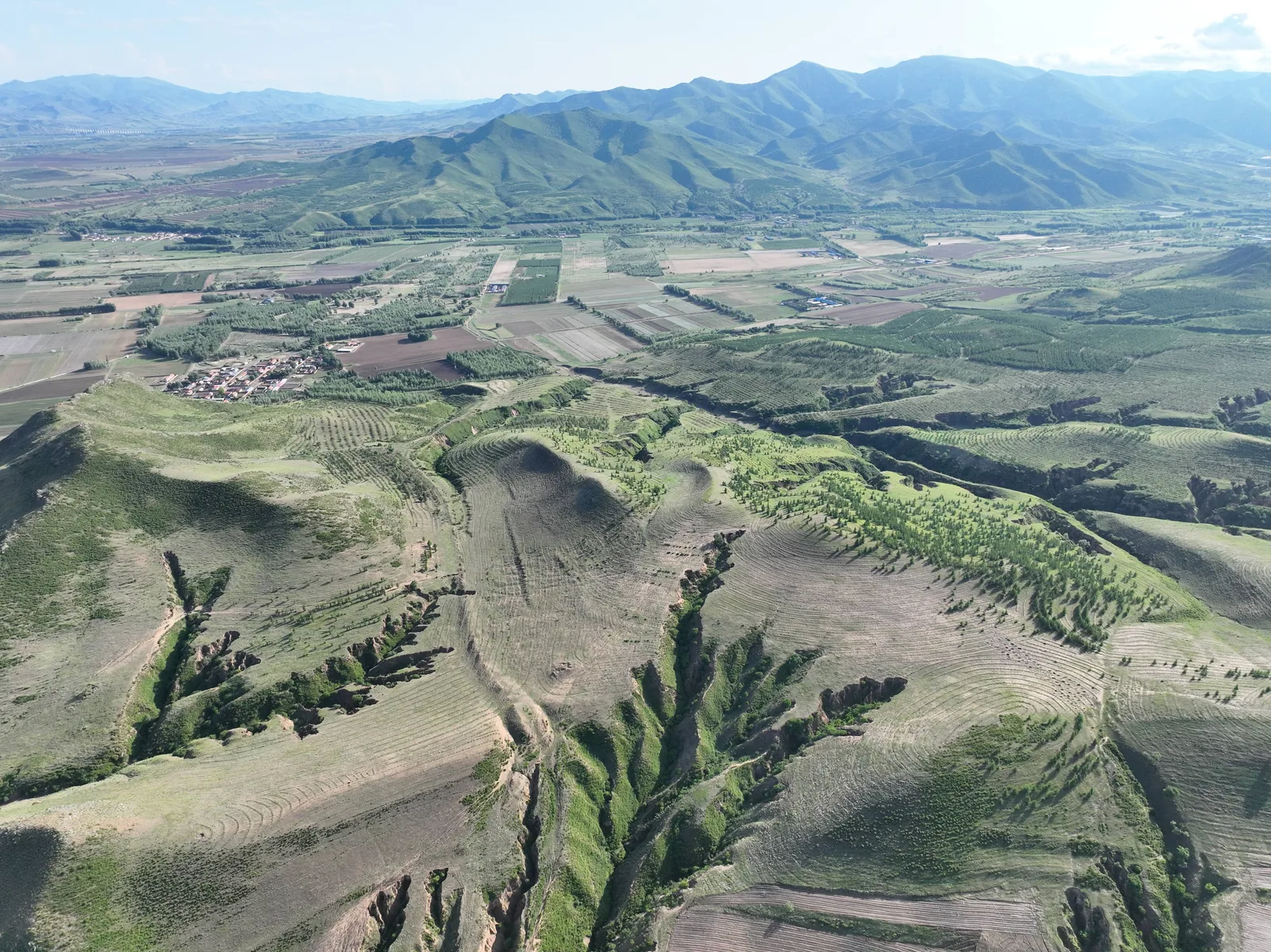
Jin Dynasty Great Wall landscape with northern frontier terrain
Jin frontier defenses belonged to a northern and northeastern strategic world.

The Jin Boundary Trench

One of the most important Jin-related features is the Jin Boundary Trench. The China Daily government service page on the Jin Boundary Trench describes it as part of the Great Wall of the Jurchen Jin Dynasty, with much of it in Inner Mongolia to the west of Heilongjiang. This is important because it shows a defensive approach based on ditch-and-earthwork systems. A trench, parapet, fort, and patrol line can be part of the Great Wall story even if it does not look like Mutianyu or Badaling.

Old Great Wall watchtower on a green ridge
Jin Great Wall remains are often lower and rougher than restored Ming sections near Beijing.
Jin defenses are often discussed through trenches, earthworks, and frontier lines.

How Jin differs from Ming

Ming sections near Beijing are easier for visitors to recognize because they often use stone and brick, with visible towers and restored walking surfaces. Jin defenses were often more landscape-based. That means the Jin page should not compete with a Mutianyu or Badaling guide. Its job is to explain another form of frontier defense and to show why the Great Wall should not be reduced to one visual style.

Rugged northern Great Wall terrain useful for comparing Jin and later wall landscapes
Different dynasties used different defensive forms depending on terrain and strategy.

How this helps a traveler

If you are planning a normal Beijing trip, you will probably not visit Jin wall remains. But understanding Jin helps you read the Great Wall more accurately. The wall was sometimes a brick ridge, sometimes an earthwork, sometimes a trench-and-fort system, and often a combination of terrain and military organization.

Sources and next reads

For context, compare Britannica’s Jin dynasty overview, China Daily government service page on the Jin Boundary Trench, and Britannica’s Han-through-Yuan Great Wall overview. Then read The Ming Dynasty Great Wall, Why Was the Great Wall Built?, and Which Sections Are Recommended?.

Why the Jin wall is often misunderstood

Many readers expect every Great Wall article to describe towers and stone steps. The Jin case is different. Its defenses were often more about trenches, banks, earthworks, forts, and frontier management. That does not make them less important. It simply means they belong to a different type of military landscape. A trench can be just as strategic as a wall if it slows movement and works with patrols and posts.

Jin and the broader Great Wall timeline

The Jin Dynasty sits between earlier frontier systems and the later Ming wall most travelers recognize. It helps explain why the Great Wall story did not stop after Han or wait for Ming. Northern regimes kept adapting defensive forms to new threats. Jin defenses also remind us that the Great Wall was not only a Han Chinese imperial project; different regimes in northern China used wall and trench systems for their own frontier needs.

How to connect this to real travel

A Beijing traveler does not need to hunt for Jin wall remains on a first visit. But if you are building a deeper Great Wall route or writing history content, the Jin page should link to construction, defense, and timeline pages. It gives readers a way to understand non-Ming wall forms without confusing them with popular visitor sections.

How this page should connect internally

This Jin page should support the construction and defense pages. It is especially useful when explaining that the Great Wall could be a trench, bank, fort line, or frontier system, not only a masonry wall. It should also link forward to the Ming page, because readers often need help separating Jin earthwork-style defenses from the restored Ming sections that dominate travel photos.

Bottom line

The Jin Dynasty Great Wall story is about northern frontier control. Its boundary trench systems show a different form of defense from the tourist wall near Beijing. That difference is the value of the topic: it makes the site’s history coverage broader and more accurate.

Comparison with other dynasties

Compared with Qin, Jin did not represent the first imperial consolidation of earlier walls. Compared with Han, it was not mainly a Silk Road expansion story. Compared with Ming, it did not create the most famous restored Beijing sections. Jin is best understood through northern frontier adaptation: trenches, earthworks, forts, and boundary control suited to its own political geography.

For travel writing, this page should mainly clarify form: Jin defenses may look unlike the restored tourist wall, but they still belong to frontier-defense history.

This also helps readers separate Jin history from the later Ming scenery they are more likely to visit.

More Great Wall Facts and Myths

For a wider fact-check path, use the Great Wall Facts and Myths hub. It links the space myth, real length, builders, dynasties, origins, and why the wall was built.

Jin period Great Wall earthworks in open countryside

The Great Wall in the Northern and Southern Dynasties

The Northern and Southern Dynasties period is easy to skip in a simple Great Wall timeline, but it matters because northern states continued to build and repair frontier defenses between the Han and the later Sui-Tang world. This was not the famous tourist wall near Beijing. It was a period of divided rule, mobile frontiers, and repeated attempts to strengthen northern defense lines.

Quick planning snapshot

  • Best for: readers building a more complete Great Wall timeline.
  • Main point: Northern Wei, Eastern Wei, Northern Qi, and Northern Zhou activity kept wall-building alive after Han.
  • Travel context: this is history background, not a standard Beijing day-trip route.

Why this period matters

The Great Wall story is not only Qin, Han, and Ming. Between those better-known eras, northern regimes also used walls, passes, and frontier lines. Britannica’s Han-through-Yuan overview notes major wall-building activity under Northern Wei and Northern Qi, including routes in what is now Hebei, Inner Mongolia, and Shanxi. This makes the period important because it links early imperial wall systems with the later Ming landscape many visitors know.

Northern and Southern Dynasties Great Wall landscape with frontier terrain
Northern dynasties used walls and terrain to manage changing frontiers.

Northern Qi and large-scale wall building

Northern Qi is especially important. It faced threats from rival northern powers and invested in frontier defense. Some later Ming routes also followed or reused older northern wall lines. This does not mean a visitor at Mutianyu is walking on a Northern Qi wall. It means the strategic geography of northern defense was reused across dynasties because mountain corridors, passes, and border zones kept mattering.

Xiangshuihu Great Wall scenery showing northern mountain defensive terrain
Mountain terrain remained central to northern frontier defense across periods.

How it differs from Ming sections

Many Northern and Southern Dynasties wall remains are less visible, less restored, or less visitor-focused than Ming sections. Materials and forms varied by place: earth, stone, ridges, trenches, and repaired earlier lines could all play a role. The period is better understood as a continuation of frontier defense practice than as a single tourist attraction.

Jin Great Wall trench line crossing open grassland
Open grassland trench lines help explain how northern frontier defenses could differ from later brick Great Wall sections.

How this helps a traveler

For a first Great Wall visit, you should still compare Mutianyu, Badaling, and other practical sections. This page helps with context. It explains why the Great Wall kept returning as a defensive idea across divided periods and why later dynasties sometimes reused earlier routes.

Sources and next reads

For context, compare Britannica’s Han-through-Yuan Great Wall overview, Britannica’s Great Wall history, and UNESCO World Heritage Centre. Then read The Han Dynasty Great Wall, The Ming Dynasty Great Wall, and When Was the Great Wall Built?.

What was happening politically?

The Northern and Southern Dynasties period was a time of division rather than one unified empire. Northern regimes faced steppe powers, rival states, and shifting frontier lines. That made defense works useful even when the political map changed. Walls were not always permanent boundaries; sometimes they were emergency defenses, repaired older lines, or short-term strategic works. This is why the period is harder to summarize than Qin or Ming, but still important in the Great Wall timeline.

Why many visitors never hear about it

Most international visitors learn the simplified sequence: Qin started it, Ming rebuilt it, and tourists now visit Beijing sections. That summary leaves out many middle periods. Northern dynasties are less famous because their wall remains are not always presented as major scenic areas, and their history is more complicated. For content quality, however, this page should fill that gap and show how frontier defense continued between the better-known periods.

How to avoid overclaiming

Do not say every northern wall line was part of the same continuous Great Wall. A safer explanation is that northern dynasties built, repaired, and reused defensive lines in areas where frontier pressure made walls useful. Some later routes overlapped older strategic corridors, but each dynasty had its own political reasons and material conditions.

How this page should connect internally

This article should act as a bridge between the Han page, the Jin page, and the Ming page. It should not try to become a full Northern and Southern Dynasties history lesson. Its job is to explain why Great Wall construction continued during divided rule and why strategic corridors in northern China kept attracting wall-building. For readers planning a visit, it also explains why the wall they see near Beijing is usually not this period, even when the route geography may have older defensive logic behind it.

Bottom line

The Northern and Southern Dynasties period shows continuity. Different regimes used walls and frontier lines for their own military problems. Some remains are difficult to visit, but the period is important because it proves the Great Wall story did not jump straight from Han to Ming.

Comparison with better-known periods

Compared with Qin, this period is less about imperial unification. Compared with Han, it is less about westward expansion. Compared with Ming, it is less about the restored brick wall foreign travelers see near Beijing. Its value is continuity: wall-building remained a practical tool during political division. That is why it belongs in a complete Great Wall history cluster, even if it is not the page most travelers start with.

For travel writing, this page should mainly serve as timeline support: it explains why wall-building continued during divided rule before readers move to better-known Ming visitor sections.

This keeps the timeline complete without overstating what a visitor can easily see on a standard Beijing trip.

How to Get from Beijing to the Great Wall of China

Getting from Beijing to the Great Wall is no longer one simple question on this site. The better question is: which Great Wall section fits your trip, and which Beijing starting point are you using? A visitor staying near Tiananmen Square has different route logic from someone arriving at Beijing South Railway Station, landing at Daxing Airport, or trying to reach Badaling by rail.

Choose the Right Beijing-to-Great-Wall Route Page

If Google sent you here from a broad route search, start by matching your Beijing starting point and preferred Great Wall section. This prevents the common mistake of reading a station-specific guide when a section-selection guide is more useful.

Your search intent Best next page Why
“Beijing to Great Wall” Great Wall sections near Beijing Choose Mutianyu, Badaling, Jinshanling, Simatai, or another section first.
“Beijing to Badaling train” Badaling from Beijing guide Compares train, Bus 877, car, and tours in one place.
“Qinghe to Badaling” Qinghe to Badaling route Best for north-Beijing hotels and the high-speed rail corridor.
“Beijing airport to Great Wall” Airport layover to Mutianyu or Capital Airport to Badaling Airport routes need luggage and flight-buffer planning.
“Mutianyu from Beijing” Mutianyu transport guide Best default for many first-time foreign visitors.

This page is the transport hub for the Beijing-to-Great-Wall route cluster. Use it as the starting point, then open the detailed route guide that matches your hotel, station, airport, or sightseeing area. For most first-time foreign visitors, Mutianyu remains the best default section. Badaling is better when rail access, official infrastructure, or the most famous name matters more. Jinshanling and Simatai are better treated as longer hiking, photography, or overnight plans.

Information check: this hub was updated on June 18, 2026. Use the decision logic here, but confirm current tickets, ride operations, payment support, bus routes, railway services, scenic-area shuttles, and holiday controls before leaving.

Quick Answer: Which Route Should You Read?

Starting point Best section to consider first Read this guide
Tiananmen Square Mutianyu Tiananmen Square to Mutianyu
Qianmen Mutianyu Qianmen to Mutianyu
Wangfujing Mutianyu Wangfujing to Mutianyu
Guomao / Beijing CBD Mutianyu Guomao to Mutianyu
Sanlitun Mutianyu Sanlitun to Mutianyu
Dongzhimen Mutianyu Dongzhimen to Mutianyu
Beijing South / Fengtai / Chaoyang Railway Station Mutianyu Beijing South, Fengtai, or Chaoyang
Beijing North / Qinghe Railway Station Badaling Beijing North to Badaling or Qinghe to Badaling
Daxing Airport Mutianyu Daxing Airport to Mutianyu
Capital Airport Badaling or Mutianyu Capital Airport to Badaling or airport layover to Mutianyu
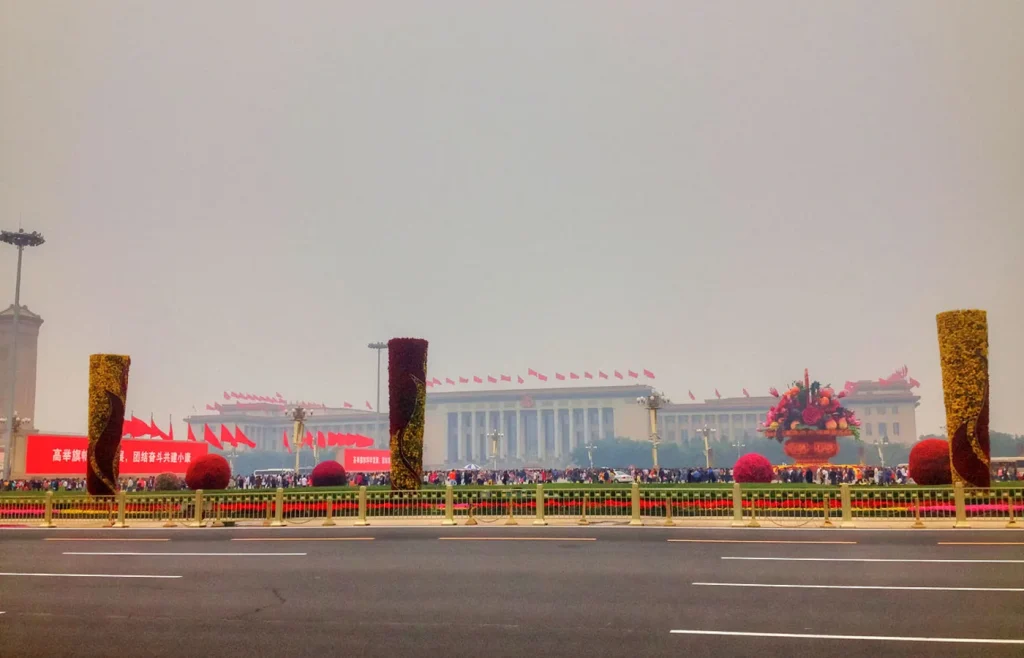
Tiananmen Square in central Beijing before a Great Wall day trip
Central Beijing is a common starting point, but the best Great Wall route depends on timing, luggage, and whether Mutianyu or Badaling fits the day better.

Step 1: Choose the Great Wall Section First

Do not choose a transport route before choosing the wall section. Mutianyu, Badaling, Jinshanling, Simatai, Juyongguan, and Huangyaguan all sit in different directions and suit different kinds of trips. If this is your first Great Wall visit and you want restored scenery with manageable logistics, start with Mutianyu. If you want the most famous section, stronger mass-tour infrastructure, and easier recognition in rail or ticketing systems, consider Badaling.

Jinshanling is usually better for hiking and photography. Simatai is more useful for an overnight or Gubei Water Town plan. Juyongguan can work as a closer pass-style visit, while Huangyaguan is better for a regional Tianjin-side or repeat-visitor route. If you are still unsure, read Great Wall sections near Beijing and Badaling vs Mutianyu before choosing a transfer.

Central Beijing Routes

Central Beijing routes are best handled as practical pickup decisions. Tiananmen Square, Qianmen, and Wangfujing are close on a map, but security checks, walking distances, one-way streets, and pickup restrictions can change the experience. If you have already spent the morning sightseeing, a direct car is usually the calmer option for Mutianyu.

  • Tiananmen Square to Mutianyu: best when you want to combine symbolic central Beijing sightseeing with one scenic wall visit.
  • Qianmen to Mutianyu: useful for visitors staying near Qianmen, Dashilan, or the south side of the Forbidden City area.
  • Wangfujing to Mutianyu: best for first-time visitors based around hotels, shopping streets, and central sightseeing.

CBD, Embassy Area, and East Beijing Routes

Guomao and Sanlitun are convenient hotel and business districts, but they are not naturally close to the wall. The route is usually less about one perfect public transfer and more about avoiding wasted time crossing Beijing before the real outbound trip begins.

  • Guomao to Mutianyu: best for Beijing CBD, China World Mall, and eastern Chaoyang hotels.
  • Sanlitun to Mutianyu: best for embassy-area visitors who want a practical day trip without first going back through the old city center.
  • Dongzhimen to Mutianyu: useful if you are specifically considering bus-based public transport toward Huairou and Mutianyu.
Mutianyu scenic area arrival sign for Beijing day trip planning
For Mutianyu routes, the last-mile arrival and scenic-area transfer matter as much as the starting point in Beijing.

Railway Station Routes

Railway station routes are different from hotel routes because luggage, arrival time, and onward tickets matter. If you arrive by high-speed rail and want to add the Great Wall on the same day, avoid fragile plans with too many transfers. Store luggage first or choose a direct car if the schedule is tight.

Airport and Layover Routes

Airport routes should be judged by total risk, not just map distance. Immigration, baggage, airport size, road traffic, weather, and return timing can all turn a tempting plan into a rushed one. If you have a same-day flight, keep the route conservative.

When Public Transport Makes Sense

Public transport makes the most sense when you have a full day, light bags, patience for transfers, and a route that is naturally supported by the transport network. Badaling can be easier to understand for rail-based planning. Mutianyu public transport can work, but it often requires moving through Dongzhimen or Huairou-side transfers, and the last mile can be the part that causes confusion.

The official Beijing Mutianyu page lists a public route involving Express Bus 916 from Dongzhimen to Huairoubeidajie, then a local bus connection toward Mutianyu. Treat that as a current-information checkpoint, not as permission to ignore same-day route checks. Public routes, local stop names, and transfer convenience can change during holidays, road works, and weather events.

When a Direct Car Is the Better Choice

A direct car is usually better when you start from a hotel, carry luggage, travel with children or older family members, have limited Chinese, or need a predictable return. It is also better after a morning in central Beijing, because the group may already be tired before the wall visit begins.

The direct-car decision is not only about comfort. It can protect the whole day from missed transfers, confusing pickup points, and late returns. For first-time foreign visitors who have only one Great Wall day, that predictability often matters more than saving the lowest possible fare.

Mutianyu Great Wall mountain view for Beijing visitors
Mutianyu remains the default recommendation for many first-time foreign visitors because scenery, restored walking, and logistics are well balanced.

Before You Leave Beijing

  • Save the Chinese name of your wall section, such as 慕田峪长城 for Mutianyu or 八达岭长城 for Badaling.
  • Check weather, especially wind, rain, snow, summer heat, and low visibility.
  • Check current ticket, shuttle, cable car, chairlift, toboggan, or rail status before relying on any single plan.
  • Keep passport or ID documents available for ticketing, hotel, or transport checks.
  • Carry water, sun protection, power backup, and shoes suitable for steps.
  • Read what to pack for a Great Wall trip and the rainy day Great Wall guide if the forecast is uncertain.

Official Information to Check

Use this hub for route logic, but check current official information before booking or leaving. Useful public references include the Beijing official Mutianyu Great Wall page, the Beijing official Badaling Great Wall ticketing page, and Beijing official payment-service guidance for foreign tourists. Avoid treating old schedules, screenshots, or third-party summaries as permanent rules.

Bottom Line

If you are planning from Beijing, choose the wall section first, then choose the route guide that matches your starting point. Mutianyu is the best default for many first-time foreign visitors; Badaling is strong when rail access, official infrastructure, or fame matters most; Jinshanling and Simatai need more time. This page is now the main entry point for the route cluster, so use it to move from a broad Beijing plan to the specific route article you actually need.

For longer-distance planning, see Shanghai to the Great Wall. For a Beijing or Tianjin alternative outside the usual first-visit choices, see how to reach Huangyaguan.

Badaling Great Wall cable car cabin above mountain ridges

Badaling vs Mutianyu: Crowds, Transport, Cable Car, and Best Choice

Badaling and Mutianyu are the two Great Wall sections most foreign visitors compare when planning a Beijing day trip. Both are restored, scenic, and practical, but they create very different travel days. Badaling is the most famous and infrastructure-heavy section. Mutianyu is usually the better default for English-speaking first-time visitors who want classic views with a calmer feel.

Fast Answer: Badaling or Mutianyu?

For most first-time foreign visitors, Mutianyu is the better default choice because it feels calmer, scenic, and easier to enjoy without heavy tour-group crowds. Badaling is better if you want the most famous Great Wall name, the most developed facilities, or the simplest rail-based public transport plan from Beijing.

QuestionChoose Mutianyu if…Choose Badaling if…
Which is less crowded?You want a calmer first visit and more relaxed photos.You can arrive very early or do not mind a busier landmark.
Which is easier by public transport?You are comfortable with bus/tourist shuttle, car, or private transfer.You prefer a train-friendly route from Beijing to Badaling.
Which is better for families?You want cable-car options, good scenery, and a less intense crowd feel.You want stronger infrastructure and a very famous checkpoint-style visit.
Which has better classic scenery?You want wooded ridges, restored walls, and postcard-style views.You want a famous, heavily restored symbol with large-scale visitor facilities.

If your decision depends mainly on transport, compare the Beijing to Great Wall transport hub. If you are still choosing beyond these two, start with Great Wall sections near Beijing.

Quick planning snapshot

  • Best for: Foreign visitors deciding between the two most common Beijing day-trip sections.
  • Use this guide for: Comparing crowds, transport, scenery, facilities, cable cars, walking difficulty, and first-visit fit.
  • Planning focus: Mutianyu usually suits independent international visitors best, while Badaling is easier by public transport but often busier.
  • Mutianyu vs Simatai Great Wall if you are considering a night Wall or Gubei Water Town plan.
  • Badaling vs Juyongguan Great Wall if you are comparing the famous restored section with a closer pass-style site.

Information check: this comparison was reviewed on May 13, 2026. Ticketing, payment support, transport routes, opening arrangements, and crowd-control rules can change during holidays, peak seasons, weather events, or maintenance. Check official channels before finalizing your plan.

Quick Answer: Badaling or Mutianyu?

Choose Mutianyu if you want the better default first Great Wall experience for many foreign visitors: mountain scenery, a calmer feel than Badaling, and cable-car or toboggan options. Choose Badaling if you want the most famous name, stronger official infrastructure, easier public-transport recognition, or accessibility support.

Traveler priorityBetter fitWhy
First-time foreign visitorMutianyuUsually more relaxed while still restored, scenic, and easy to understand.
Most famous Great Wall nameBadalingBadaling is the classic official and domestic-tour landmark.
Lower crowd pressureMutianyuNot empty, but often less intense than Badaling outside peak dates.
Public transport simplicityBadalingTrain and recognized public routes are easier for many visitors to identify.
Kids and fun descent optionsMutianyuCable car, chairlift, and toboggan options can make the visit more flexible.

If you choose Mutianyu, check Mutianyu opening hours and how to get to Mutianyu from Beijing. If you choose Badaling, start with Badaling from Beijing downtown.

Badaling Great Wall cable car cabin above mountain ridges
Badaling cable cars make access easier but do not remove the crowds factor.

Quick Answer

Choose Mutianyu if this is your first Great Wall visit, you want beautiful mountain views, and you prefer a less crowded atmosphere than the most famous domestic-tour section. Choose Badaling if you want the most iconic name, the strongest official infrastructure, easier public-transport recognition, or better-known accessibility facilities. If you are still unsure, Mutianyu is the safer recommendation for most foreign independent travelers.

Quick Comparison Snapshot

  • Best for most foreign first-timers: Mutianyu.
  • Most famous section: Badaling.
  • Most crowd-sensitive: Badaling, especially on Chinese holidays and weekends.
  • Best for smoother scenery and a relaxed feel: Mutianyu.
  • Best for official infrastructure and broad facilities: Badaling.
  • Best if traveling with kids: often Mutianyu, especially if the toboggan or cable-car options fit your group.

Badaling: Famous, Developed, and Busy

Badaling is the Great Wall section many people have heard of before arriving in China. It is highly developed, heavily promoted, and strongly associated with official visits, domestic tourism, and classic Great Wall imagery. The paths are restored, facilities are broad, and transport recognition is easier than for many other sections.

That convenience comes with a tradeoff. Badaling can feel crowded, especially during Chinese public holidays, weekends, school breaks, and high-demand travel periods. If your dream is a quiet wall winding through green mountains, Badaling may disappoint unless you time the visit carefully. It is not a bad choice; it is just not automatically the best choice for foreign independent travelers.

Badaling Great Wall overlooking mountain ridges
Badaling’s developed ridge experience is part of the first-visit comparison. Photo: CEphoto, Uwe Aranas via Wikimedia Commons (CC BY-SA 3.0)
Badaling is the most famous Beijing-area Great Wall section, but its popularity can make crowd timing more important than distance.

Mutianyu: Better Default for Many Foreign Visitors

Mutianyu is also restored and visitor-friendly, but the travel experience usually feels more balanced. It has mountain scenery, cable car and chairlift options, a toboggan descent option, and enough walking flexibility for families, couples, and first-time visitors. It is popular, but it often feels less intense than Badaling when you avoid peak times.

For an English-speaking inbound visitor, Mutianyu often gives the strongest mix of scenery and confidence. You still need to plan transport carefully, but the on-site experience is usually easier to shape around your group’s energy level. Start with the Mutianyu first-visit guide if you are leaning this way.

Transport from Beijing

Badaling can be easier to understand from a public-transport perspective because it is so famous and well-served. Mutianyu is still very doable, but many foreign visitors choose a private transfer, shuttle, or organized day trip to reduce transfer uncertainty. The right choice depends on budget, hotel location, travel confidence, and how much stress you want to remove from the day.

If transport is your main concern, compare the general Beijing to Great Wall transport guide, the dedicated Beijing to Mutianyu route guide, and the Badaling from Beijing guide. Do not judge only by distance; the return journey and crowd timing matter too.

Mutianyu Great Wall towers and surrounding mountains
Mutianyu’s mountain setting is part of the comparison with Badaling. Photo: xiquinhosilva via Wikimedia Commons (CC BY 2.0)
Mutianyu’s cable car, chairlift, and toboggan options make it easier to adapt the day for different ages and energy levels.

Crowds and Atmosphere

For many visitors, crowd level is the deciding factor. Badaling is more likely to feel crowded because it is the best-known section for domestic visitors, large tour groups, and official travel imagery. It can still be enjoyable if you go early, avoid holidays, and accept a lively atmosphere. But if you want fewer people in your photos, Badaling is usually the riskier choice.

Mutianyu can also be busy, especially on good-weather weekends and public holidays, but its atmosphere is often more comfortable for first-time foreign visitors. If your schedule includes the Labor Day holiday, National Day holiday, or another high-demand period, read seasonal guidance such as the May Great Wall planning guide and leave earlier than you think necessary.

Scenery and Walking Experience

Both sections offer classic Great Wall views, but the feeling is different. Badaling is broad, restored, and monumental. It gives a strong sense of scale and fame. Mutianyu feels more relaxed and scenic, with forested hills and flexible walking sections. If you want a polished, famous landmark, Badaling works. If you want a scenic mountain wall day, Mutianyu is usually better.

Neither section should be treated as flat or effortless. Even restored wall sections include steps, uneven surfaces, and exposed ridge walking. If accessibility or knee comfort matters, compare facilities carefully and read the Great Wall accessibility guide before choosing.

Which Should Families Choose?

Mutianyu is usually the stronger family choice because the day can be adjusted more easily. Families can use uphill/downhill rides, keep the walking route shorter, and still get strong views. The toboggan can be memorable for older children when conditions are suitable, but it is not a must-do and should be skipped if anyone is uncomfortable.

Badaling can work for families that prioritize facilities and accessibility, but the crowd level may be tiring. For families with young children or older relatives, the quieter day often matters more than the famous name.

When Badaling Is the Better Choice

Choose Badaling if the name itself matters to you, if your transport plan strongly favors it, if accessibility infrastructure is your top priority, or if you are comfortable with a busier, more developed scenic-area experience. It is also a reasonable choice for travelers who want the most recognized Great Wall section and do not mind crowds.

When Mutianyu Is the Better Choice

Choose Mutianyu if you want the best all-around first visit, especially as a foreign independent traveler. It is scenic, practical, and easier to enjoy at a relaxed pace. It is also a better fit if you care about photos, family comfort, and avoiding the most intense domestic-tour atmosphere.

Practical Verdict

For most English-speaking visitors planning one Great Wall day from Beijing, Mutianyu is the better default. Badaling is the most famous and easiest to recognize, but Mutianyu usually delivers a more balanced travel experience. Choose Badaling for fame and infrastructure; choose Mutianyu for scenery, comfort, and a more relaxed first Great Wall day.

Sources Checked

Related Great Wall section comparison

If you are deciding between a polished restored-wall visit and a quieter lakeside route, see Mutianyu Great Wall or Huanghuacheng Lakeside Great Wall.

n

Related family planning guide

For a family-specific comparison of the two most common first-visit sections, see Mutianyu Great Wall or Badaling Great Wall with Kids.

Related Great Wall comparison

For a classic daytime section versus a Simatai night-trip comparison, see Badaling Great Wall or Simatai Great Wall.

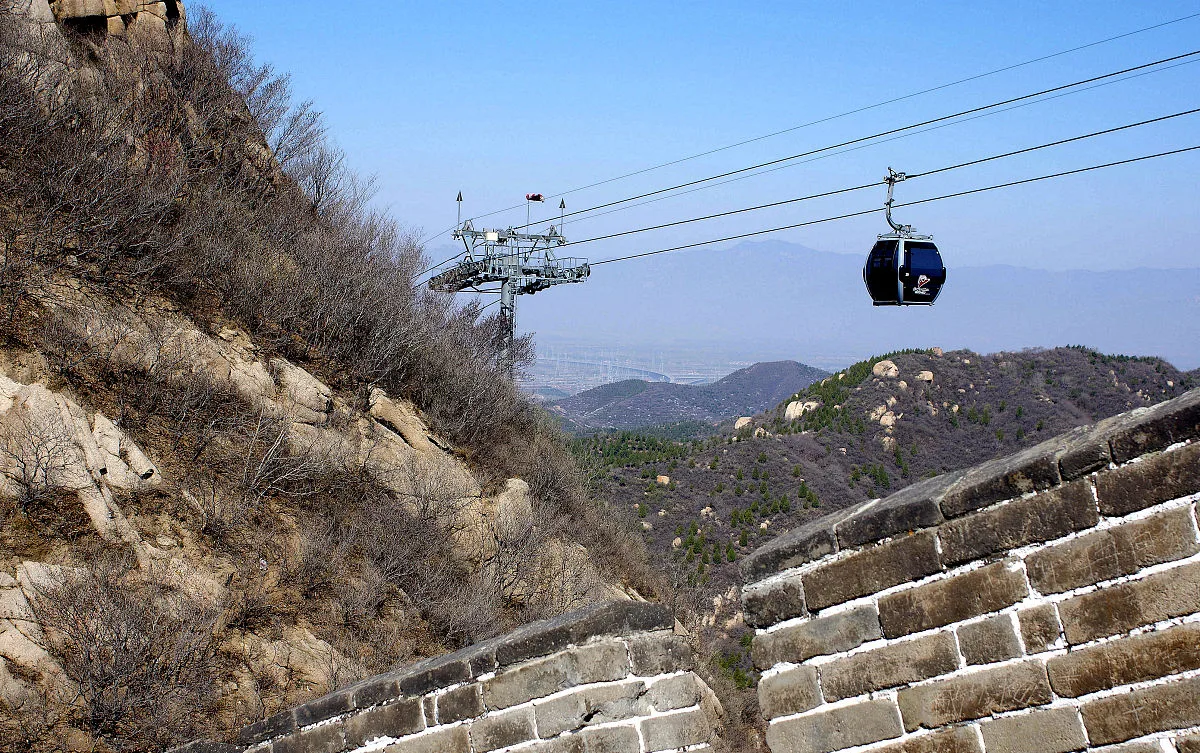
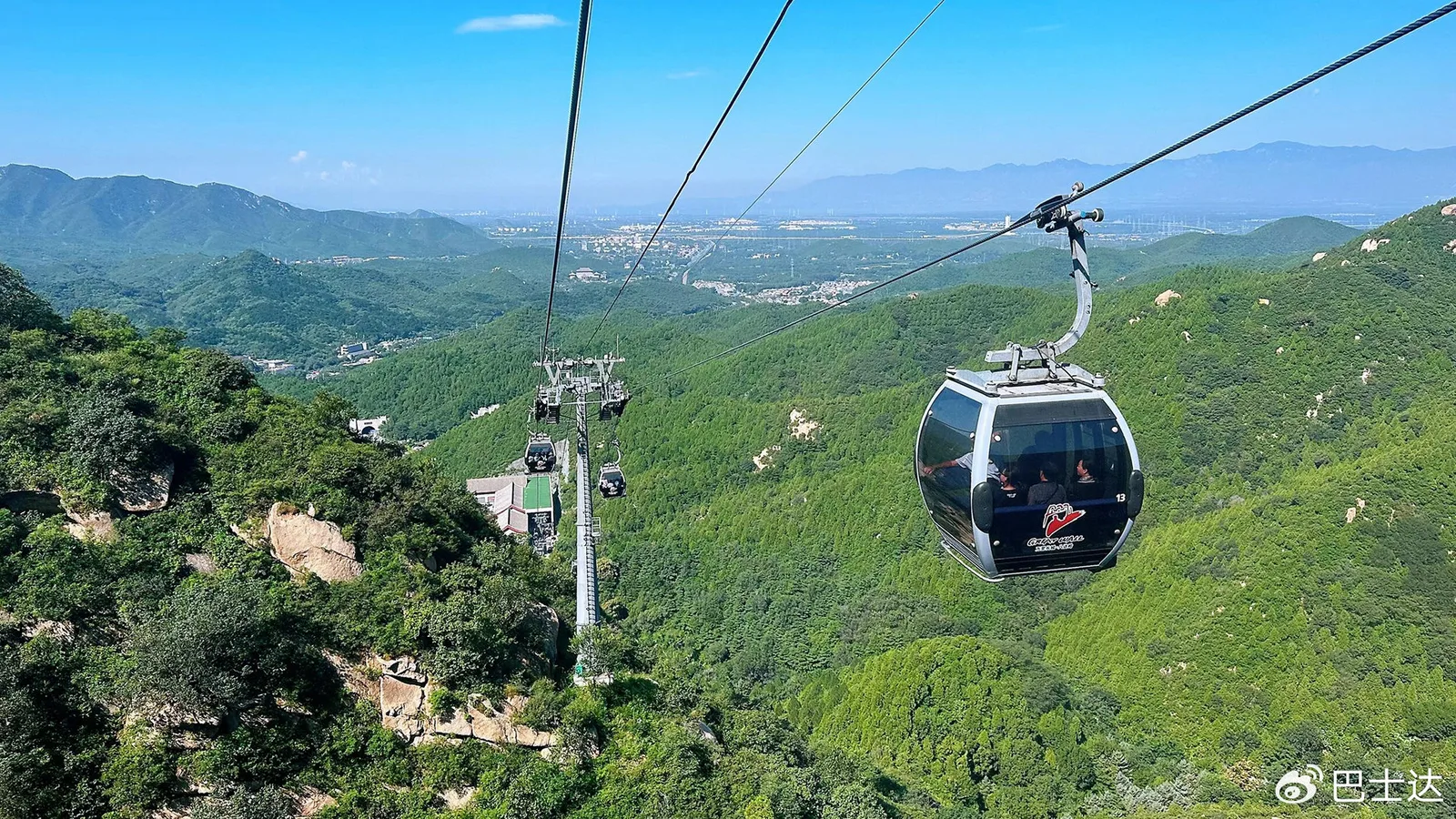
Badaling cable cars running beside the Great Wall

Cable Car and Pulley Rides at Badaling Great Wall

Badaling Great Wall has more visitor facilities than most Great Wall sections near Beijing. That makes it useful for families, seniors, and travelers who want a less physically demanding route. The cable car and pulley-style ride can help you avoid part of the uphill climb, but they are not interchangeable. Choose based on comfort, mobility, crowd level, and where you want to walk on the wall.

Information check: this guide was reviewed on May 17, 2026. Ticket windows, online booking rules, route access, prices, and operation status can change with weather, maintenance, holidays, and crowd-control rules. Check the official Badaling channel before buying or queuing.

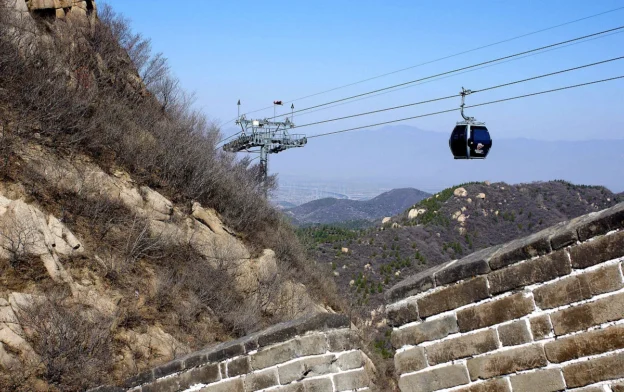
Badaling cable cars running beside the Great Wall
Some Badaling transport routes run close to the wall itself.

Quick Planning Snapshot

  • Best comfort choice: cable car, especially for seniors, children, and visitors saving energy.
  • More playful option: pulley-style ride, if operating and suitable for your group.
  • Avoid pulley: if you dislike bumps, have heart/back concerns, or travel with someone who needs a steadier ride.
  • Still expect walking: rides reduce the climb but do not remove steps, slopes, queues, or weather exposure.
  • Compare first: if you mainly want an easier foreign-visitor experience, also read Mutianyu Great Wall.

Cable Car: The Safer Default for Most Visitors

The cable car is usually the better default if your priority is stability. It is the more comfortable choice for families, older travelers, and visitors who want to save their legs for the wall itself. It also helps if you arrive tired after transport from Beijing or if the weather is hot, cold, or windy.

Do not think of the cable car as a complete replacement for walking. Badaling still has steps, slopes, exposed ridges, and crowded chokepoints near popular watchtowers. The cable car simply lets you start higher and use your energy more selectively.

Badaling Great Wall cable car above a green valley
Badaling transport options run through steep terrain, so visitors should compare route, queue, and walking needs before choosing.
Badaling is highly developed and popular, so comfort facilities matter most on busy days.

Pulley Ride: Fun, But Not for Everyone

The pulley-style ride is more playful and may appeal to travelers who want a novelty experience. It can be memorable, but it is not the right choice for every visitor. If someone in your group is nervous, has mobility limitations, has heart or back concerns, or simply wants a calmer route, choose the cable car instead.

Before queuing, confirm whether the ride is operating, whether the route matches the part of the wall you want to visit, and whether your return plan uses the same station. Facilities and rules can change by season and maintenance schedule.

Cable Car vs. Pulley: Which Should You Choose?

ChoiceBetter ForThink Twice If
Cable carComfort, families, seniors, energy savingYou want the most active walk from the bottom
Pulley rideVisitors who want a more playful experienceYou need a steady ride or have health concerns
Walk upActive travelers with time and good kneesHeat, ice, heavy crowds, or limited mobility are concerns

How to Fit the Ride into Your Day

Start by choosing your transport route from Beijing. The Badaling transport guide explains the train, Bus 877, shuttle, and private-car options. Once you know how you will arrive, check which entrance and ride station make sense. On a busy day, the best plan is often to arrive early, use the facility that fits your group, then walk only the most rewarding section instead of trying to cover everything.

Colorful Badaling cable cars above green forest
Badaling cable routes cross green valleys in the warmer travel season.
Plan your transport route and ride station together before leaving central Beijing.

Accessibility and Senior Traveler Notes

Badaling is more developed than many Great Wall sections, but “developed” does not mean fully easy. There can be steps, slopes, queues, long walking distances between facilities, and crowd pressure at popular viewpoints. For senior travelers or visitors with limited mobility, use the Great Wall accessibility guide before deciding whether Badaling, Mutianyu, or another section is the better fit.

Before-You-Go Checklist

  • Check official operation status on the day, especially in wind, rain, snow, or holiday periods.
  • Do not rely on old online prices; use current official ticketing information.
  • Choose cable car over pulley for seniors, young children, nervous riders, or anyone with health concerns.
  • Keep your bag light and wear shoes with grip even if you use a ride.
  • If weather turns wet, review the rainy-day Great Wall guide before continuing.

Sources Checked

Choosing between Badaling cable car and pulley options

Badaling has developed visitor facilities, but the best option depends on mobility, crowd level, weather, and whether you want to save energy for walking on the wall. Cable transport can reduce climbing time, but it does not remove all stairs or crowd pressure.

Who should use assisted transport?

Families, older visitors, and travelers with limited time may benefit from cable-style options. Active travelers may prefer walking more of the route if conditions are comfortable. During peak periods, queue time can change the calculation, so do not assume assisted transport is always faster.

Before-you-go checks

Check current operation, weather impact, ticket rules, and route direction before committing. Wind, maintenance, or crowd control can affect facilities. If accessibility is a major concern, also read the site’s accessibility guide before choosing Badaling over Mutianyu.

For current transport, ticket, opening, and seasonal rules, check official scenic-area channels, local government notices, or transport operators before visiting. Commercial tour-company pages are not used as public sources.