Author Archives: fei li

About fei li

I have a deep passion for the Great Wall of China and have explored many of its sections, from the well-known to the hidden wild parts. Over the years, I’ve studied its history, architecture, and the legends that surround it. Through my writing, I hope to share this knowledge and help travelers see the Great Wall not just as a landmark, but as a symbol of China’s culture and strength.

The Great Wall in the Northern and Southern Dynasties

The Northern and Southern Dynasties (420–589) was one of the most turbulent and fragmented eras in Chinese history. While political power frequently shifted between rival states, this period also witnessed some of the most ambitious Great Wall building since the Qin and Han dynasties. Unlike the southern regimes, the northern states—Northern Wei, Eastern Wei, Northern Qi and Northern Zhou—built extensive defensive walls to protect their borders from powerful nomadic groups such as the Rouran, Tujue (Turks) and Khitan.

The Great Wall in the Northern and Southern Dynasties

For modern travelers, this lesser-known chapter of the Great Wall offers a deeper look into China’s early medieval history and the strategic efforts that shaped the northern frontier.

Historical Background: An Era of Division and Conflict

After the Han Dynasty collapsed under waves of internal rebellions, China fragmented into the Three Kingdoms. Centuries of warfare followed, leading to the rise of the Western and Eastern Jin dynasties. By the early 5th century, China was divided between northern kingdoms ruled largely by non-Han ethnic groups and southern dynasties ruled by Han elites.

This long period of division, known as the Northern and Southern Dynasties, lasted 169 years. Constant military pressure from nomadic states forced the northern rulers to construct, rebuild and extend Great Wall fortifications on a scale rivaling earlier imperial eras.

The Great Wall of the Northern Wei Dynasty

Founded by the Tuoba clan of the Xianbei people, the Northern Wei established its capital in present-day Datong in 389. When Emperor Mingyuan ascended the throne in 409, the powerful Rouran confederation posed a serious threat along the northern border.

To secure the frontier, the Northern Wei built an impressive defensive line stretching nearly 1,000 kilometers from today’s Chicheng County in Hebei across northern Shanxi to Wuyuan in Inner Mongolia. Emperor Taiwu later expanded the defense system by establishing six key military towns and constructing an additional 500-kilometer wall to protect the Datong region and the Yellow River basin.

The Great Wall in the Northern and Southern Dynasties

The Short Wall of the Eastern Wei Dynasty

Although Eastern Wei ruled for only a brief period, it continued earlier defense efforts. In 543, a 75-kilometer wall was built between modern-day Jinle and Chunyang counties in Shanxi. This short but strategic section strengthened defenses against rival northern states.

The Ambitious Walls of the Northern Qi Dynasty

The Northern Qi Dynasty (550–577) undertook one of the most extensive Great Wall construction campaigns in Chinese history. Over three decades, they built and rebuilt several major fortification lines to guard against both northern nomadic forces and their western rival, the Northern Zhou.

Key constructions include:

552: A 200-kilometer wall running across northwest Shanxi between Lishi and Shouxian.

555: Reconstruction of a 450-kilometer Northern Wei wall from Nankou (near Beijing) to Datong.

556: A monumental 1,500-kilometer eastern extension reaching all the way to Shanhaiguan Pass and the Bohai Sea—the longest wall built since the Qin and Han dynasties.

557: A 200-kilometer inner defense line running through famous mountain passes such as Yanmenguan and Pingxingguan.

563: A 100-kilometer wall along the Taihang Mountains with 12 military posts.

565: Repairs and extensions of earlier walls, reinforcing the inner defensive systems after attacks by the Tujue.

These achievements made Northern Qi one of the most active wall-building regimes in China’s early medieval history.

The Great Wall of the Northern Zhou Dynasty

When Northern Zhou replaced Western Wei in 557, tensions with Northern Qi quickly intensified. By 579, Emperor Jing ordered a complete restoration of the Great Wall sections built by Northern Qi, strengthening defenses along the northern frontier as the two states struggled for dominance.

Visiting the Northern and Southern Dynasties Great Wall Today

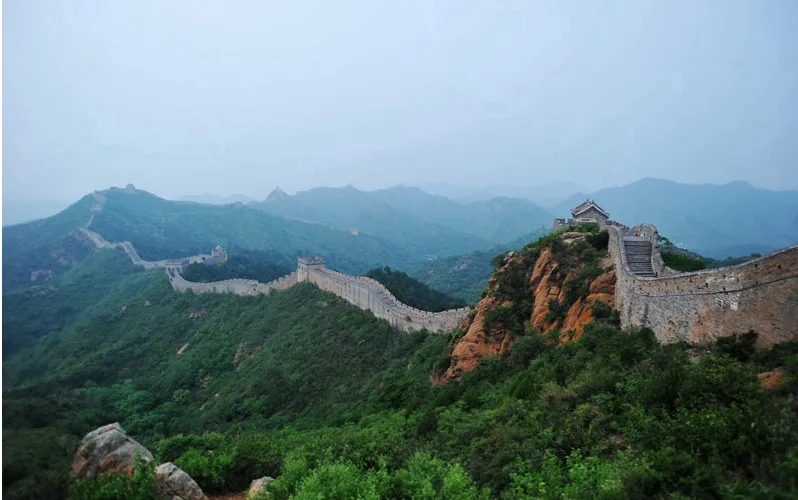
Much of the Great Wall from this era survives as earthen ramparts, beacon towers and scattered ruins across Shanxi, Hebei and Inner Mongolia. While less restored than the Ming-era sections near Beijing, these ancient remains offer a rare opportunity to explore the more remote, authentic and historically rich landscapes of China’s frontier.

Travelers seeking untouched history and dramatic natural scenery will find this period’s Great Wall an unforgettable window into China’s past—silent witnesses of an age marked by upheaval, resilience and remarkable engineering.

How to Get from Beijing to the Great Wall of China

As one of the world’s most iconic landmarks, a UNESCO World Heritage Site, and a proud member of the “Seven Wonders of the World,” the Great Wall of China stands as a testament to ancient Chinese ingenuity and perseverance. Stretching over 21,000 kilometers (13,000 miles) across northern China, it draws millions of visitors annually—many of whom base their trip in Beijing. The good news? Several of the most spectacular sections are easily accessible as day trips from downtown Beijing. This guide breaks down everything you need to know: choosing the right section for your travel style, and the best ways to get there from Beijing.

How to Get from Beijing to the Great Wall of China

First: Choose the Right Great Wall Section for You

The Great Wall is not a single, continuous structure—instead, it’s a network of sections built and restored across different dynasties. Near Beijing, several sections are open to tourists, each with its own unique character. To help you pick, here’s a comparison of the most popular options, along with who they’re best suited for:

SectionDistance from Beijing DowntownKey FeaturesBest For
Badaling~70 km (43 miles)Most famous section; fully restored; wheelchair accessible; cable car availableFirst-time visitors, families with young kids, travelers seeking convenience
Mutianyu~75 km (47 miles)Lush forest surroundings; fewer crowds than Badaling; cable car + downhill slide optionFamilies, photographers, those wanting a balance of comfort and scenery
Jinshanling~130 km (81 miles)Partially restored; dramatic mountain views; ideal for long hikes; quiet atmosphereNature lovers, serious hikers, travelers avoiding crowds
Simatai~120 km (75 miles)Night tours available (lit up with lanterns); mix of restored and wild sections; scenicCouples, adventurers, photographers chasing unique views
Jiankou~100 km (62 miles)“Wild” (unrestored) section; rugged terrain; steep climbs; authentic ancient feelExperienced hikers only (no beginners or families)

For most first-time visitors to China, Mutianyu and Badaling are the top picks—they’re the most accessible, well-equipped, and offer stunning views without the extreme challenge of wild sections like Jiankou.

3 Main Ways to Get to the Great Wall from Beijing

Your choice of transport will depend on your budget, group size, and how much flexibility you want. Below are the three most common options, ranked by convenience (with pros and cons for each).

A. Group or Private Tour (Highly Recommended for First-Timers)

Booking a guided tour is the easiest and most stress-free way to visit the Great Wall, especially if you’re new to Beijing or don’t speak Chinese. Tour operators handle everything: round-trip transportation, entrance tickets, optional cable car rides, and even meals. Many also include hotel pickup and drop-off, saving you the hassle of navigating public transport.

Why we recommend it:

  • No language barriers: All instructions, signs, and communication are in English (or your preferred language).
  • Time-efficient: Drivers know the best routes to avoid traffic jams, and guides help you skip long ticket lines.
  • Informative: English-speaking guides share fascinating stories about the Great Wall’s history, architecture, and significance—turning a sightseeing trip into a cultural experience.
  • Flexible options: Private tours (for couples or small groups) let you set your own pace, while group tours are more budget-friendly.

👉 Tip: Book with reputable agencies like JiangMi Travel for well-reviewed, reliable service. Most tours range from £50–£150 per person, depending on the section and inclusions.

B. Hire a Taxi or Private Driver (Flexible for Groups/Families)

If you prefer to travel independently but want comfort, hiring a private driver or taxi is an excellent choice—especially for families or groups of 3–4 people (the cost becomes affordable when split). You can negotiate a round-trip fare with a driver, who will wait for you while you explore the Wall.

Key details:

  • Cost: £60–£110 round-trip (varies by distance: Badaling is cheaper than Jinshanling, and waiting time may add £10–£20 per hour).
  • Duration: 1–2.5 hours each way (depending on traffic and the section).
  • How to book: Use ride-hailing apps like Didi Chuxing (available in English) or ask your hotel concierge to arrange a trusted driver (safer than hailing a random taxi).
  • Pro tip: Confirm the fare upfront (including waiting time) to avoid surprises. Also, ask the driver to help with ticket purchases if you’re unsure.

C. Public Transportation (Budget-Friendly for Independent Travelers)

Public transport is the cheapest option, but it requires more planning—especially for sections other than Badaling. It’s best for solo travelers or budget-conscious visitors who don’t mind a bit of extra effort. Below is a step-by-step guide to the most popular sections via public transport.

Step-by-Step: Get to Specific Great Wall Sections

1. Badaling Great Wall (Easiest to Reach by Public Transport)

As the most famous section, Badaling has the most public transport options. Here are the three best ways:

Option 1: S2 Suburban Train (Fast & Scenic)

This is the most popular public transport choice—it’s affordable, fast, and offers views of the countryside along the way.

  • Departure point: Huangtudian Station (a 10-minute walk from Beijing North Station, accessible via Subway Line 2/4/13 at Xizhimen Station).
  • Schedule: Trains run every 1–2 hours, with the first departure around 7:00 AM (check the latest timetable via the China Railway 12306 app).
  • Duration: ~1 hour (no traffic delays).
  • Cost: ~£1 (¥7) one-way (pay with cash or a Yikatong transit card).
  • Arrival: Badaling Station is a 10-minute walk to the Great Wall entrance.

Option 2: Tourist Bus 877 (Direct & Affordable)

A direct bus that drops you right at the ticket office—perfect if you’re near Deshengmen.

  • Departure point: Deshengmen Bus Terminal (near Jishuitan Subway Station, Line 2).
  • Schedule: 6:00 AM – 12:30 PM (return buses run until 5:00 PM).
  • Duration: ~1 hour (if no traffic).
  • Cost: ~£1.50 (¥12) one-way.

Option 3: Public Bus 919 Express (Cheap but Slower)

A budget option, but be sure to take the “express” version to avoid frequent stops.

  • Departure point: Deshengmen Bus Terminal (same as Bus 877).
  • Schedule: 6:00 AM – 7:00 PM, runs every 15–20 minutes.
  • Duration: ~1.5 hours (varies by traffic).
  • Cost: ~£1.50 (¥12) one-way.

2. Mutianyu Great Wall (Scenic & Less Crowded)

Mutianyu is trickier to reach via public transport than Badaling, but still manageable with a transfer or a direct tourist bus.

Option 1: Mutianyu Direct Tourist Bus (Most Convenient)

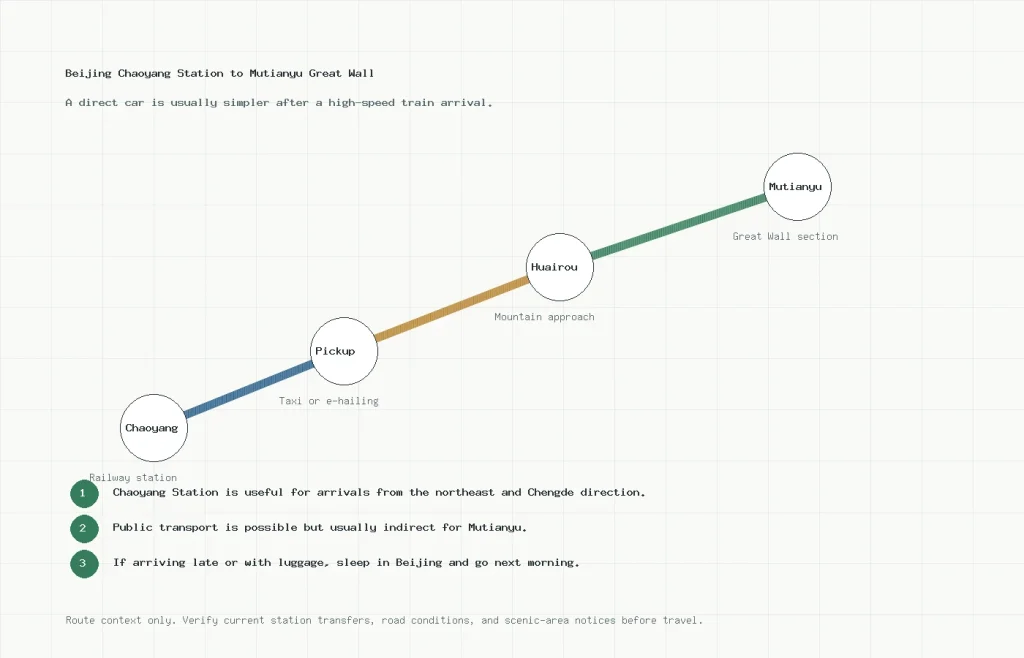
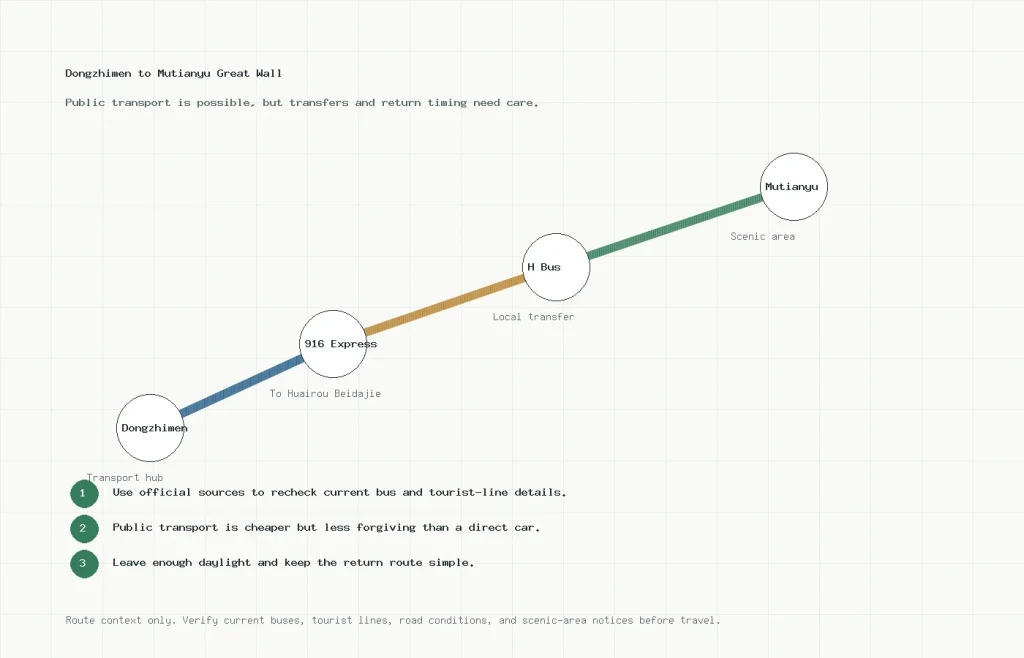
  • Departure point: Dongzhimen Public Transport Hub (near Dongzhimen Subway Station, Lines 2/13).
  • Schedule: Departs at 8:00 AM sharp; return bus departs Mutianyu at 2:00 PM (confirm the latest times online or via your hotel).
  • Duration: 1.5–2 hours.
  • Cost: £4–£6 (¥30–¥50) one-way; round-trip tickets are available for a discount.
  • Drop-off: Directly at Mutianyu’s parking lot (a 5-minute walk to the ticket office).

Option 2: Public Bus + Taxi (Budget Transfer)

This option is cheaper but requires a transfer in Huairou District.

  1. Take Bus 916 Express from Dongzhimen Bus Station to Huairou North Avenue (Huairou Beidajie). Buses run every 10–15 minutes from 6:00 AM to 7:30 PM, taking ~1 hour and costing £2 (¥15).
  2. From Huairou, take a local taxi or minibus (routes H23/H36/H50) to Mutianyu. The taxi ride takes ~30 minutes and costs £6–£10 (¥50–¥80).

3. Simatai Great Wall (Perfect for Night Tours)

Simatai is often paired with Gubei Water Town (a nearby ancient town), and many visitors combine both in one trip. Here’s how to get there:

Option 1: Direct Tourist Bus to Simatai/Gubei Water Town

  • Departure point: Dongzhimen Public Transport Hub (Lines 2/13).
  • Schedule: Departs at 8:00 AM; return bus departs at 3:00 PM (confirm times in advance).
  • Duration: 2–2.5 hours.
  • Cost: ~£6 (¥48) one-way; £10 (¥80) round-trip.
  • Drop-off: Gubei Water Town parking lot—Simatai’s entrance is inside the town (you’ll need a town ticket to access the Wall).

Option 2: Public Bus + Taxi

  1. Take Bus 980 Express from Dongzhimen Bus Station to Miyun Bus Station. Buses run every 10–15 minutes (6:00 AM–7:30 PM), taking ~1.5 hours and costing £2 (¥17).
  2. From Miyun, take a taxi to Simatai (~45 minutes, £12–£18/¥100–¥150).

4. Jinshanling Great Wall (Hiker’s Paradise)

Jinshanling is beloved by hikers for its unspoiled scenery and lack of crowds. It’s farther from Beijing, but worth the trip for nature enthusiasts.

Option 1: Direct Tourist Bus to Jinshanling

  • Departure point: Wangjing West Subway Station (Lines 13/15), Exit B.
  • Schedule: Departs at 7:40 AM; return bus departs Jinshanling at 3:00 PM.
  • Duration: ~2.5 hours.
  • Cost: £6–£8 (¥50–¥60) one-way (book via WeChat or online platforms).
  • Drop-off: Directly at Jinshanling’s main entrance.

Option 2: Public Bus + Taxi (Budget Choice)

  1. Take Bus 980 Express from Dongzhimen Bus Station to Miyun Bus Station (same as Simatai: ~1.5 hours, £2/¥17).
  2. From Miyun, take a taxi to Jinshanling (~1.5 hours, £24–£36/¥200–¥300). For a cheaper option, share a taxi with other travelers at the bus station.

Best Time to Visit the Great Wall

To make the most of your visit, timing is key. The ideal seasons are spring (April–May) and autumn (September–October). During these months, the weather is cool and comfortable (15–25°C/59–77°F), the skies are clear, and the landscapes are stunning—spring brings blooming wildflowers, while autumn paints the mountains in fiery red and gold.

Pro tip: Arrive between 7:00–9:00 AM on a weekday. This lets you avoid the worst of the crowds (most tour groups arrive around 10:00 AM) and enjoy the Wall in relative peace.

When to avoid:

  • Public holidays: National Day (October 1–7) and Labor Day (May 1–5) draw massive crowds—expect long lines and packed walkways.
  • Summer (July–August): Sweltering heat (30–35°C/86–95°F), strong sun, and peak tourist season make hiking uncomfortable. Heatstroke is a risk, so if you visit, bring plenty of water and sunscreen.
  • Winter (December–February): Bitter cold (-5–5°C/23–41°F) and windy conditions. Some sections close due to snow and icy paths, which are dangerous for hiking. If you visit in winter, dress in layers and wear non-slip shoes.

Final Tips for a Smooth Trip

  • Wear comfortable shoes: You’ll be walking on uneven stone paths for hours—sturdy sneakers or hiking boots are a must.
  • Bring essentials: Sunscreen, a hat, sunglasses, and a reusable water bottle (there are water stations at most sections, but prices are high).
  • Buy tickets in advance: For popular sections like Badaling and Mutianyu, book tickets online via the official Great Wall website or app to skip long lines.
  • Respect the site: Do not carve on the stones or leave litter—this is a UNESCO World Heritage Site, and preservation efforts are vital.

Visiting the Great Wall is a once-in-a-lifetime experience, and with the right planning, getting there from Beijing is simple. Whether you choose a hassle-free tour, a private driver, or budget-friendly public transport, the stunning views and rich history of the Great Wall will make every bit of effort worth it. Enjoy your trip!

Badaling vs. Mutianyu Great Wall: Which Should You Choose?

No trip to Beijing is truly complete without standing atop the Great Wall of China—an iconic symbol of history that lives up to every bit of its fame. The ancient Chinese saying says it best: “He who does not reach the Great Wall is not a true man.” But with so many sections to choose from, first-time visitors often find themselves torn between two of the most popular: Badaling and Mutianyu. Both offer incredible views and a chance to walk through history, but they cater to very different travel styles. Let’s break down what makes each unique, so you can pick the perfect fit for your Beijing adventure.

Mutianyu Great Wall

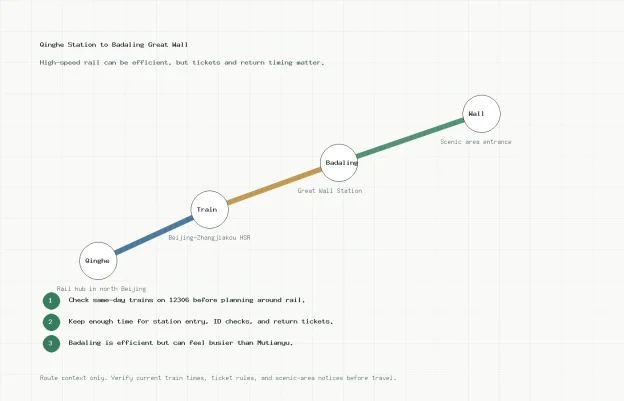
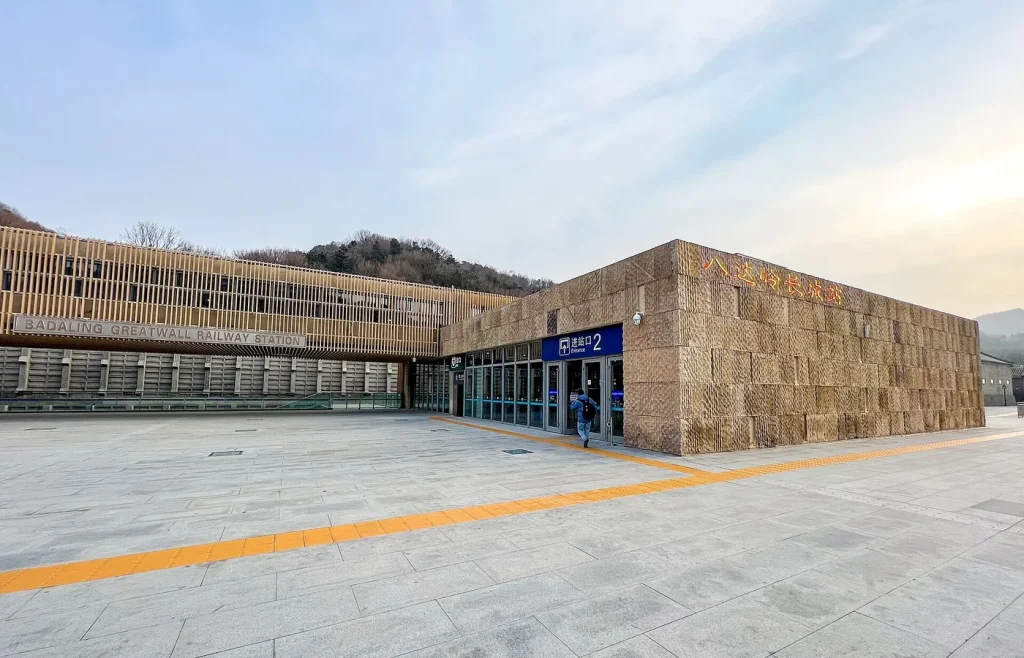
First, let’s talk about getting there—because ease of transport can make or break a day trip. Badaling, at 70km from downtown Beijing, has the edge here. It’s the most accessible section, with both direct buses and trains. The S2 Line train is a favorite for many: it departs from Huangtudian Railway Station (a short walk from Huoying Metro, Lines 8 and 13) and drops you right at Badaling Railway Station in about an hour. If buses are more your speed, several routes run directly from the city, making it a no-fuss option if you’re short on time or prefer straightforward directions.

Mutianyu, slightly farther at 75km, doesn’t have train service, but it’s still easy to reach with a bit of planning. The “Mu Bus” shuttle is a godsend for independent travelers: it leaves from Exit C of Dongsishitiao Metro (Line 2) at 8:00 AM and 10:00 AM daily, with return trips at 2:30 PM and 5:00 PM. A one-way ticket costs 38 CNY, and the ride takes about 90 minutes. Pro tip: If you buy your Mutianyu entrance ticket through the Mu Bus, you skip the 15 CNY shuttle fee inside the scenic area—the bus drops you straight at the parking lot, saving you time and hassle.

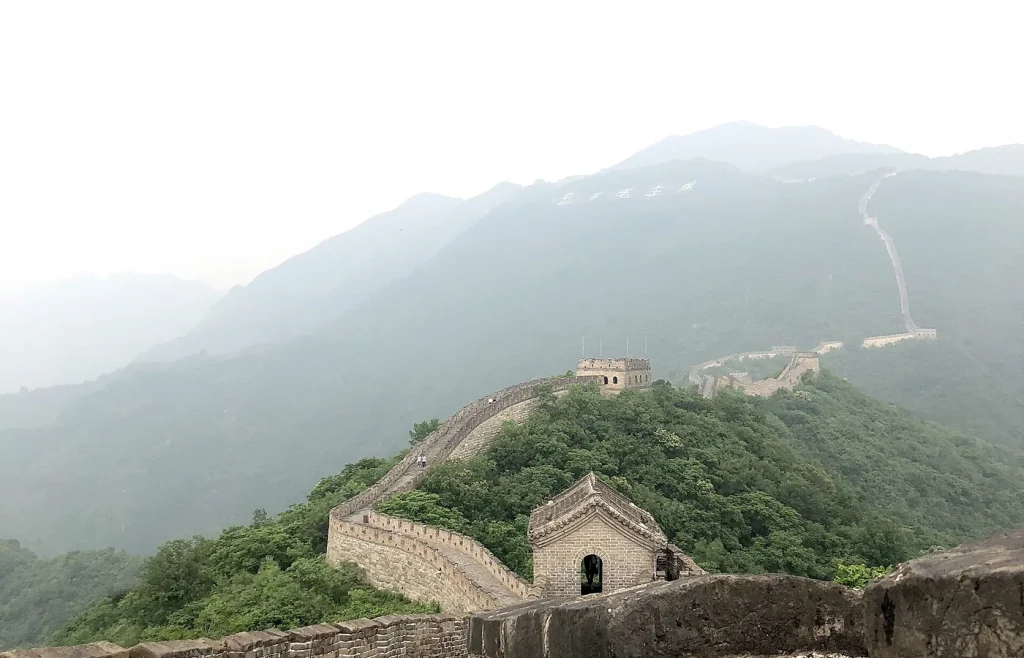
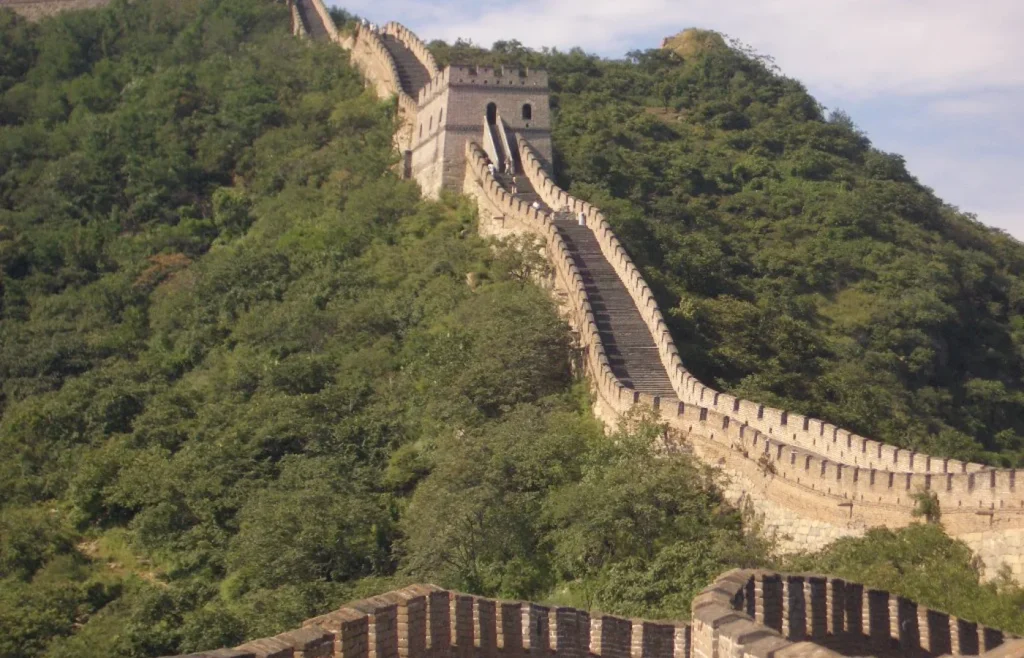
When it comes to scenery and authenticity, the tables start to turn. Both sections are well-preserved (a big plus for first-timers), but Badaling has been heavily renovated over the years. This means smoother paths and more uniform walls—great if you want a “picture-perfect” Great Wall experience, but it can feel a bit less “raw” compared to Mutianyu. Mutianyu, by contrast, retains more of its original character. Less renovation means you’ll see more of the wall’s natural texture, and with over 90% vegetation coverage, it’s lush and scenic, especially in spring and autumn when the hills are dotted with flowers or fall foliage.

Crowds are another huge factor. Badaling’s accessibility makes it the most visited section in Beijing—think bustling pathways, especially during Chinese public holidays (Spring Festival, National Day, and weekends get particularly packed). If you’ve ever imagined the Great Wall as a serene place to reflect on history, Badaling on a busy day might feel more like a crowded marketplace. That’s where Mutianyu shines: it’s tourist-friendly but far less crowded. Even on peak days, you’ll find more space to wander and take photos without jostling for position.

Both sections excel at tourist facilities, so you won’t be caught short. Badaling is the most developed, with wheelchair-accessible paths, multiple cable cars for easy ascents, and plenty of restaurants and souvenir shops. Mutianyu doesn’t lag behind: it offers cable cars, chairlifts, and a fun toboggan ride down the mountain—perfect for families or anyone looking to add a little excitement to their descent. Whether you’re traveling with kids, seniors, or just want to avoid a strenuous hike, both places have you covered.

A quick note on costs and hours: Badaling’s entrance fee is 40 CNY from April to November (peak season) and 35 CNY from December to March (low season), with hours ranging from 6:30 AM–7:00 PM (peak) to 7:30 AM–6:00 PM (low). Mutianyu charges 40 CNY for adults and 20 CNY for children year-round, with hours typically 8:00 AM–5:00 PM (extending to 7:30 AM–6:30 PM in summer).

So, which one should you choose? If you’re short on time, traveling with a group that prefers minimal planning, or want to check off the “most famous” section (it’s hosted countless foreign dignitaries and celebrities), Badaling is the way to go. Just be sure to visit on a weekday if you can.

If you prioritize a more authentic, peaceful experience with stunning natural scenery, Mutianyu is worth the extra bit of travel time. It’s our top pick for travelers who want to connect with the Great Wall’s history without the crowds—and that toboggan ride is a bonus!

At the end of the day, there’s no “wrong” choice. Both Badaling and Mutianyu offer unforgettable views and a chance to walk in the footsteps of ancient warriors. Whichever you pick, you’ll leave with memories that last a lifetime.

Cable Car and Pulley Rides at Badaling Great Wall

Getting to Badaling Great Wall from downtown Beijing is surprisingly hassle-free—whether by bus, subway connection, or tour shuttle, the journey is well-connected and easy to navigate. Once you step into the scenic area, you’ll notice a range of traveler-friendly facilities designed to make your visit smoother, especially if you’re traveling with kids, seniors, or simply want to save energy for soaking in the views rather than strenuous climbing. Two popular options here are the cable car and the pulley ride, each offering a unique way to reach the wall’s upper sections.

Cable Car and Pulley Rides at Badaling Great Wall

The cable car is hands down the most reliable choice for those prioritizing comfort and stability. It’s been engineered with safety as a top priority, gliding along the cableway smoothly without sudden jolts—perfect for nervous travelers or families with young children. You’ll find the cable car station nestled at the back hill area, right where buses 919, 877, and 879 terminate, so it’s easy to spot after getting off public transport.

Each cable car cabin can accommodate up to five people, and the ride itself is remarkably quick—just five minutes to reach the upper watchtowers. For the best experience, we recommend taking the cable car up to the 7th Watchtower. From there, it’s a gentle, enjoyable walk to the 8th Watchtower, which stands as the highest point on the Badaling section. This short stretch is one of the most scenic parts of the wall, with unobstructed views of the rolling mountains and snaking fortifications, so you won’t want to miss it by heading straight to the top.

When it comes to tickets, it’s helpful to plan ahead based on the season. The Great Wall entry fee alone is 40 CNY during peak season (April 1 to October 31) and 35 CNY in low season (November 1 to March 31). If you’re opting for the cable car, a combined ticket for both the Great Wall entry and round-trip cable car costs 175 CNY. Ticket offices open early, especially in summer: 6:00 AM to 7:30 PM during July and August, 6:30 AM to 7:00 PM for the rest of peak season, and 7:30 AM to 6:00 PM in low season.

For those seeking a bit more excitement, the pulley ride is a great alternative—though it’s less stable than the cable car, it adds a fun, breezy element to the ascent. The pulley station is located at the front mountain parking lot, convenient if you’re arriving via bus 877. A round-trip ticket for adults is 100 CNY, and like the cable car, it gets you to the top in under 10 minutes. That said, it’s important to note that seniors and anyone with heart conditions should avoid the pulley due to its slightly bumpier ride.

A few final tips: if you encounter any issues during your visit, the Badaling Scenic Area’s complaint hotlines are 69121235 and 12358. Also, keep in mind that the ticket prices listed here were updated in 2020 and serve as a reference—for the most accurate, up-to-date information, checking the official Badaling Great Wall website is always a smart move.

Whether you choose the steady cable car or the lively pulley, both options let you skip the tiring uphill climb and focus on what matters most: marveling at one of the world’s most iconic landmarks.

How to Explore Mutianyu Great Wall Easily

Mutianyu Great Wall is one of Beijing’s most popular sections—and for good reason: it’s less crowded than Badaling, has stunning mountain views, and offers fun ways to get up and down without just walking. If you don’t want to hike the steep stairs (or if you’re traveling with kids, seniors, or anyone who prefers an easier ride), the cable car, toboggan, and slide rail are game-changers. Here’s everything you need to know—no confusing jargon, just real info for your trip.

How to Explore Mutianyu Great Wall Easily

Cable Car: The Easy, Scenic Way Up

The Mutianyu cable car is the most popular choice for getting to the top—and once you ride it, you’ll see why. It’s fast, safe, and gives you a bird’s-eye view of the wall winding over the mountains.

Cable Car: The Easy, Scenic Way Up

Let’s start with the details (all checked and up-to-date as of 2025):

  • Length & Speed: The cableway stretches 723 meters, and each carriage moves at 3.5 meters per second. That means the ride up takes just 5–6 minutes—no long waits, even on busy days.
  • Capacity: There are 58 carriages total, each holding up to 6 people. So it can carry around 1,800 passengers per hour one-way—plenty of space, even during peak season (March–November).
  • Where It Drops You Off: Directly at the 14th Watch Tower—the perfect spot to start exploring. From here, you can walk east or west along the wall, and the views of the surrounding peaks are unbeatable.

What makes this cable car stand out is how accessible it is. The cable car company has gone out of its way to help seniors and people with disabilities:

  • There’s a special elevator in the northeast corner of the parking lot that takes you up to the cable car’s lower station (fits 11 people at a time—no stairs!).
  • Both the lower and upper stations have disabled access routes, so getting on and off is easy.
  • The lower station’s waiting room is cozy too: 120 square meters with tables, chairs for 50 people, free hot water, phone charging, and even a small luggage storage area. If you need travel tips, the info desk staff speak basic English—just ask.

Toboggan & Slide Rail: The Fun Way Down

Mutianyu Toboggan & Slide Rail

Once you’ve explored the wall, going down is just as exciting—thanks to the toboggan and slide rail. These aren’t just “rides”—they’re a chance to add a little adventure to your day.

Toboggan: Fast & Fun (But Not for Everyone)

The toboggan is a fan favorite—think a gravity-powered cart that glides down a track.

  • Details: The track is 1,580 meters long, and you can hit speeds up to 30 km/h (don’t worry, you can control the speed with a brake).
  • Where It Goes: It takes you from the top of the wall down to near the 6th Watch Tower.
  • Important Notes: It’s only for one-way trips (downhill), and it’s not recommended for seniors, people with disabilities, or kids under 1.2 meters tall. You need to be able to sit up straight and hold the brake—no exceptions for safety.

Slide Rail: A Slightly Calmer Alternative

The slide rail is similar to the toboggan but moves along a fixed rail (no cart). It’s still fun, but a bit slower if you’re nervous about speed.

  • Details: Same length as the toboggan (1,580 meters) and same speed limit (30 km/h).
  • Who Can Ride: Same rules as the toboggan—no seniors, disabled visitors, or young kids. It’s also one-way downhill.

Pro tip: For the best experience, take the cable car up, walk around the wall for an hour or two, then take the toboggan down. That way, you get the scenic ride up and the fun ride down—two different adventures in one day.

All the Practical Stuff: Tickets & Opening Hours

No one likes surprises with prices or timing—so here’s the breakdown (double-checked for 2025; always confirm at the gate for last-minute changes):

Tickets (CNY = Chinese Yuan; 1 CNY ≈ 0.14 USD as of 2025)

  • Great Wall Entry Ticket: 40 CNY per adult; free for kids under 1.2 meters.
  • Shuttle Bus: 15 CNY round-trip (from the parking lot to the wall entrance); 10 CNY one-way. You’ll need this—walking from the parking lot is too far.
  • Cable Car: 120 CNY round-trip per adult; 60 CNY round-trip for kids (1.2–1.4 meters); 100 CNY one-way per adult; 50 CNY one-way for kids.
  • Slide Rail: 120 CNY round-trip per adult; 100 CNY one-way per adult; 60 CNY round-trip for kids.
  • Toboggan: 60 CNY one-way per adult; no round-trip option (it only goes down).

Opening Hours

  • Great Wall:
    • Low season (Nov 16–Mar 15): 8:00 AM–5:00 PM
    • Peak season (Mar 16–Nov 15): 7:30 AM–6:00 PM (Mon–Fri); 7:30 AM–6:30 PM (Sat–Sun)
  • Cable Car:
    • Summer (Mar–Nov): 8:00 AM–5:00 PM
    • Winter (Dec–Feb): 8:30 AM–4:30 PM
  • Slide Rail:
    • Mon–Fri: 8:00 AM–4:50 PM
    • Sat–Sun: 8:00 AM–5:00 PM

Final Tips for a Smooth Day

  • Book Ahead?: No need to book tickets online—you can buy them at the gate. But arrive early (before 10 AM) to avoid long lines for the cable car.
  • For Seniors/Disabled Visitors: Stick to the cable car— it’s the safest and easiest option. The special elevator and disabled access make it stress-free.
  • For Families: The cable car up + toboggan down is perfect for kids (as long as they’re over 1.2 meters). Bring water and snacks—there are restaurants at the lower station, but they’re pricey.

Mutianyu’s cable car, toboggan, and slide rail aren’t just “extras”—they make the Great Wall accessible and fun for everyone. Whether you want to skip the stairs, add some adventure, or just enjoy the views, these options let you experience the wall your way. So grab your ticket, hop on, and get ready to see one of China’s most famous landmarks—without the sore legs!

Great Wall Access for Seniors & Wheelchair Users: What You Need to Know

The Great Wall is a dream for many travelers—but if you’re a senior, use a wheelchair, or have mobility issues, you might worry: Can I actually visit it? The good news is yes—some sections near Beijing are set up to help you enjoy the view. Let’s break down which ones work best, and what to expect.

First, let’s be honest: Most Great Wall sections are steep, with narrow stairs and no rails. They’re historic, but not built for easy access. But two main spots near Beijing have made changes to welcome everyone: Badaling and Mutianyu. Juyongguan has a small accessible area too, but it’s more limited.

Great Wall Access for Seniors & Wheelchair Users: What You Need to Know

Badaling Great Wall: The Most Wheelchair-Friendly Choice

Badaling is the closest section to Beijing (about 1.5 hours by car), and it’s the most set up for wheelchair users—thanks to changes made for the Olympics. Here’s what makes it easy:

  • Ramps and Elevators: There’s a special “no-barrier” path with gentle ramps that leads up to the third watchtower. If ramps feel too tiring, you can use one of two elevators—just contact Badaling’s administration ahead of time (they’ll help arrange a security escort).
  • Flat Lanes: Once you’re on the wall, a flat lane lets you move from the first to the third watchtower without stairs. It’s not a long stretch, but it gives you that real Great Wall feeling—views of the mountains, the zig-zag of the wall, and the breeze.
  • How to Find It: When you get to Badaling’s entrance, look for signs that say “No Barrier Access” near the ticket stand. Follow those, buy your ticket, and tell the attendant you want to use the elevator—they’ll guide you.
Great Wall Access for Seniors & Wheelchair Users: What You Need to Know

For seniors who can walk a few steps, Badaling is even better—you can go beyond the third watchtower if you feel up to it. But even if you stick to the accessible area, it’s worth it.

Mutianyu Great Wall: Possible, But More Tricky

Mutianyu is quieter than Badaling, with a cable car and even a toboggan slide for the way down. But for wheelchair users, it’s a bit harder:

  • Cable Car Help, But Not Perfect: The cable car takes you up to near the 14th watchtower, which saves a lot of climbing. There’s a barrier-free path to the cable car station, but here’s the catch: You still need to walk a few stairs to get into the cable car, and once you get off, there are more stairs to reach the wall’s top.
  • Need a Helper: You’ll definitely want someone with you to push the wheelchair—there are steep slopes near the cable car stations that are hard to manage alone.
  • The View Spot: Once you’re up, there’s a small flat platform where you can sit and watch the wall stretch over the mountains. It’s a nice view, but you can’t move far along the wall itself—most of it has steps.

If you’re a senior who can walk short distances (with help), Mutianyu’s quiet vibe might be worth it. But if you rely fully on a wheelchair, Badaling is better.

Juyongguan Great Wall: A Short Stop

Juyongguan has a 180-meter barrier-free path at its East Gate. It leads up to the top of the pass, where you can see the Great Wall in the distance. But that’s as far as you can go—beyond that, there are stairs and steep slopes. It’s a quick stop if you’re passing by, but not a full Great Wall experience.

Tips for a Smooth Trip

  • Book Accessible Transport: Regular taxis might not fit wheelchairs. Book a wheelchair-accessible van ahead of time, or ask your hotel to arrange one. If you have a folding wheelchair, a private car with a driver (easy to book through local travel agents) works too.
  • Bring Help: Even at Badaling, having someone with you to carry bags or steady you on the ramps makes it easier.
  • Take It Slow: Don’t rush! Stop often, drink water, and enjoy the moment. The Great Wall isn’t about how far you go—it’s about being there.

You don’t have to miss out on the Great Wall because of mobility issues. Badaling’s accessible area gives you that magic, and with a little planning, you can have a day you’ll remember. It’s not about climbing to the top—it’s about standing there, looking out, and thinking: I did this. I saw the Great Wall.

Jiankou-Mutianyu Great Wall Hiking Route

If you’re an advanced hiker craving the “real” Great Wall—raw, steep, and unpolished—then the Jiankou to Mutianyu trail is your dream. This 2-day route (near Huairou District, 2 hours from Beijing) mixes Jiankou’s wild, unrestored charm with Mutianyu’s well-kept paths and panoramic views. It’s not for beginners, but for those who want to trade crowds for history and adventure, it’s unbeatable.​

Jiankou-Mutianyu Great Wall Hiking Route

Why Jiankou-Mutianyu Is a Top Hike​

Jiankou isn’t open to regular tourists—that’s part of its magic. It’s the “wild Great Wall” photographers rave about: weathered Ming Dynasty bricks, narrow paths clinging to mountain slopes, and no handrails on the steepest parts. Mutianyu, on the other hand, offers a gentler finish with cable cars, restored watchtowers, and easier access back to Beijing. Together, they let you experience two sides of the Great Wall in one trip.​

Jiankou-Mutianyu Great Wall Hiking Route

Day 1: Jiankou’s Wildest Spots – Beijing Knot to Heaven Ladder​

Start in No. 5 Xizhazi Village (your base for the night). It’s a quiet village with small guesthouses (¥150–200/night, includes dinner) —perfect for resting before the hike.​

Morning: Hike to Beijing Knot (北京结)​

The first leg is to Beijing Knot (a key junction where Jiankou connects to Huanghuacheng Great Wall west and Mutianyu east). The path has no stairs—just dirt and loose rocks—so wear hiking boots with good grip. When you reach the top, look for the small pine tree: it’s Beijing Knot’s signature. The flat area here is great for a snack break or even camping (if you’re up for it).​

Afternoon: Yingfeidaoyang (鹰飞倒仰) & Heaven Ladder (天梯)​

Head east from Beijing Knot to Yingfeidaoyang—a section named for its shape (“eagle flying belly up”). It’s made of 3–4 connected mountains, and the climb gets serious here: a 5-meter high cliff with no safety ropes. Go slow, keep your hands free (no caps—they block your view!), and follow the faint paths left by other hikers.​

Next comes Heaven Ladder (天梯), a steep, narrow stretch that feels like climbing a ladder. The drop-off is steep, so take every step carefully. By late afternoon, hike down a small side path back to No. 5 Xizhazi Village. Grab a hot meal (try local braised pork and millet porridge) and rest—Day 2 is long!​

Note: Day 1’s sections (Yingfeidaoyang, Heaven Ladder) are the most dangerous. Skip them if you’re not an experienced hiker—stick to the moderate route: Jiankou → Small Potala Palace → Suobolou → Zhengbeilou → Niujiaobian → Mutianyu.

Day 2: Jiankou to Mutianyu – From Wild to Scenic​

Start early (8 AM) from Heaven Ladder, heading east toward Mutianyu. The path eases up a little, but Jiankou’s rocks are still slippery—stay alert.​

Key Stops on Day 2​

  • Small Potala Palace: A 10-meter bluff that feels like rock climbing. It’s steep, but take it step by step—you’ll be rewarded with views at the top.​
  • Zhengbeilou (正北楼): This watchtower is your “almost there” sign. From here, Mutianyu is just a few hours away.​
  • Niujiaobian (牛角边): A section that cuts across two mountain halves. It’s closed, so take the small detour along the wall—5 minutes later, you’ll rejoin the main path.​
Jiankou-Mutianyu Great Wall Hiking Route

Finish at Mutianyu Great Wall​

Finally, you’ll hit Mutianyu’s western entrance. Here, the Great Wall changes: restored bricks, handrails, and even cable cars (¥100 one-way) if your legs are tired. You’ll also start seeing more tourists—proof you’re back to a “developed” section.​

To get back to Beijing: Take bus No. 867 from Mutianyu’s entrance to Huairou Bus Station (¥5, 1 hour), then transfer to a bus to Beijing’s Dongzhimen Station (¥15, 1.5 hours).​

Practical Tips for Hikers (SEO-Friendly)​

  • Best Time to Hike: September–November (cool weather, red leaves) or April–May (wildflowers). Avoid summer heat and winter ice.​
  • Gear to Bring: Hiking boots, 2L water, energy bars, sunscreen, a jacket (mountain winds are cold), and a first-aid kit.​
  • Guides: Hire a local guide (¥200/day) if you’re new to wild Great Wall hikes—they know the safest paths.​
  • Accommodation: Book No. 5 Xizhazi Village guesthouses in advance (search “Xizhazi Village guesthouse for foreigners”).​

Final Thought​

Jiankou-Mutianyu isn’t just a hike—it’s an adventure. You’ll scramble up cliffs, walk where soldiers once stood, and finish with Mutianyu’s easy views. It’s hard work, but when you look back at the wild wall snaking over the mountains, you’ll know it’s worth every step. For advanced hikers wanting the “real” Great Wall, this route is a must.

Gubeikou-Jinshanling Great Wall Hiking Route

If you want to hike the Great Wall like a local—away from crowds, with raw, unpolished charm—then the Gubeikou to Jinshanling route is your perfect pick. Stretching through Hebei’s Yanshan Mountains (about 2.5 hours from Beijing), this 10-kilometer trail mixes unrestored Ming Dynasty walls, jaw-dropping sunrise spots, and stories of ancient military defense. It’s not just a hike; it’s a step back in time.

Gubeikou-Jinshanling Great Wall Hiking Route

Why Gubeikou-Jinshanling Stands Out

Unlike the busy, fully renovated sections near Beijing, Gubeikou keeps its “wild” side. This is the Great Wall as it’s stood for centuries—weathered bricks, overgrown watchtowers, and no handrails on steep parts. Jinshanling, on the other hand, balances that wildness with better paths (great for beginners) and some of the best sunrise views you’ll ever see. Together, they offer the best of both worlds: adventure and beauty.

Starting with Gubeikou: The “Unrestored Gem”

Gubeikou isn’t just a section—it’s a military legacy. Built and rebuilt over dynasties, it’s known as the “most complete Ming Dynasty Great Wall” because it kept all its original defense features: thick walls, hidden shelters, and even old arrow slits.

To start, hike up the small mountain leading to the wall (it takes about 30 minutes—wear sturdy shoes!). When you reach the top, you’ll stop in your tracks: the wall zigzags over the mountains, blue sky above, and no crowds in sight. We visited on a weekday, and for an hour, we had a whole watchtower to ourselves—just the wind and the distant sound of birds.

Gubeikou-Jinshanling Great Wall Hiking Route

Key Spots in Gubeikou: Panlongshan & Iconic Towers

Halfway through Gubeikou, you’ll hit Panlongshan Great Wall (Panlong Mountain), the heart of this section. It’s 5 kilometers long with over 40 watchtowers, each with a story. Don’t miss:

  • General Tower (Jiangjun Lou): A large, sturdy tower that once held military leaders. Climb to the top for views of the surrounding mountains.
  • 24 Eyes Tower (24 Yan Lou): Named for its 24 small windows (used to watch for enemies). It’s one of the most photographed spots here—bring your camera!
Gubeikou-Jinshanling Great Wall Hiking Route

The Bypass: Important Note for Hikers

Here’s a heads-up: Between Panlongshan and Jinshanling, there’s a closed military area. You can’t walk through it—so you’ll need to hike down the wall via a small dirt path (look for signs or ask local hikers for directions). It’s a 20-minute walk downhill, then a short climb back up to rejoin the Great Wall at Jinshanling. Don’t worry—it’s easy to follow, and the detour lets you see local villages and farmland.

Jinshanling: Sunrise Paradise & Well-Kept Beauty

Once you reach Jinshanling, the trail gets a little easier—and the views get even better. This section was renovated during the Ming Dynasty by General Qi Jiguang, a famous military leader, so it’s more stable than Gubeikou but still retains its history.

Wake up early if you can—Jinshanling’s sunrise is legendary. The wall glows orange as the sun comes up over the mountains, and the mist hangs low between the watchtowers. We arrived at 5:30 AM (in autumn) and had front-row seats—just a few other photographers, no loud crowds.

Practical Tips for the Hike

  • How to Get There: Take a high-speed train from Beijing to Miyun Station (45 minutes, ¥30), then a taxi to Gubeikou (30 minutes, ¥80). Or book a day tour from Beijing (includes transport, ¥200–300).
  • Hiking Time: 4–6 hours (including stops for photos and rest).
  • Best Time to Visit: September–November (cool weather, red leaves) or April–May (blooming wildflowers). Avoid summer heat!
  • What to Bring: Water (2 liters), snacks (energy bars, fruit), sunscreen, and a jacket (mountains get windy).

Final Thought

The Gubeikou-Jinshanling hike isn’t for people who want an easy walk. It’s for travelers who want to feel the Great Wall’s true spirit—raw, historic, and breathtaking. Whether you’re a solo hiker, a couple, or a small group, this route will give you stories (and photos) you’ll talk about for years. Lace up your boots and go—you won’t regret it.

How to Get Internet in China for Tourists

If you’re traveling to China, staying connected isn’t just convenient—it’s essential for maps, translation apps, and sharing your trip with friends. But here’s the thing: China uses a separate internet system, so your home data plan probably won’t work. Don’t worry, though—there are easy ways to get reliable internet. This guide breaks down the best options for tourists, with step-by-step tips to avoid headaches.​

How to Get Internet in China for Tourists

1. Tourist SIM Card: The Cheapest & Most Flexible Option​

A local SIM card is the most popular choice for travelers—and for good reason. It’s affordable, works everywhere (even in small towns), and lets you use data, make calls, and send texts. Here’s how to get one:​

  • Where to buy: You can pick one up at major airports (Beijing Capital, Shanghai Pudong, Guangzhou Baiyun) right after landing. Look for booths with signs like “Tourist SIM” or “China Mobile/Unicom.” Staff usually speak basic English, so just tell them your stay length (7 days, 15 days, etc.).​
  • What to bring: Your passport (required for registration—China’s rules say all SIM cards must be linked to an ID).​
  • Cost: Plans start at ¥50 for 7 days (10GB data) and go up to ¥120 for 30 days (30GB data). Most include free calls to local numbers, which is handy for booking taxis or hotels.​
  • Pro tip: Avoid buying SIM cards from random street vendors—they might be expired or not registered properly. Stick to official carrier booths (China Mobile, China Unicom, China Telecom).​

2. Portable WiFi (Pocket WiFi): Great for Groups or Long Stays​

If you’re traveling with family or friends, a portable WiFi device (also called a “pocket WiFi”) is a smart pick. It lets multiple devices (up to 5) connect at once, so everyone can use data.​

  • Where to rent: Rent online before your trip (websites like Klook or Trip.com have good deals) or at airport rental desks. You can pick it up at the airport and drop it off before leaving.​
  • Cost: About ¥20–30 per day, plus a deposit (¥300–500, refunded when you return the device).​
  • How it works: Turn it on, connect your phone/laptop to its WiFi signal, and you’re good to go. It runs on a battery (lasts 8–10 hours), so bring a power bank for long days out.​
  • Best for: Groups, people who use multiple devices, or travelers staying 2 weeks or more.​

3. Public WiFi: Free but Limited​

You can find free WiFi in many public places, but it’s not always reliable. Here are the spots to check:​

  • Hotels & restaurants: Most mid-range and luxury hotels offer free WiFi—ask the front desk for the password. Many restaurants (especially chain ones like Starbucks or Haidilao Hot Pot) have WiFi too.​
  • Airports & train stations: Major airports and high-speed train stations have free public WiFi. Look for networks like “Airport Free WiFi” or “12306 WiFi”—you might need to enter your phone number to get a verification code.​
  • Caution: Avoid using public WiFi for sensitive things (like online banking) —it’s not always secure. Stick to data from your SIM card or pocket WiFi for important tasks.​

4. Key Tips to Stay Connected​

  • Download apps before you arrive: Apps like WeChat (for messaging/payments), Baidu Maps (China’s version of Google Maps), and Google Translate (download offline languages) won’t work without internet. Download them and their offline data before you leave home.​
  • Check your phone’s compatibility: Make sure your phone is “unlocked” (not tied to a single carrier). Most phones from the US, Europe, or Australia are unlocked, but double-check with your provider.​
  • Ask for help: If you’re confused, don’t hesitate to ask hotel staff or tour guides. They can help you set up your SIM card or connect to WiFi.​

Staying connected in China is easier than you think—you just need to plan ahead. Whether you choose a SIM card, pocket WiFi, or public WiFi, you’ll be able to share your adventures and navigate with confidence. Enjoy your trip!

Hiking Route: Huanghuacheng Water Great Wall

Beijing’s Unique ‘Wall-in-Water’ Gem

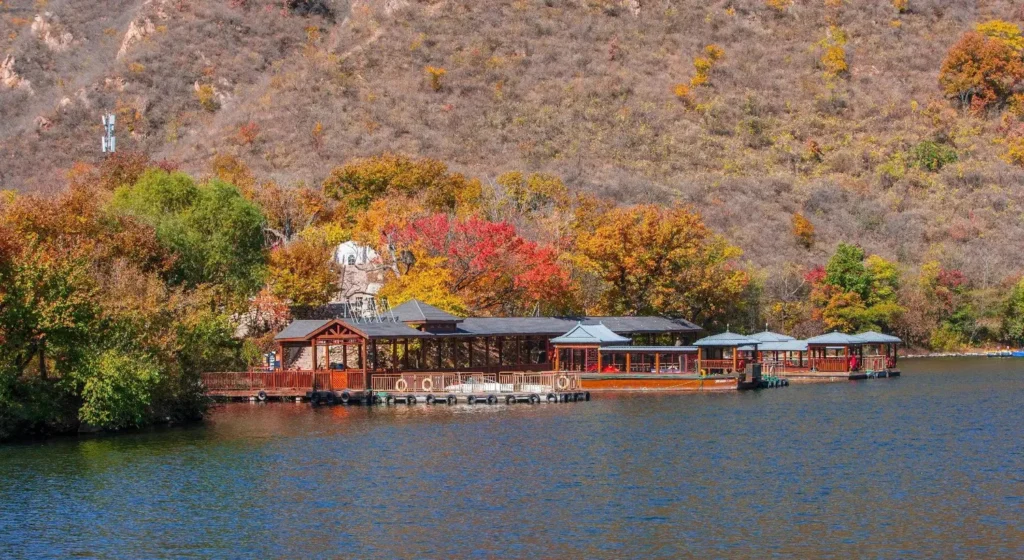
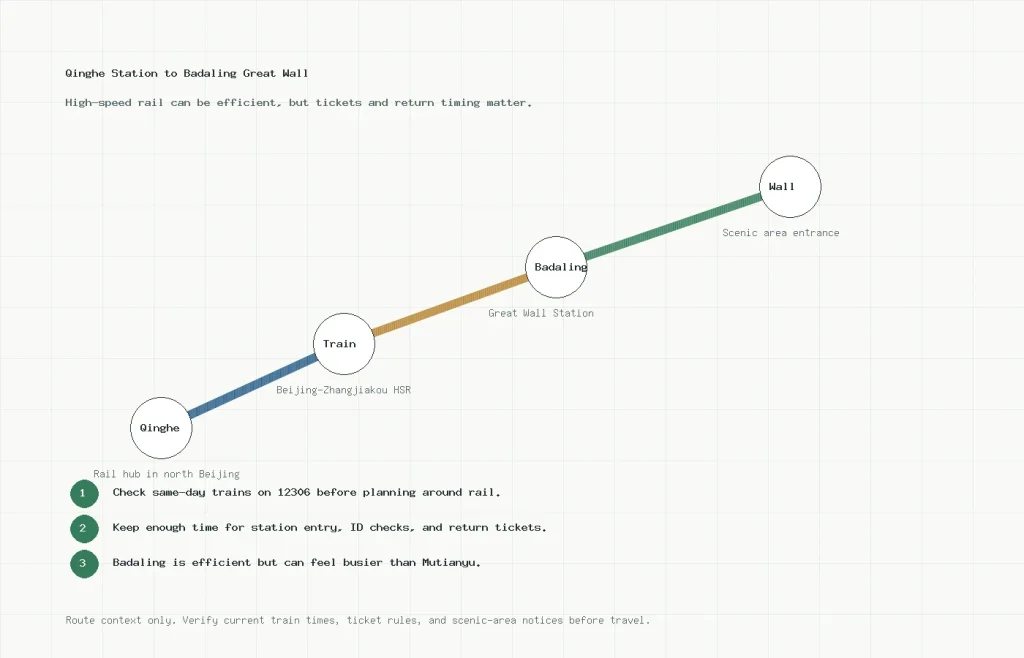
If you’re tired of the same old Great Wall crowds and want something truly unique near Beijing, head to Huanghuacheng Water Great Wall. Located in Xishuiyu (now part of Huanghuacheng Scenic Area) in Huairou District—just a 1.5-hour drive from downtown Beijing—this stretch has a trick up its sleeve: it’s the only part of the Great Wall that dips right into water. Cool, right?
Huanghuacheng Water Great Wall

First, let’s clear up the name mix-up: Xishuiyu used to be the spot’s name, but now it’s all part of Huanghuacheng Water Great Wall Scenic Area (ask taxi drivers for “Beijing Huairou Jiuduhe Zhen Xishuiyu” if you get lost—they’ll know). And don’t worry about hiking skill level: most of it’s well-renovated, so families, beginners, and even older travelers can enjoy it.

Now, the fun part: the hike itself. The wall here has two big quirks. One, you’ll see sections where the stone and brick structure meets a lake—like the wall’s “taking a dip.” It’s surreal to watch, especially on sunny days when the water reflects the gray bricks. Two, some parts are steeper than they look. The slopes are made of large, old bricks, and a few sections have narrow steps—only about 10cm wide! Take it slow here, hold the handrail, and wear sturdy shoes (sneakers work, but hiking boots are better if you have them).

Oh, and keep an eye out for the road that cuts through the wall—weird to see a modern road crossing an ancient structure, but it’s a fun photo op.

The best surprise? The watchtowers. One big tower we passed had a roomy interior—so roomy, in fact, that 9 foreigners were camping there! They’d set up 4 or 5 tents, lit a small bonfire (safe, don’t worry—they kept it contained), and were playing soft music while eating breakfast. They waved and said they’d stayed the night to catch the sunrise over the water. It’s that kind of laid-back spot—no rush, just people enjoying the view.

Huanghuacheng Water Great Wall

This hike isn’t about pushing your limits. It’s about stopping to stare at the wall and water together, chatting with other travelers in the towers, and taking your time. Plan 3–4 hours, bring a water bottle and a snack (there are small stalls near the entrance, but not many along the wall), and don’t forget your camera—you’ll want to show friends the “Great Wall that swims.”

For Beijing day trips, Huanghuacheng is a breath of fresh air. It’s unique, not overcrowded, and perfect for anyone who wants to see the Great Wall in a whole new way.