
Mutianyu Great Wall is usually the best first Great Wall section for English-speaking visitors staying in Beijing. It is scenic, restored, easier to manage than wild-wall routes, and usually less overwhelming than Badaling during busy domestic travel periods. If this is your first Great Wall trip and you want a balanced mix of classic views, manageable walking, cable-car options, and flexible timing, Mutianyu should be near the top of your list.
This guide is written for travelers who want to enjoy Mutianyu without overcomplicating the day. It explains who should choose Mutianyu, how long to allow, which uphill/downhill options make sense, where to walk, what to check before departure, and how Mutianyu compares with other Beijing-area Great Wall sections.
Quick Planning Snapshot
- Best for: first-time foreign visitors, families, couples, seniors who can handle some steps, and travelers who want good views with manageable logistics.
- Time needed: usually a half-day to relaxed full-day trip from Beijing, depending on transport and walking pace.
- Main appeal: restored wall, mountain scenery, cable car, chairlift, toboggan, and less intense crowd pressure than Badaling on many days.
- Main caution: weekends, Chinese public holidays, rain, high winds, and ticketing rules can change the experience quickly.
- Best next step: pair this guide with the Beijing to Mutianyu transport guide before finalizing your route.
Why Mutianyu Works Well for Inbound Travelers
Mutianyu solves the biggest problem many international visitors face: they want the Great Wall to feel impressive, but they do not want the day to become stressful. Badaling is more famous and easier to reach by some public-transport routes, but it can feel more crowded and tour-group oriented. Jiankou, Gubeikou, and Jinshanling can be more dramatic, but they require more route knowledge, hiking confidence, or travel time.
Mutianyu sits in the middle. It gives you a restored, photogenic wall section with strong mountain views and practical facilities, while still feeling more relaxed than the most crowded Beijing-area option. That is why it is often the safest recommendation for visitors who only have one Great Wall day. For a direct comparison, see the Badaling vs Mutianyu guide.
Cable Car, Chairlift, and Toboggan Choices
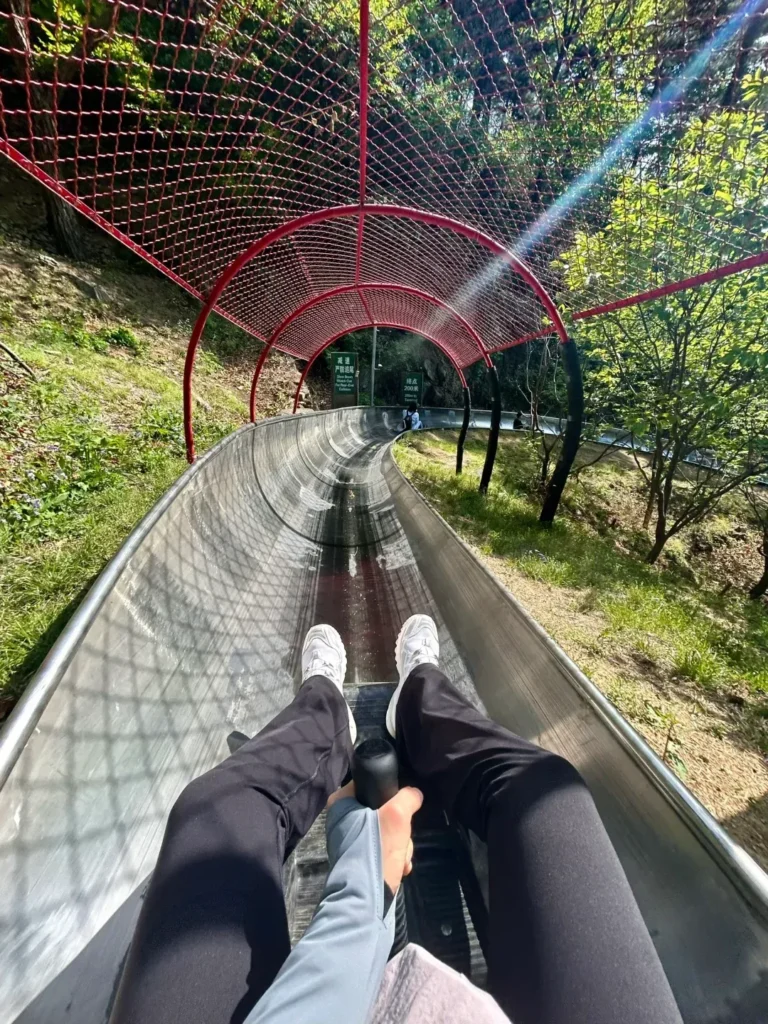
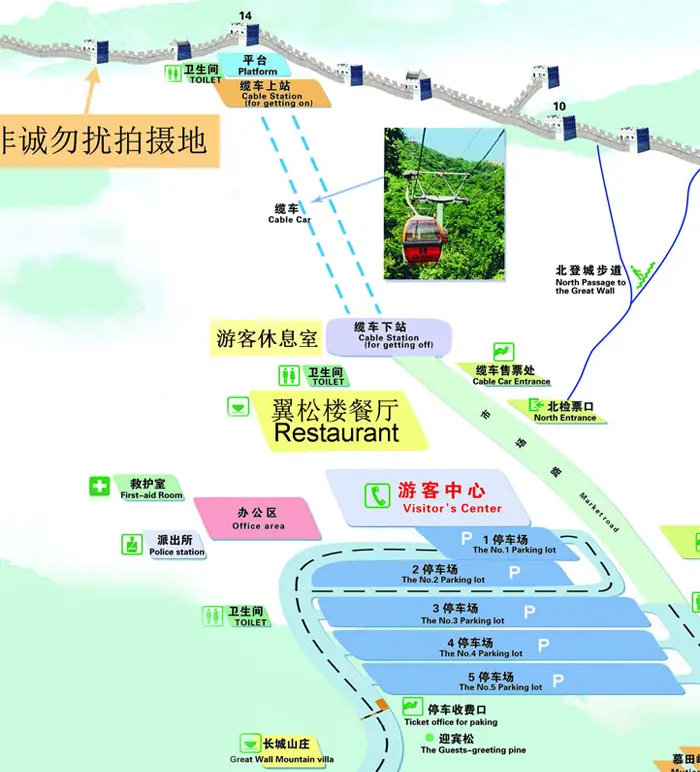
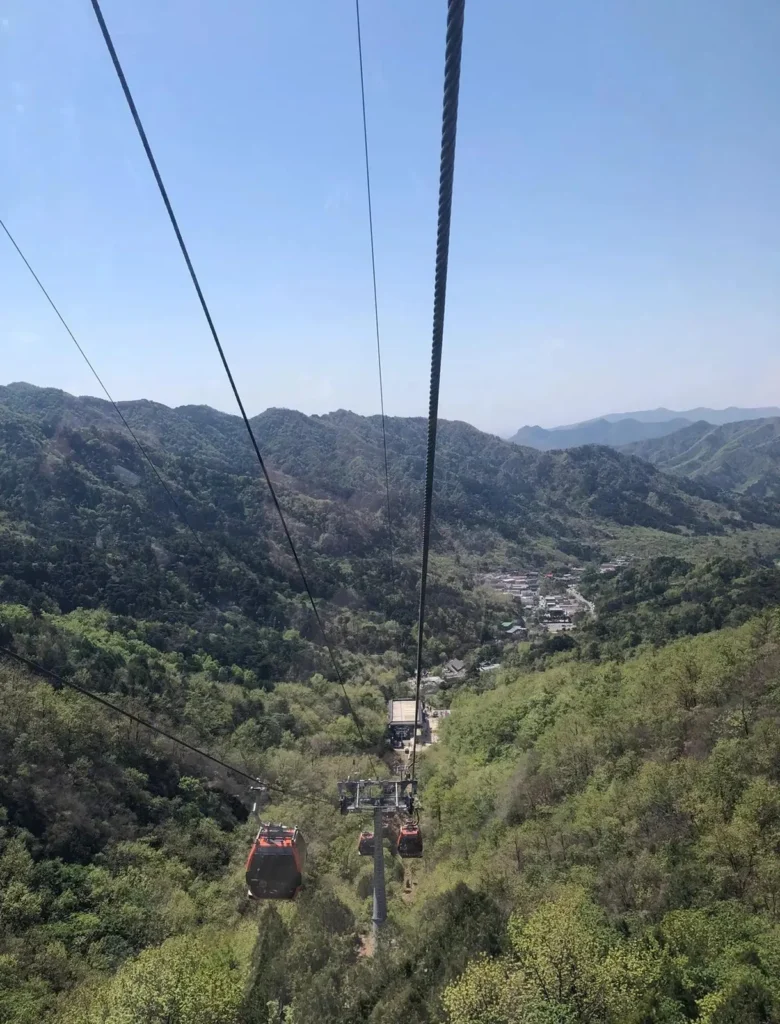
Mutianyu is easier to customize than many Great Wall sections because you do not have to walk all the way up and down the mountain. Visitors usually choose between a cable car, a chairlift, and the toboggan-style descent. Exact operating arrangements can change by season, weather, maintenance, or crowd-control needs, so check the official scenic-area information before your trip.
The cable car is the simplest choice for most first-time visitors. It is enclosed, efficient, and works well for travelers who want to save energy for walking on the wall itself. The chairlift and toboggan combination feels more playful and is popular with families and visitors who want a more memorable downhill experience, but it is not ideal for everyone. If you dislike exposed rides, have mobility concerns, or are traveling in bad weather, choose the more conservative option.
Where to Walk on the Wall
Do not try to cover every tower unless you specifically want a long walk. A better first-visit plan is to choose a manageable route, stop often, and enjoy the views. The restored paths still include many steps, uneven surfaces, and exposed sections, so the wall can feel harder than it looks in photos.
For most visitors, the best experience is a loop or partial out-and-back route that starts from the upper station, walks through several towers, and returns before fatigue becomes the main memory of the day. Photographers may want to keep moving toward less crowded viewpoints, while families should prioritize shorter sections, shade breaks, and a relaxed descent.
Recommended First-Visit Itinerary
Start early from Beijing, especially on weekends or during spring and autumn travel peaks. Arrive before the main late-morning crowd if possible. After entering the scenic area, take the shuttle and uphill option that best fits your group. Spend your best energy walking on the wall, not climbing the approach road.
A practical route is to ride up, walk several towers in the direction with the best visibility and lower crowd pressure, pause for photos, then return before you feel rushed. If you want a more active day, extend the walk carefully, but do not underestimate the steps. After descending, allow time for food, rest, and transport back to Beijing. If you are visiting in May, also read the Mutianyu in May planning guide.
Transport from Beijing
Mutianyu is commonly visited as a day trip from Beijing. The easiest option for many inbound travelers is a private transfer or organized day tour, especially if you are traveling with family, arriving after a long flight, or nervous about language and payment details. Public transport can also work, but routes, departure points, and ticketing details should be checked close to your travel date.
Do not choose transport only by the cheapest headline price. Consider the full day: hotel location, transfer time, how early you can start, return flexibility, and how much uncertainty you are willing to handle. For detailed transport planning, use the Beijing to Great Wall transport overview and the dedicated Beijing to Mutianyu guide.
When to Visit Mutianyu
Spring and autumn are usually the best seasons for Mutianyu because temperatures are more comfortable and the scenery is stronger than in deep winter or midsummer haze. May can be excellent if you avoid the Labor Day holiday rush. October can be beautiful, but the National Day holiday period can create heavy demand. Winter is quieter and visually stark, but cold wind and icy steps can affect comfort and safety.
For seasonal planning across the site, start with the best time to visit the Great Wall. For day-of preparation, check weather, wind, and scenic-area notices before leaving Beijing.
Who Should Not Choose Mutianyu?
Mutianyu is not the best choice for every traveler. If your top priority is the most famous name and the broadest official infrastructure, Badaling may still make sense. If your main goal is serious hiking or photography, Jinshanling or a properly planned Gubeikou-Jinshanling route may be stronger. If you want an overnight resort-style Great Wall experience, Simatai and Gubei Water Town may fit better.
For most first-time foreign visitors, though, Mutianyu remains the safest default. It gives you a classic Great Wall day with fewer planning risks than wild-wall routes and a calmer feel than the busiest domestic-tour section on many days.
Before-You-Go Checklist
- Check official scenic-area notices before departure.
- Confirm your uphill/downhill option is operating, especially in poor weather.
- Start early on weekends, holidays, and peak spring/autumn days.
- Wear shoes with grip; the restored wall still has steep and uneven steps.
- Bring water, sun protection, and a light layer for wind on the ridge.
- Keep your walking plan shorter if traveling with children, seniors, or anyone with knee or mobility concerns.
Practical Verdict
Mutianyu is the best all-around Great Wall choice for many foreign first-time visitors to Beijing. It is scenic, flexible, easier to plan than hiking-focused sections, and usually less overwhelming than Badaling. Choose it when you want a classic Great Wall experience with enough comfort and structure to make the day feel smooth.
Sources Checked
- Mutianyu Great Wall official site for scenic-area information and visitor notices.
- Beijing official English portal Mutianyu page for destination context.
Related Great Wall comparison
For a safety-focused comparison of restored Mutianyu and wild Jiankou, see Mutianyu Great Wall or Jiankou Great Wall.