
Many travelers ask where the Great Wall “starts,” but the honest answer depends on which Great Wall you mean. In modern travel writing, Jiayuguan Pass in Gansu is often described as the western end of the Ming Great Wall, while Shanhaiguan and Laolongtou mark the eastern end where the wall meets the Bohai Sea. That is different from saying the entire Great Wall began at one single gate.
Quick planning snapshot
- Best for: travelers who want end-point history, not just a Beijing day trip.
- Use this guide for: understanding Jiayuguan, Shanhaiguan, Laolongtou, and why different sources name different “starts.”
- Planning focus: Beijing visitors should normally choose How to Explore Mutianyu Great Wall Easily or How To Get To Badaling Great Wall From Beijing first, then consider remote end-point routes on a longer China trip.
Why Jiayuguan is called the western end
Jiayuguan Pass sits on the Hexi Corridor in Gansu, guarding a strategic route between central China and the deserts to the west. For the Ming Dynasty wall system, it became the best-known western fortress. That is why guidebooks often call Jiayuguan the “start” or “western end” of the Great Wall. A more accurate wording is: Jiayuguan is the famous western end of the Ming Great Wall, not the universal starting point of every wall ever built in China.
Why Shanhaiguan is also part of the answer
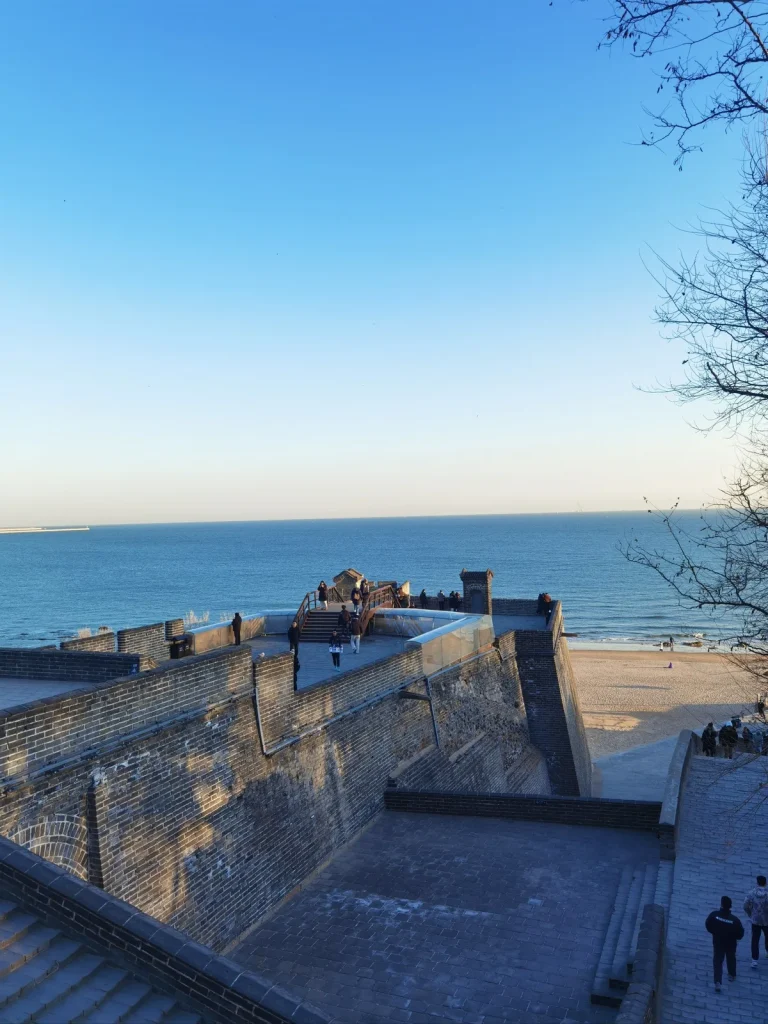
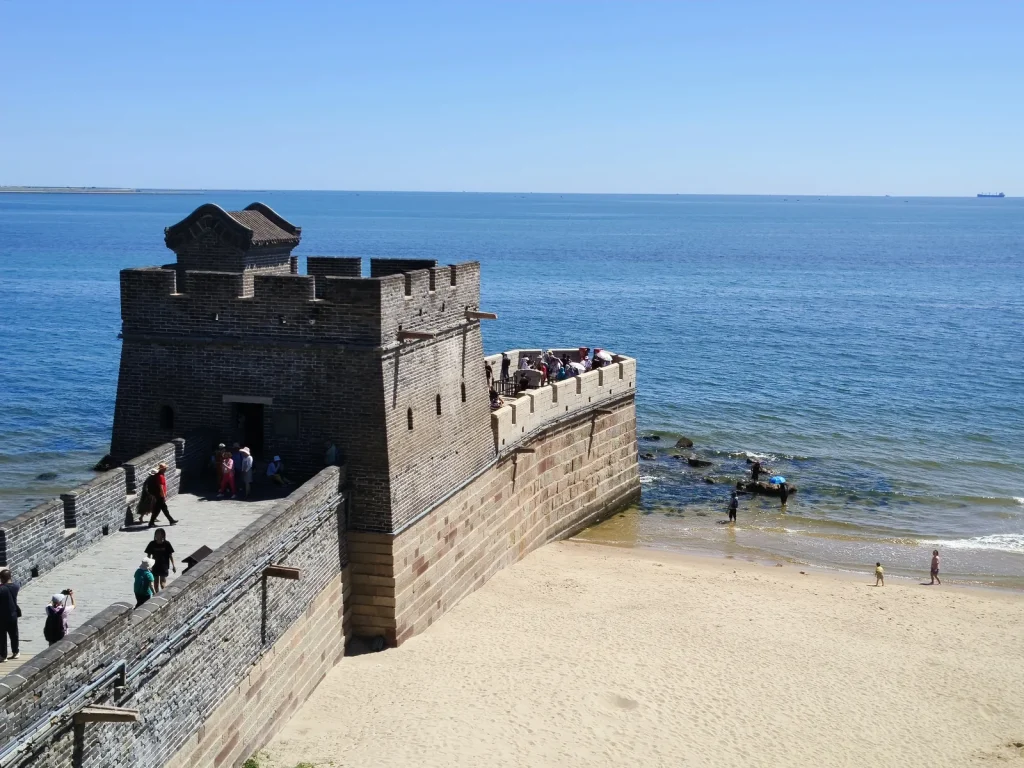
If you follow the Ming Great Wall in the other direction, the story ends at Shanhaiguan in Hebei. The coastal section at Laolongtou is often described as the place where the wall reaches the sea. For travelers, this makes Shanhaiguan one of the clearest end-point routes because it connects history, sea views, and a real Great Wall landscape in one trip. See the dedicated Laolongtou Shanhaiguan Great Wall guide if you want to compare it with Beijing sections.
What this means for a Great Wall trip
For first-time foreign visitors, Jiayuguan is rarely the practical first choice because it sits far from Beijing. If you only have one day, start with Great Wall Sections Near Beijing How To Choose and compare How to Explore Mutianyu Great Wall Easily with Badaling. If you have a multi-city China route, Jiayuguan can work as part of a Gansu or Silk Road itinerary, while Shanhaiguan can fit a northern coastal route.
Before you plan around a “start point”
Do not treat the Great Wall as one continuous visitor trail. The historical wall systems were built in different regions and dynasties. UNESCO describes the Great Wall as a long cultural landscape rather than one simple line, and historical summaries such as When Was the Great Wall of China Built? A Clear Timeline for Travelers and The Origin of the Great Wall of China: From Early Defenses to Ming Sections explain why Qin, Han, and Ming wall systems should not be merged into one easy date or start point.
For background checks, compare broad references such as UNESCO’s Great Wall listing and Britannica’s historical overview. For real travel planning, always verify local access and transport conditions before visiting, especially around holidays or seasonal maintenance.
Recommended next reads
- Which Sections of the Great Wall Are Recommended? for choosing a Great Wall section by travel style.
- How to Get from Beijing to the Great Wall of China for Beijing-based transport planning.
- Great Wall History for the broader historical context behind the wall systems.

Why “start” and “end” depend on direction
English travel pages often use “start” because it is easier than explaining wall systems. But if you read the Great Wall from west to east, Jiayuguan feels like a starting point. If you read it from the sea inland, Laolongtou and Shanhaiguan can feel like the beginning. Historians and travelers are often asking different questions: one is asking about construction and dynasties, while the other is asking where a famous route begins on the map.
For practical travel writing, the clearest solution is to name the exact frame. Say “western end of the Ming Great Wall” when discussing Jiayuguan. Say “eastern end where the Ming Great Wall reaches the sea” when discussing Laolongtou. Avoid saying that either place is the absolute start of every Great Wall system in Chinese history.
Should foreign visitors go to Jiayuguan?
Jiayuguan can be worthwhile on a Gansu or Silk Road route, especially for travelers who want frontier-pass history, desert-edge scenery, and a very different Great Wall context from Beijing. It is not a convenient add-on to a normal Beijing itinerary. If your China trip is short, use your Great Wall day for Mutianyu, Badaling, Jinshanling, or another Beijing-area section. If your route already includes Lanzhou, Zhangye, Dunhuang, or the Hexi Corridor, Jiayuguan becomes much more logical.
The biggest mistake is treating Jiayuguan as a must-see for every first-time visitor just because it is an endpoint. Endpoint history is interesting, but it should not override route efficiency. A traveler with two or three days in Beijing will usually get more value from a strong Beijing-area wall visit and a clear history guide than from forcing a distant western detour.
Should foreign visitors go to Shanhaiguan and Laolongtou?
Shanhaiguan and Laolongtou are easier to connect with northern coastal travel than Jiayuguan is with Beijing. They work well for travelers who are already considering Qinhuangdao, Beidaihe, or an eastern Hebei route. The experience is different from Mutianyu: more pass-and-coast history, less classic mountain-ridge walking. That difference is exactly why it can be valuable as a second Great Wall theme.
If your main goal is a beautiful first wall photo, choose Mutianyu or Jinshanling first. If your goal is to understand how the Ming Great Wall met the sea and controlled a major pass, Shanhaiguan and Laolongtou are stronger. Read the Laolongtou and Shanhaiguan guide before building the route.
How to explain it simply
- Jiayuguan: famous western end of the Ming Great Wall in Gansu.
- Shanhaiguan: major eastern pass of the Ming Great Wall in Hebei.
- Laolongtou: sea-facing eastern end where the wall reaches the Bohai coast.
- Qin and Han systems: earlier and broader frontier defenses that should not be collapsed into one tourist line.
Bottom line
The Great Wall does not have one simple start point that works for every dynasty and every map. For travel planning, call Jiayuguan the famous western end of the Ming Great Wall and Shanhaiguan/Laolongtou the eastern end route. For a first Beijing visit, choose a practical section first; for a longer China itinerary, use these endpoints to add historical depth.
Related planning guides
For a practical first visit, compare Great Wall sections near Beijing before planning a distant endpoint. If you want a normal Beijing day trip, start with Mutianyu Great Wall or Badaling transport from Beijing. For eastern endpoint context, use Laolongtou and Shanhaiguan.