
Most visitors reach Juyongguan and immediately look up: the Great Wall climbs sharply on both sides of the pass. Before choosing a staircase, look at the stone gateway below. The Cloud Platform, or Yuntai (云台), is a Yuan-dynasty monument inside the pass. Its passage is lined with Buddhist images and inscriptions in several scripts. It makes Juyongguan more than a quick photograph of battlements, and it offers a worthwhile focus for travelers who do not want to make the wall climb the whole visit.
This guide is for a heritage-first visit, not a promise of an accessible or step-free route. The monument is within the Juyongguan scenic area; current admission, opening times, access restrictions and transport should be checked before departure. If your main question is whether this section suits your trip at all, start with our Juyongguan decision guide.
What is the Cloud Platform?
The Cloud Platform is a monumental stone base and arched passage from the Yuan period. It stands within Juyongguan Pass, where the road through the mountains and the Great Wall landscape meet. The Beijing Municipal Bureau of Cultural Heritage identifies it as a protected Yuan-dynasty site. It is not a modern viewing deck or a cable-car station. You can appreciate its facade and interior without treating it as a route up the ramparts.
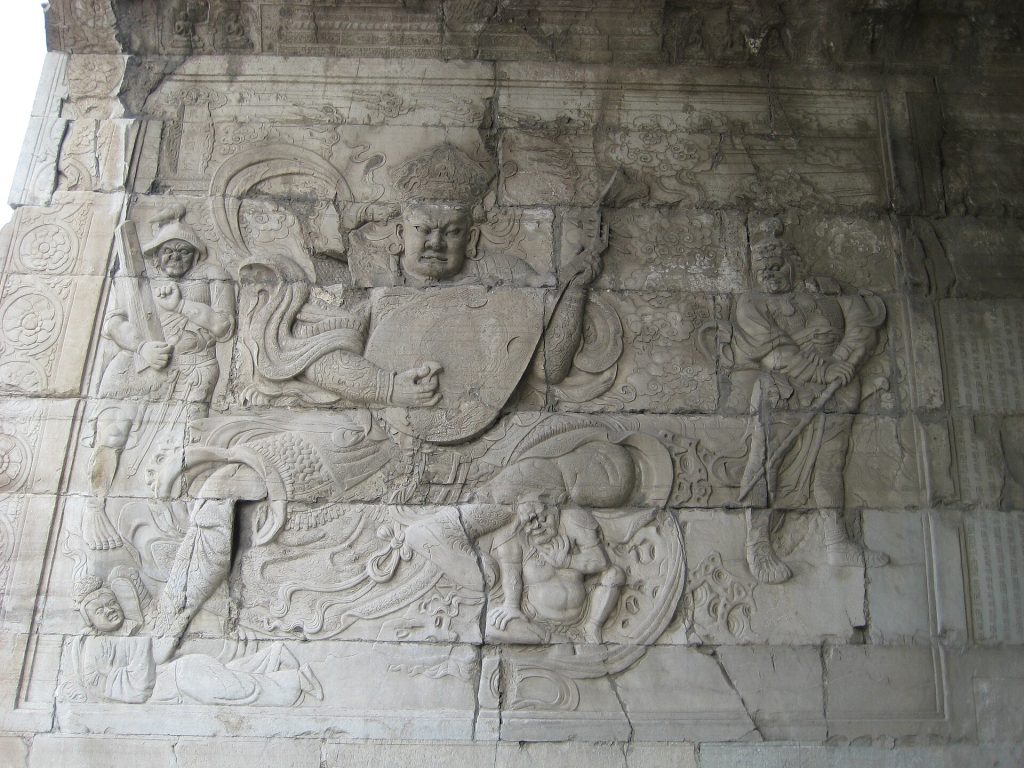
The arch is the key. Beijing’s culture and tourism bureau describes images including the Four Heavenly Kings, dragons and other Buddhist motifs, together with inscriptions in Sanskrit, Tibetan, Mongolian, Tangut, Uyghur and Chinese. These are features of a historic monument, not replicas installed as decoration for the modern visitor. You do not need to read every inscription to understand the site: the combination of sculpture, language and a mountain pass tells a story of movement and religious culture across Yuan-era China.
A slow walk: facade, arch, passage
First, stand back. From a comfortable distance, take in the scale and shape of the freestanding stone structure. Look at how the arch sits in the pass before trying to photograph details. If you only shoot a close-up and leave, you lose the relationship between the monument, the road and the walls rising beyond it. The official Beijing scenic-area description places the Cloud Platform in the pass city and notes the carvings on the structure.
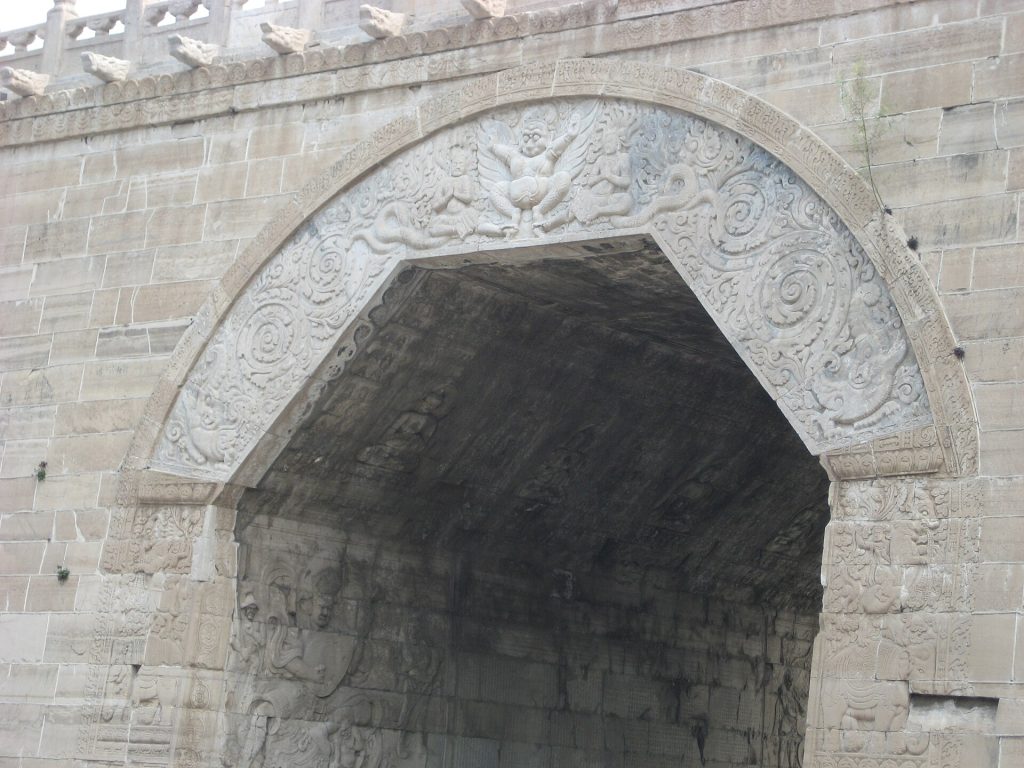
Next, examine the arch from both ends. There are reliefs around the opening as well as inside it. Let your eyes adjust to the contrast between outdoor sun and the darker stone passage. If other visitors are passing through, step aside rather than blocking the arch for a long photograph. The stone is old and weathered: use your camera zoom instead of touching it or leaning against it.
Then walk through slowly. The main carved figures are easier to understand when viewed as an ensemble rather than as isolated photo subjects. Look for the imposing guardian figures, smaller surrounding forms, and carved surfaces above your head. Light changes sharply through the passage; a phone may render the interior darker than it looks to your eyes. Do not use flash or photography equipment in any area where local signs forbid it.
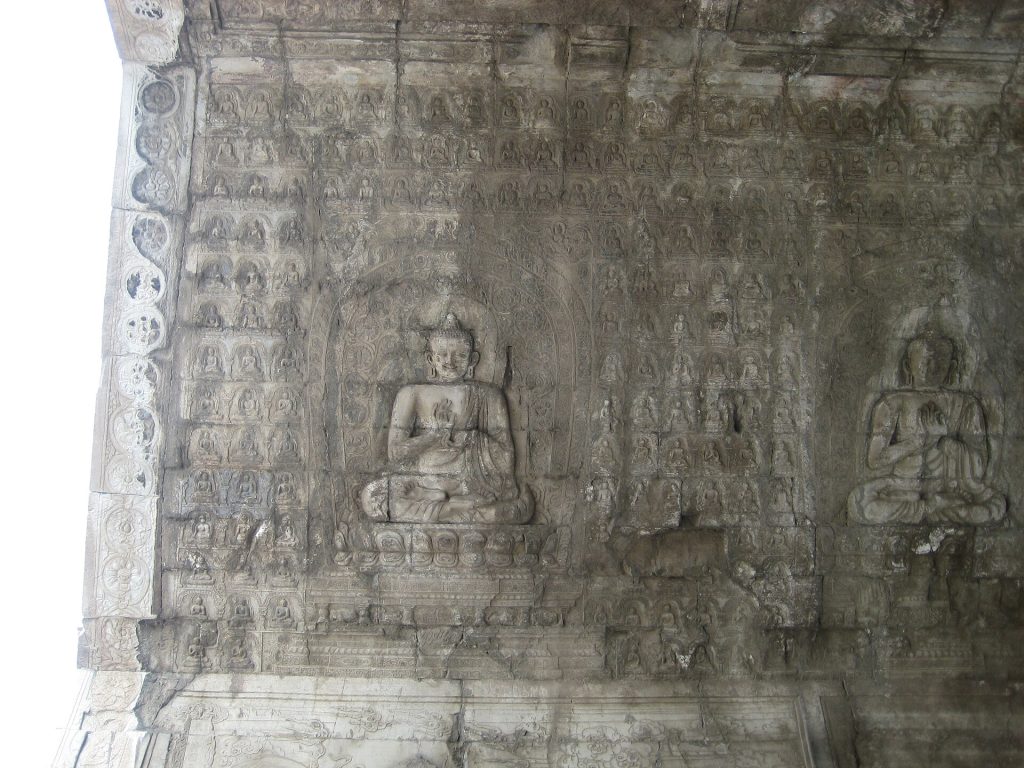
Finally, look up and turn back. The ceiling and inner surfaces have their own imagery, and reversing direction changes what you notice. That second look often gives more than a rushed attempt to cover every tower on the hillside. Expect uneven wear: weathering is part of what makes the original stone worth seeing, not a defect to edit out of photographs.
How long should you allow?
Allow roughly 30–60 minutes for a careful look at the Cloud Platform itself, with more time if you enjoy photography or reading on-site interpretation. This is a planning allowance, not an official tour duration. A relaxed Juyongguan visit that also includes the pass grounds and a short section of wall can occupy around two to three hours, depending on crowds, weather, fitness and whichever paths are open that day.
If you have only a short stop, prioritize the facade, arch and interior before deciding whether a climb makes sense. If you have more time, use the platform as a starting point: after studying the carved gateway, the fortifications above it have more context. Do not assume both sides of the wall will be equally easy. Juyongguan’s stepped hillside can be demanding; turn around before the descent becomes uncomfortable. Our Great Wall guide for older travelers discusses pacing and why the gentler-looking plan on a map may still be physically tiring.
Cloud Platform or wall climb: choose your emphasis
Choose the platform first if your group includes a history enthusiast, someone who prefers detailed observation to a long climb, or travelers who have already seen another Great Wall section. You still get the atmosphere of Juyongguan Pass without making the steepest staircase your measure of a successful trip. It also works as a useful shared stop when a group has mixed interests: some can focus on the heritage details while others later choose a suitable wall route.
Choose the wall first if your priority is an energetic hike and weather or closing time makes the climb time-sensitive. You can return to the platform on the way out if site access permits. Do not plan a summit-to-summit traverse based only on an online map: paths, gates and conditions may change. For the broader trade-offs between this pass and a more familiar section, see Badaling vs. Juyongguan.
Travelers with mobility limitations should not read “short heritage stop” as “wheelchair accessible.” Surfaces, approach routes and access arrangements need direct confirmation with the scenic area. The municipal scenic-area listing has described accessibility as limited. If step-free access is essential, contact the operator before buying tickets or arranging transport, and use our accessibility planning guide as a checklist rather than a guarantee.
Practical planning from Beijing
Juyongguan is an excursion from Beijing, but a map distance is not a reliable door-to-gate travel time. Traffic, your departure point and the route you choose matter. Our Beijing-to-Juyongguan transport guide compares the practical approaches; confirm the current timetable and final drop-off before relying on public transport. A private vehicle can simplify a short stop, but clarify where the driver will wait and how much time you want inside the scenic area.
Before leaving, check the scenic area’s current opening arrangements, ticket rules, weather and any temporary closure notice. Older articles may quote out-of-date prices or hours, so use the operator or current official booking channel for the decision that costs money. Carry water and shoes with dependable grip even if you intend to stay mostly near the pass. Allow time for the return journey; a heritage stop is more satisfying when you are not rushing to catch a fixed connection.
How to photograph it respectfully
For an establishing image, step back far enough to show the stone gateway and a little of its setting. For detail shots, move closer without touching the reliefs. The shaded interior may need a steadier hand rather than a brighter flash. A wide shot, an arch detail and one interior carving tell a more complete visual story than a dozen near-identical close-ups. Keep the passage open for other visitors, follow signs about restricted areas and do not stage people against fragile carved surfaces.
The photographs here are real images of the Cloud Platform, credited to their photographer. They record the monument at the time photographed; they do not prove today’s light, crowd levels or exact access. That distinction matters when you use a historical site photograph to plan a live visit.
Is it worth making a special stop?
Yes, if you are already considering Juyongguan and want something more specific than “walk on the Great Wall.” The Cloud Platform rewards close looking, and its multilingual carvings give the pass a cultural dimension that a panorama alone cannot. But it is not a substitute for every Great Wall experience. If the trip is primarily about a long open-ridge walk or a particular cable-car route, choose the section that fits that goal rather than forcing this stop into an overpacked day.
A simple plan is enough: arrive with the current access details confirmed, start at the Cloud Platform, take time with the arch and passage, then decide on the wall climb your group can comfortably manage. That way, the monument remains the point of the visit rather than a detail you noticed only while heading for the exit.
Featured photo: BabelStone / Wikimedia Commons, CC BY-SA 3.0. Resized; archive thumbnails may be cropped. These real photographs illustrate the locations, not current access, crowd levels, or weather.