
Jinshanling Great Wall is not a single out-and-back walk. From the main entrance you can build a compact loop, use the cable car to reach the central ridge, extend across several watchtowers, or attempt a longer one-way route toward the east. The last option is where plans often fail: an old route description may show an east-gate exit even when that gate or the approach to it is not available to ordinary visitors. This guide explains how to choose a short, half-day or longer Jinshanling route without making your return transport depend on an unverified exit.
Choose the return point before you start walking
The safest way to plan Jinshanling is backwards. First decide where your driver, shuttle or taxi will collect you. Then choose a wall route that returns to that point unless the scenic area has confirmed a different exit for your date. A government route guide has described several access points and landmark sequences, including Zhuanduokou (砖垛口), Shalingkou (沙岭口), Houchuankou (后川口), Xiaojinshan Tower and Dajinshan Tower. These names are useful for understanding the map, but historical route listings are not a live access notice.
This matters because Chengde authorities announced in December 2024 that the east gate, including East Five-Eye Tower, was temporarily closed for winter fire prevention, with reopening to be announced separately. A 2026 hiking event later used a long course involving East Five-Eye Tower, but event access does not prove that the ordinary east gate is open every day or available as a public exit. Before planning a one-way traverse, ask the scenic area two exact questions: “Can ordinary visitors reach East Five-Eye Tower today?” and “Can we leave through the east gate today?” If either answer is unclear, use a route that returns to the main entrance.
Route 1: compact main-entrance loop
A compact route suits travelers who want the character of Jinshanling without committing to a long ridge hike. From the visitor area, walk toward a central wall access such as Zhuanduokou, spend time on the nearby ridge, then use an approved return path toward the main entrance. An older official route guide described a Zhuanduokou-Shalingkou loop of about 3 kilometers and roughly 1.5 hours. Treat those figures as orientation only: the actual route, open exits and your pace may be different.
For a current trip, allow two to three hours on site for ticketing, approach paths, the wall segment, photographs and the return. That is our planning allowance, not an official duration. The value of this route is not the distance covered; it is the chance to see repeated towers and mountain layers without turning the day into an endurance test. It is the best starting point for a first-time Jinshanling visitor who also has a long drive back to Beijing.
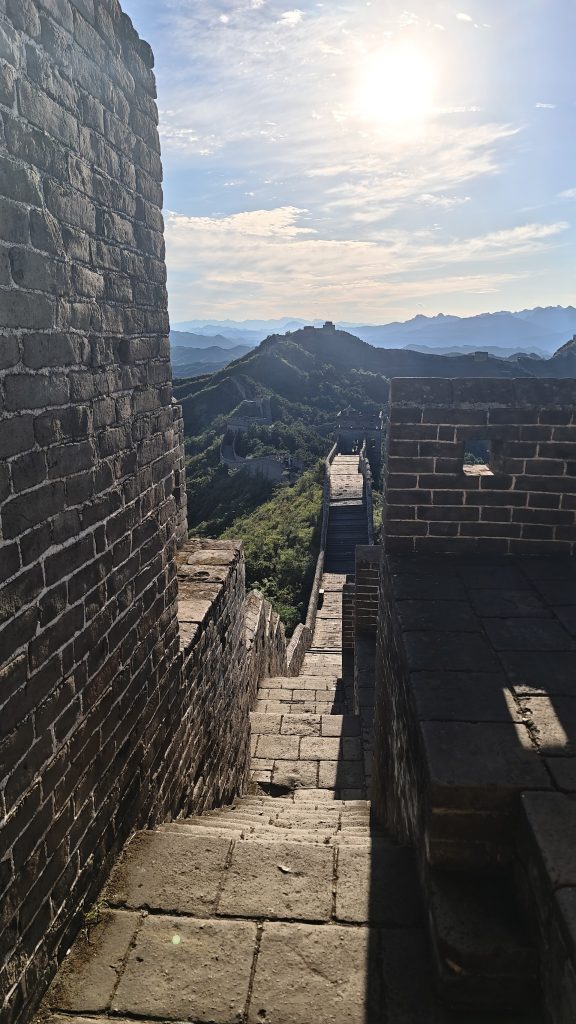
Stone steps can be narrow, uneven and tiring on the descent. A short map line may still involve sustained climbing, and stopping inside or beside a tower can add useful rest time. Wear shoes with reliable grip and turn back while everyone still has enough energy for the approach path to the gate. For broader difficulty comparisons, see our Great Wall hiking guide for beginners.
Route 2: cable car plus central ridge
The cable car can reduce part of the approach and place more of your available time on the wall itself. A government visitor guide described it as reaching the Xiaojinshan area, one of the central scenic parts of Jinshanling. It does not make the ridge flat, remove tower stairs or guarantee that every member of a group can manage the remaining walk. Confirm the cable car’s operating status, last ride and whether you need a one-way or round-trip ticket when you arrive.
A sensible cable-car plan is to ride up, explore a comfortable stretch around the central towers, and return by the cable car or an open walking route to the same main visitor area. Before leaving the upper station, note the last return time and ask which path leads back if service pauses because of wind or maintenance. Do not let a one-way ticket force a longer descent that your group did not inspect in advance.
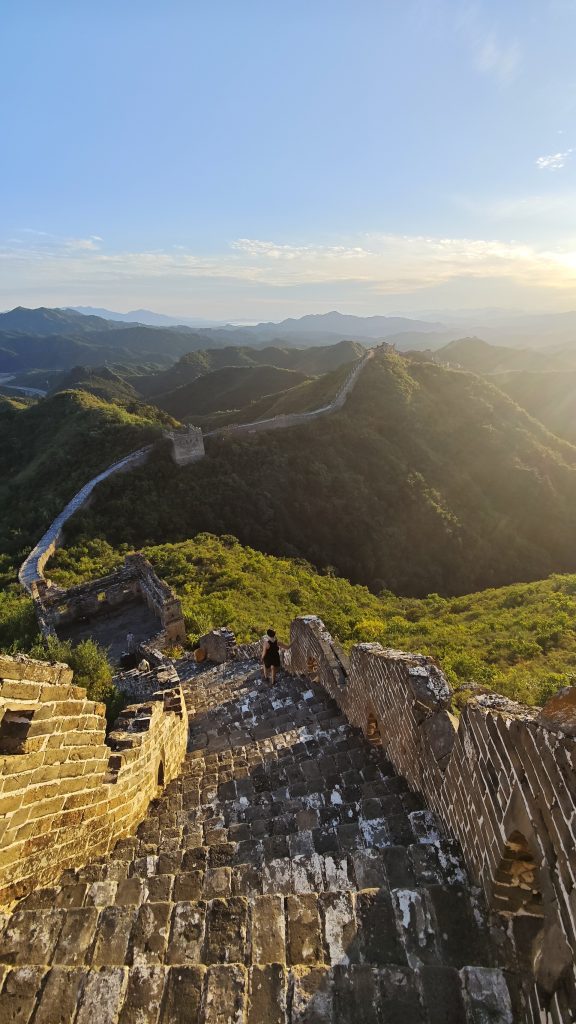
This is usually the strongest option for a mixed-ability group whose priority is scenery and photography rather than distance. Allow at least two hours after reaching the upper area so the trip does not become a rush between the cable car and one tower. If sunrise or late light is your main aim, ordinary daytime access, special early opening and cable-car operation are separate questions. Our guide to staying near Jinshanling explains when an overnight plan is more realistic than a same-day drive.
Route 3: longer central hike with a confirmed descent
Stronger walkers can extend beyond the compact loop through more of the central ridge. A historical official route listed Zhuanduokou, Shalingkou and Houchuankou as part of a roughly 5-kilometer loop. A 2026 family running event also linked the main parking area, ticket gate, Taochunkou, Zhuanduokou, Shalingkou, Xiaojinshan, Dajinshan and Houchuankou before returning to the main venue. Those references show how the central access points can connect; they do not create a permanent signed route for every visitor.
At the ticket gate, photograph the current scenic map and ask which lower paths are open. Choose a descent that brings you back toward your vehicle rather than simply following the wall until you feel tired. A longer ridge route can take three to five hours depending on the exact exits, elevation, rests and photography. Add a firm turnaround time based on daylight, weather and the last available cable car or pickup. If you are using a private transfer, give the driver a specific gate and expected return window, not just “Jinshanling.”
Why the east-gate traverse needs same-day confirmation
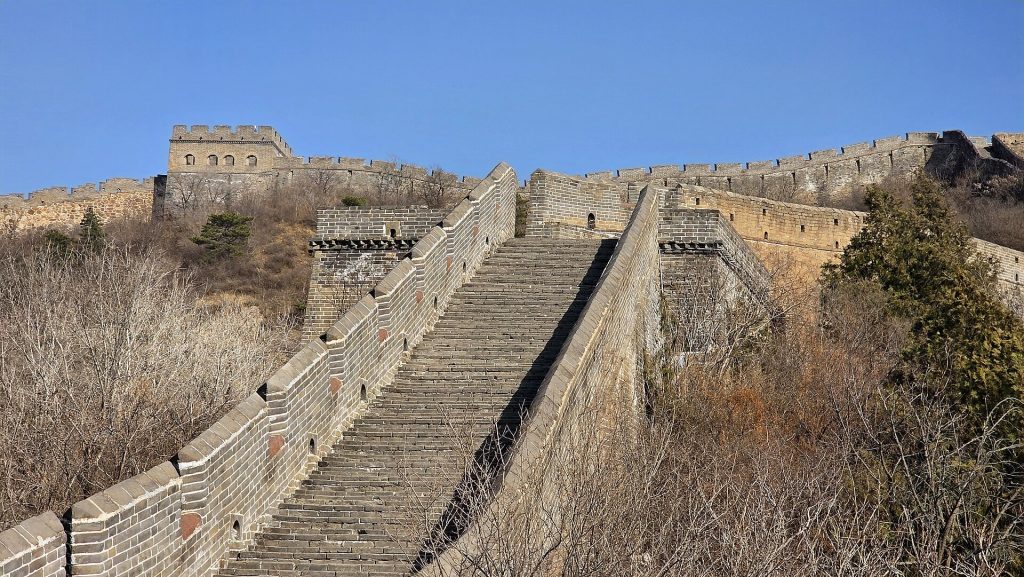
Older guides often present a one-way line from the central towers toward East Five-Eye Tower and the east gate. It is attractive because it avoids retracing the entire ridge and covers many towers. It also has a more fragile logistics chain: the far route must be open, the east exit must accept visitors, and your vehicle must be able to meet you there. A screenshot of an old blog, map or tour itinerary is not confirmation.
The practical fallback is simple: do not continue past the last confirmed return point. If staff confirm that the east gate is unavailable, turn the day into a central out-and-back or loop. If they confirm it is open, verify the walking direction, closing time, last safe entry to the eastern stretch and pickup location. Ask whether your ticket covers that exit and whether any temporary fire-prevention or conservation restriction applies. Never bypass a barrier or use an unmarked hillside path to preserve an itinerary.
What the photographs tell you, and what they do not
The images in this guide are genuine Jinshanling photographs, including scenes recorded in September 2026. They show real wall surfaces, towers and gradients. They do not establish which entrance was used, whether a distant gate is open today, or how crowded the site will be on your date. Light can also flatten or exaggerate a slope in a photograph. Use the images to understand the character of the terrain, then use current signs and staff instructions to choose the route.
Suggested timing from Beijing
For a same-day trip, leave enough margin for a road journey that can vary with traffic and weather. Aim to reach the gate early enough that a delayed arrival still leaves time for your chosen route. Do not choose the longest hike before seeing the day’s access map. For a compact or cable-car visit, reserve a substantial morning or afternoon block plus round-trip road time. For a longer central hike, treat Jinshanling as the day’s main activity.
Public and tourist transport arrangements can change seasonally. The most robust options are a confirmed current direct service or a vehicle booked for the round trip. If you hire a driver, agree whether the vehicle waits at the main entrance or moves to another gate only after staff confirm the exit. Our Beijing-to-Jinshanling transport guide covers the broader transfer choices, while the private day-trip guide explains driver and guide roles.
Route choice by traveler type
- First Jinshanling visit: choose the compact loop or cable-car central route. Prioritize scenery and an uncomplicated return.
- Family or mixed fitness: use the cable car if operating, agree on a turnaround point, and keep the group together.
- Regular hiker: choose a longer central loop with a confirmed descent and a fixed turnaround time.
- Photographer: spend less distance and more time around several viewpoints; confirm opening and cable-car hours separately.
- One-way traverse walker: attempt the eastward plan only after same-day confirmation of route and exit access.
Questions to ask at the gate
- Which wall entrances and descents are open today?
- Is the east gate open to ordinary visitors today?
- Can visitors reach and pass East Five-Eye Tower?
- What time is last entry to the longer route?
- Is the cable car running, and when is its last downhill ride?
- Which route returns to the main parking area without road transport?
These questions take a minute and prevent the most expensive route mistake: arranging your pickup at a gate you cannot reach.
Source and update note
Checked September 21, 2026 against the Chengde government access guidance, the official tourism bureau’s historical route descriptions, the east-gate closure notice, and a 2026 event route report. The route names help with orientation, but only the scenic area’s same-day map and staff guidance can confirm current ordinary visitor access.
Featured photo: Renek78 / Wikimedia Commons, CC0 1.0. Resized; archive thumbnails may be cropped. These real photographs illustrate the locations, not current access, crowd levels, or weather.