
Shuiguan Great Wall (水关长城) is a real, ticketed Great Wall attraction in Beijing’s Yanqing District. It is not the main Badaling Great Wall entrance. That distinction matters more than it sounds: a traveler who asks a driver for “Badaling,” buys a Badaling ticket, or follows a map pin without checking the Chinese name can end up planning for the wrong gate. Shuiguan has its own setting, entrance and visitor information, and its own reason to visit. This guide is for people deciding between the two, or trying to make a Shuiguan stop work without wasting a half-day.
Shuiguan or Badaling: the short answer
Choose main Badaling if this is your first and perhaps only Great Wall visit, you want the best-known Badaling route and its familiar north/south tower choice, or you are building the trip around the standard Badaling rail and visitor facilities. Choose Shuiguan if you specifically want its valley-and-pass setting, its water-defense story, or a separate Yanqing wall experience. Do not treat Shuiguan as a substitute entrance to the north and south routes at main Badaling. The Beijing government lists Shuiguan and Badaling as separate attractions with different addresses and visitor details.
The distinction is not a judgment that one wall is “authentic” and the other is not. Both are historic Great Wall locations in the Badaling area. It is a practical distinction about which wall walk and visitor entrance you will actually get. If you have already booked a tour described only as “Badaling area,” ask the operator for the exact scenic-area name in Chinese, entrance, ticket and return pickup point before paying. Our Badaling north-versus-south guide applies to the main Badaling scenic area, not automatically to Shuiguan.
What you will see at Shuiguan
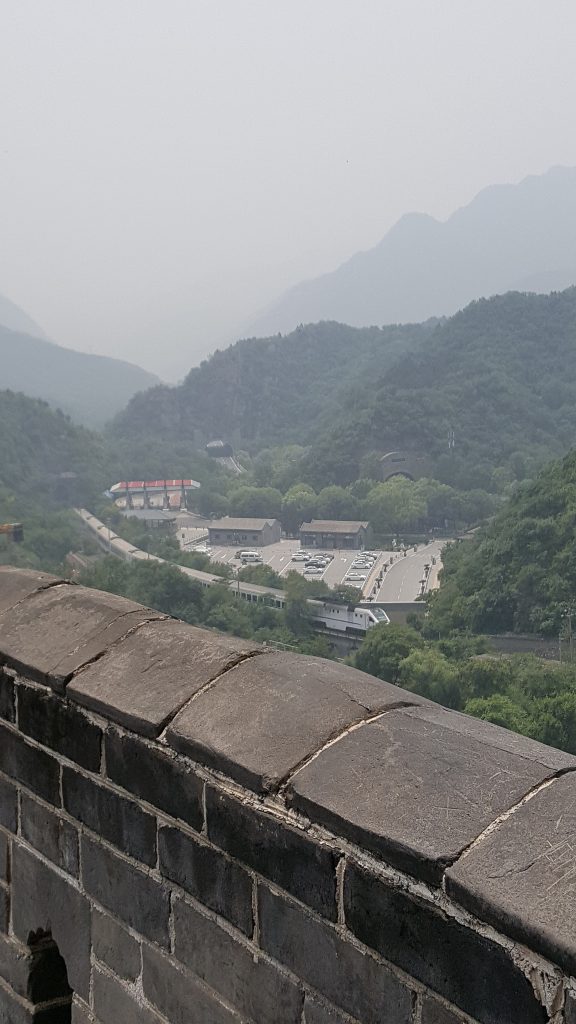
Shuiguan follows the contours of a narrow mountain setting rather than presenting the same broad first-visit panorama as main Badaling. The local name refers to a water pass or water-defense function. An official Yanqing tourism description characterizes the wall here as V-shaped across the mountains, with double-sided battlements and watchtowers arranged with the terrain. That is a useful way to read the landscape from the entrance: look at how the walls climb away on either side of the pass, and how the route is controlled by the valley rather than by a straight line.
Expect stonework, towers and steps, not a flat overlook. The photographs on this page are actual Shuiguan scenes, but they were taken on earlier dates; they do not prove today’s path conditions, foliage, opening status or crowd levels. What is walkable can change with conservation work and weather. Treat every closed section and barrier as a hard stop, not as a suggestion to find a side path.
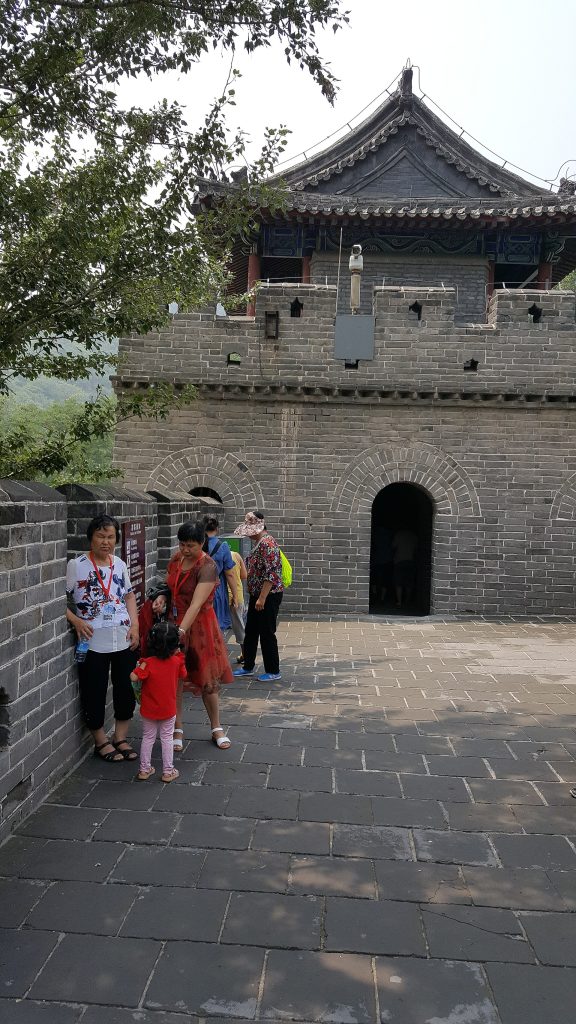
The central arrow-tower area makes a sensible orientation point before you decide how far to climb. Give yourself a moment to identify the route back to the gate and check any signs showing current access. This is especially helpful when a group has different fitness levels: you can agree on a turnaround point instead of turning a pleasant short visit into a forced summit attempt.
How demanding is the walk?
Shuiguan can work as a shorter wall stop, but “short” does not mean step-free. The slope is the limiting factor. Surfaces and riser heights vary, and the descent asks for attention after your legs are tired. Wear grippy shoes, carry drinking water, and allow extra time if you need to pause for photographs or for children to regroup. A photograph of a dramatic stairway is not a promise that every visitor must climb it: the correct route is the one open and comfortable for your party on the day.
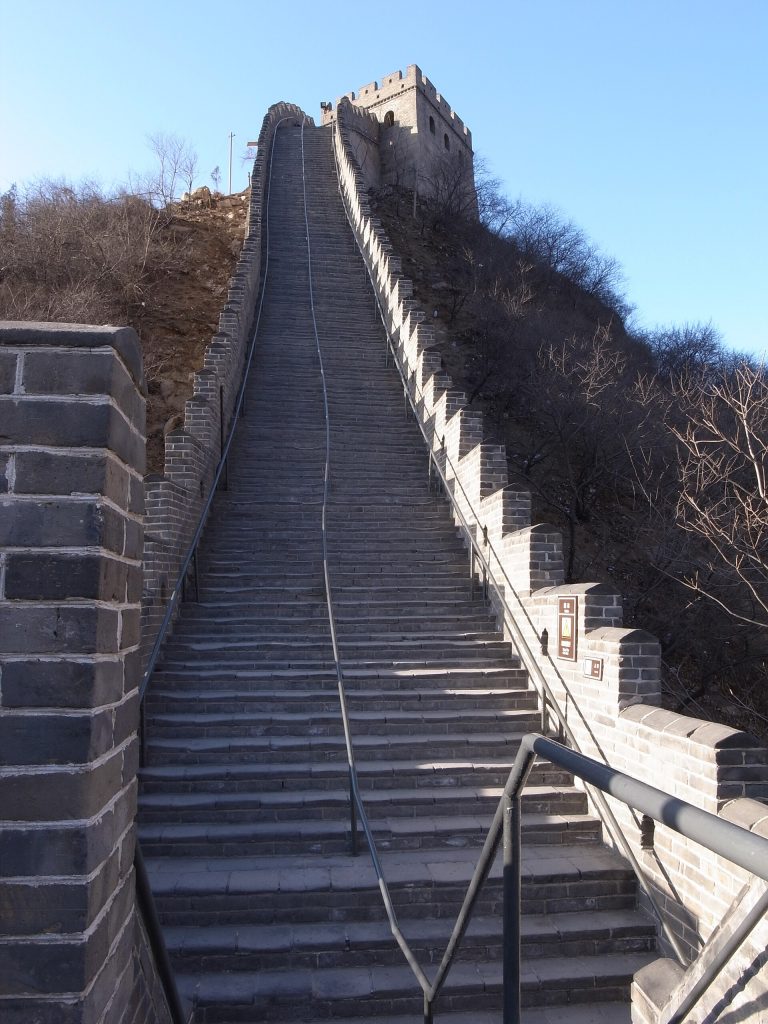
For planning, allow roughly 90 minutes to two hours on site for a relaxed short wall experience, then add the actual transfer time, ticketing and breaks. That is our planning allowance, not an official minimum or a guarantee that all towers are open. A fast photo stop could be shorter; a careful climb and longer return could take more time. If you have limited mobility, ask the scenic area what accessible viewing is currently available before committing, rather than assuming a handrail makes the upper walk accessible. Our broader Great Wall with seniors guide helps compare gentler alternatives.
Tickets and opening hours: what to verify before leaving Beijing
The Beijing municipal visitor listing describes Shuiguan as an on-site ticket purchase attraction and records seasonal hours, a standard adult ticket and discount policies. The listing is dated July 2024, so it is a reference, not a verified live 2026 tariff or same-day operating notice. The listed schedule is 09:00-16:30 from April through October and 09:00-16:00 from November through March; it lists an adult ticket at CNY 35. Before traveling, confirm current hours, last admission, ticket price, eligibility documents and any temporary closure directly with the site. The same official listing gives +86 10 6111 8002 as its contact number. Do not buy a main Badaling ticket on the assumption it covers Shuiguan.
Use the official scenic-area name, 水关长城, when searching maps or asking a Chinese-speaking driver. The listed address is Shifosi Village, Badaling Town, Yanqing District. Save the gate pin before setting off, especially if a map presents several similarly named “Badaling” results. If a seller quotes a bundle, ask which site the admission actually covers and whether return transport waits at Shuiguan or somewhere else. For wider booking decisions, see our Great Wall ticket and booking guide.
Getting there without confusing the two gates
The simplest low-friction option for a small group is a driver or taxi arranged to the exact Shuiguan entrance, with the return pickup point agreed in advance. If you use public transport for most of the journey, Beijing’s tourism bureau has described taking the suburban S2 train to Badaling Station and then a taxi for the short final leg to Shuiguan. It also identifies the Shuiguan Great Wall exit from the Beijing-Xizang Expressway for drivers. That report was a spring-travel suggestion, not a current S2 timetable: check today’s operating schedule and last return service separately. In particular, a station named “Badaling” is not itself proof that you have arrived at the Shuiguan ticket gate.
A standard Badaling-bound bus or high-speed-rail plan may be excellent for the main scenic area but should not be silently reused for Shuiguan. Ask a driver to repeat the destination name, show the Chinese characters, and check the final map pin before the vehicle leaves the station. If an advertised tour promises “Badaling” but substitutes Shuiguan, request the exact itinerary and entry ticket before agreeing. For a broader comparison of rail and road choices, use our Great Wall by train guide.
A sensible half-day plan
- Before departure: check Shuiguan’s open status, the weather, transport return plan and exact entrance. Keep a screenshot of the Chinese name and gate location.
- At the gate: verify ticket terms and the currently open walking area. Photograph the entrance sign and your pickup location so you can find them again.
- On the wall: start with the pass and arrow-tower setting, then walk only as far as your party can descend comfortably. Leave a generous buffer for the return.
- Before leaving: return to the same agreed pickup point. If you also want main Badaling, treat it as a second attraction requiring separate time, transfer planning and potentially a separate ticket.
For most first-time visitors with one Beijing day, I would still prioritize the main Badaling route or compare it with Mutianyu rather than trying to tick off two entrances in haste. Shuiguan is most rewarding when the smaller pass landscape is itself the point of the trip, or when it fits a carefully planned Yanqing itinerary. For other one-day choices, see our Great Wall one-day tour planning guide.
Common questions
Is Shuiguan the same ticket as Badaling?
Do not assume so. The Beijing government publishes separate attraction pages and ticket details for the two. Check the exact product name and current terms before purchase.
Does the Badaling train stop at the Shuiguan gate?
No direct gate arrival is established by the official guidance used here. The city’s S2 travel suggestion includes a taxi from Badaling Station to Shuiguan. Confirm the last-mile transfer and return before leaving.
Is Shuiguan a good choice for a first Great Wall visit?
It can be if its terrain and pass story appeal to you, but main Badaling is the clearer choice for the classic Badaling route. Make the choice deliberately; a cheaper or shorter-looking ticket should not decide the destination by accident.
Can I visit both in one day?
Possibly, with a vehicle, enough daylight and confirmed separate admission. It is usually better to enjoy one wall properly than to spend the afternoon transferring between entrances. Check actual driving and operating times on the day.
Source and update note
Checked in September 2026 against the Beijing government Shuiguan visitor listing, its separate Badaling listing, the municipal S2 travel suggestion, and the Yanqing landscape description. Older posted hours and fares can change. Confirm current conditions with the attraction before travel.
Featured photo: Antigng / Wikimedia Commons, CC BY-SA 4.0. Resized; archive thumbnails may be cropped. These real photographs illustrate the locations, not current access, crowd levels, or weather.