
Yes, you can often get mobile signal on popular Great Wall sections, but coverage is not guaranteed everywhere. Restored and busy areas such as Badaling and Mutianyu usually have better connectivity than remote hiking routes. Signal can drop behind ridges, inside valleys, during bad weather, or on less-developed sections.
Quick planning snapshot
- Best for: visitors relying on maps, ride-hailing, translation apps, or messaging.
- Most reliable: popular restored sections and visitor-service areas.
- Less reliable: remote hikes, wild-wall routes, valleys, and long ridgelines.
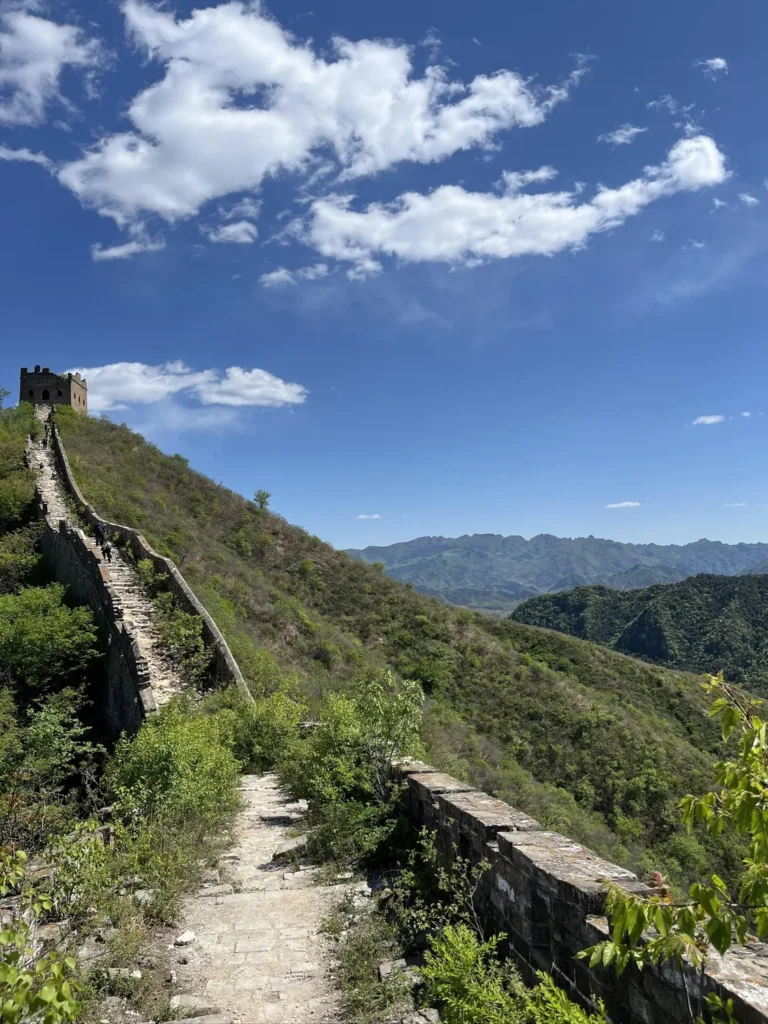
Where signal is usually better
Badaling, Mutianyu, and other developed scenic areas tend to have stronger coverage because they receive more visitors and have more infrastructure. You may still see temporary drops on the wall itself, especially around towers or on the far side of ridges. If you need to contact a driver, arrange a pickup point and backup time before going up.
Where signal can be weak
Remote routes such as Gubeikou, Jiankou, and some long hiking lines are less predictable. Mountain terrain blocks signal, and visitor infrastructure is limited. Do not rely on live navigation alone. Download offline maps, save hotel addresses in Chinese, screenshot transport details, and keep your driver or guide contact details available offline.

SIM, eSIM, and apps
If your phone supports roaming or eSIM, set it up before the trip and test it in Beijing. Some apps and services may behave differently in China, so prepare offline alternatives. Read how to get internet in China for tourists before relying on maps, messaging, or payment apps on the wall.
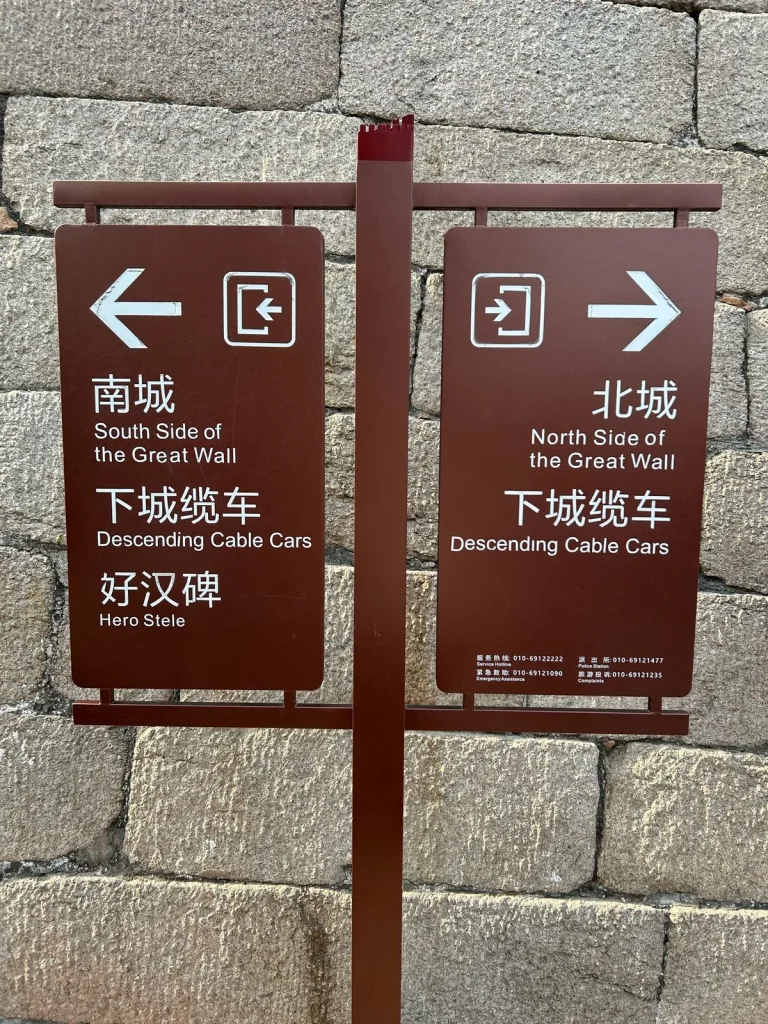
Before-you-go checklist
- Download offline maps.
- Screenshot ticket, hotel, and driver details.
- Carry a power bank.
- Agree on a pickup point before climbing.
- Do not depend on live signal for emergency route decisions.
Bottom line
Popular sections usually have usable signal, but a Great Wall route should still be planned as if signal may disappear at the worst moment.
FAQ
Can I use maps on the wall? Usually yes at popular sections, but download offline maps first. Will messaging apps work? Often in developed areas, but not guaranteed on ridges. Can I call a driver from the top? Maybe, but agree on the pickup plan before climbing. Do remote hikes have signal? Treat signal as unreliable.
Section-by-section expectations
Mutianyu and Badaling usually offer the best chance of a usable connection because they are developed scenic areas. Juyongguan may also be reasonably connected near visitor zones. Jinshanling, Gubeikou, and Jiankou-style routes are less predictable because terrain and distance matter more. Even when a phone shows bars, data may still be slow or unstable.
What to prepare offline
Save your hotel address, driver phone number, ticket confirmation, route notes, emergency contacts, and the Chinese name of your section. Screenshots are more reliable than live pages. If traveling with others, agree on a meeting place in case someone loses signal or battery. A power bank is more useful than a second navigation app if your phone dies.
Safety rule
Do not make route decisions that depend on live signal. If a trail is unclear, weather changes, or a section looks unsafe, turn back or ask staff where available. Connectivity is helpful, but it is not a substitute for conservative route planning.
What to do if signal disappears
Stay calm and follow your offline plan. Return to the last clear route point, use signs where available, and avoid taking side paths just because a map app is slow. If traveling with a driver, use the pickup time and location agreed in advance. If traveling with friends, set a meeting point before separating for photos or rest stops.
App access and China-specific issues
Mobile signal is only one part of connectivity. Some foreign apps may not work normally in China, and some services require local verification, roaming, VPN preparation, or a China-friendly alternative. Test your map, translation, messaging, and payment setup in Beijing before the Great Wall day. A scenic-area ridge is a bad place to discover that your app setup is incomplete.
Battery matters as much as signal
Cold weather, photography, navigation, and weak signal search can drain a phone quickly. Carry a power bank, especially in winter or on longer routes. A phone with signal but no battery is useless for pickup coordination, translation, tickets, or emergency contact.
Final note for writers
This page should stay current without making fragile promises. Avoid saying one carrier always works or one section always has perfect coverage. Network conditions change with terrain, weather, infrastructure, and phone setup. The evergreen advice is to prepare offline, test connectivity in Beijing, and avoid depending on live signal for route safety or return transport.
Practical example
Before leaving Beijing, open your map route once, screenshot the destination, save the Chinese scenic-area name, and confirm the return meeting point. If signal drops on the wall, you can still show the screenshot to staff or a driver. That simple backup is more reliable than hoping live data will work everywhere.
For remote hiking, tell someone your route and expected return time before leaving. Connectivity can support a plan, but it should never be the whole plan.
This is especially important when weather, crowds, or road delays change the return plan.
Plan this before climbing.