
Zhenbeitai (镇北台), on the northern side of Yulin in Shaanxi, is a Great Wall visit built around one extraordinary structure. Its broad base and stepped upper tiers feel very different from a long ridge walk near Beijing. You come here to understand how a major observation platform worked in a frontier landscape, then connect the view to the trading places and settlements around it.
For travelers already visiting northern Shaanxi, it is a rewarding way to add Great Wall history to an itinerary. Give it a focused sightseeing stop rather than expecting an all-day mountain hike. This guide explains what to notice, how to pace the visit, and what to confirm before arranging transport. Suggested durations below are planning estimates, not official opening or access guarantees.
What makes Zhenbeitai worth visiting?
Zhenbeitai’s scale is its immediate attraction. A cultural heritage feature published by the Liaoning Department of Culture and Tourism dates construction to 1607–1608 and describes a four-tier structure more than 30 meters high. It also identifies a scenic area that includes the tower, nearby Kuangongcheng and Yimacheng remains, and Ming Great Wall heritage. Together, these give the site a broader story than a single lookout.
The best reason to visit is curiosity about the Great Wall beyond its familiar Beijing sections. Here, a huge platform concentrates attention on oversight, movement and exchange. If you have already walked a mountain section, Zhenbeitai adds a different architectural experience. If you are choosing your only Great Wall visit and are based in Beijing, compare the main sections by traveler interest before adding a separate regional journey.
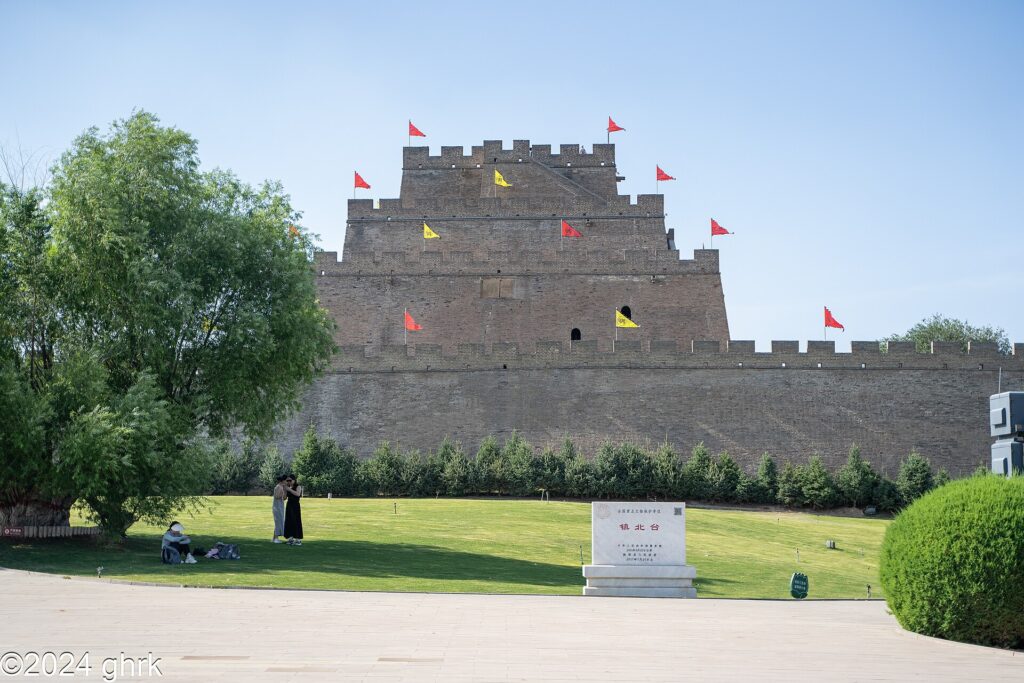
Start by reading the shape of the tower
Before heading toward an entrance or stairway, stand back far enough to see the successive tiers. Notice how the structure narrows as it rises. Then move to a second public viewpoint and compare the proportions: a close view of the brickwork and a distant view of the entire mass explain different things. A photograph taken only at the doorway can miss what makes this monument unusual.
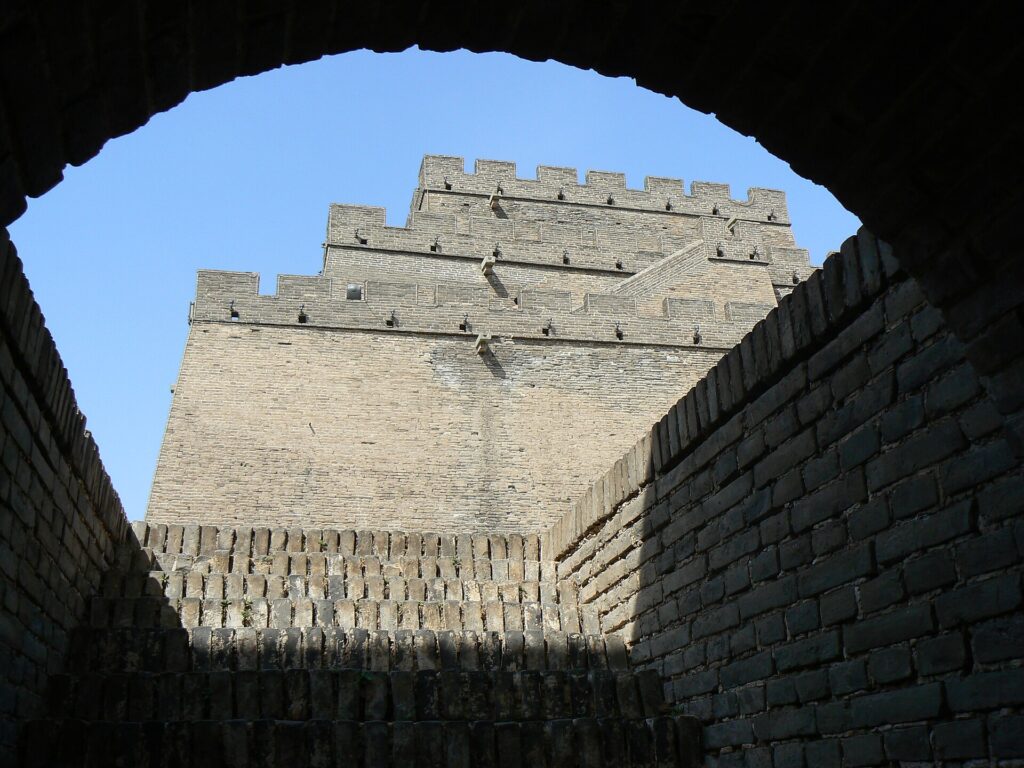
As you follow the permitted visitor route, look at the openings, thick walls and changes of level. Ask what each position would allow an observer to see, and where movement could be watched. You do not need to assign a military function to every brick. The useful exercise is to relate the architecture to the terrain around it. Our Great Wall defense-system guide provides wider context for that way of looking.
Climbing arrangements depend on the route open during your visit. Historic steps, thresholds and exposed levels deserve more attention than a normal city pavement. Use the provided handrails where available, give people space to descend, and turn back if a flight feels uncomfortable. Seeing the exterior and grounds can still be worthwhile; reaching the highest permitted point does not need to become a test.
The frontier also had markets
The history around Zhenbeitai includes regulated trade. An account published by the National Ethnic Affairs Commission links the tower to oversight of the Hongshan market and explains the nearby Yimacheng and Kuangongcheng sites. Livestock and goods crossed this frontier under negotiated arrangements. That context changes how you read the platform: it watched a place where people and merchandise moved as well as a defensive boundary.
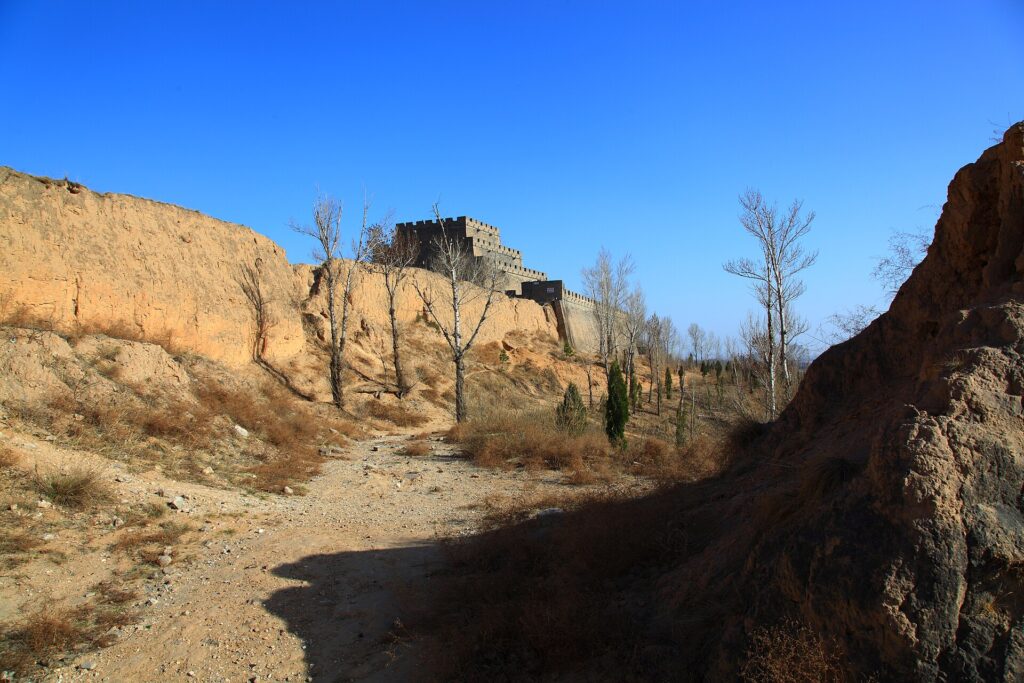
Use on-site interpretation to locate the remains and distinguish what survives from what you are reconstructing in your imagination. Do not expect every historic enclosure to look like a complete fortress. A low or weathered feature may be significant even when it is less photogenic than the tower. Stay on designated paths; surviving earthwork edges are not shortcuts or places to scramble for a better view.
A comfortable 90-minute to two-hour visit
For an unhurried first visit, allow roughly 90 minutes to two hours on site, plus travel and ticketing time. This is an editorial allowance for looking, photographs and a moderate amount of walking. Add time for detailed interpretation or a slower pace. If only part of the site is open, adapt the plan to what staff confirm rather than filling the gap with an unofficial trail.
- Begin with the grounds and exterior. Take an establishing view and identify the public route before joining the climb.
- Visit the accessible tower levels at your own pace. Pause where permitted to connect the view with the surrounding landscape.
- Return to the interpretation. Read about the trading sites after you have seen the tower’s position; the geography will make more sense.
- Finish with a second exterior view. The monument often reads differently after you understand its setting.
If you are short of time, prioritize the tower and its immediate context. Avoid replacing the whole visit with a rushed photograph followed by several distant stops. A well-paced hour with an informed guide can be more useful than a checklist of places whose connections remain unexplained.
How to fit it into a Yulin day
A practical approach is to base the day in Yulin and pair Zhenbeitai with one other cultural stop. Red Stone Gorge, or Hongshixia (红石峡), is one possibility: a September 2026 cultural visit reported by the Overseas Chinese Affairs Office included both places and describes the gorge’s cliff inscriptions. Treat them as two stops with separately checked access and a planned transfer, rather than assuming one admission or a continuous walking route.
Another option is to return to Yulin’s old-town area after the tower. This makes sense when your group wants a shorter sightseeing day, a proper lunch and time to explore urban streets. For a family or mixed-ability group, keeping the afternoon flexible is useful: one substantial monument can be enough, especially in cold, windy or very hot weather.
If you are planning a wider Great Wall journey, compare the experience with our Jiayuguan itinerary. The two belong to different regional travel plans. Plot your intercity journey before linking them into a route; an interest in Great Wall history does not make distant landmarks practical neighbors.
Getting there and arranging a guide
Save the destination as 镇北台景区, 榆林, 陕西. Ask your hotel or driver to confirm the current visitor entrance and return meeting point. Make sure your booking identifies Yulin in Shaanxi (榆林,陕西); there is also a city written 玉林 in Guangxi whose romanized name is Yulin. The Chinese address removes an avoidable booking ambiguity.
For a car booking, agree on the number of stops, waiting time, pickup point and return destination. If you add Hongshixia, name it explicitly. A driver solves the transfer; a guide adds value when you want the architecture and market history explained. Ask whether the guide can discuss the tower and nearby trade sites in your preferred language, and whether guiding and admission are included in the quoted price.
Choose intercity transport according to your wider itinerary and the live timetable. Do not buy a tightly timed onward connection on the assumption that you can complete sightseeing in a fixed minimum. A local hotel base or a day with a generous return margin gives you more room for queues, slower walking and weather changes.
Weather, photographs and access checks
The setting is outdoors, and upper levels can feel more exposed than the grounds. Bring shoes with dependable grip, water and a layer suited to the forecast. In warm weather, carry sun protection; in colder months, consider wind as well as the air temperature. If there is rain, ice or a strong-wind warning, ask staff about the available route before climbing. Travelers who need step-free access should confirm the approach, thresholds and viewing options directly.
For photographs, make one wide image that shows the tiers and another that explains the brickwork or an arch. Keep walkways clear while framing a shot. Do not climb barriers or earthwork remains. The real photographs here were made in different years and conditions; flags, vegetation and visitor arrangements may look different during your visit.
Before paying for transport, confirm the current opening hours, last admission, ticket price, identification requirements and available tower levels with the scenic area or a locally verified booking channel. This guide does not quote a current fee because older listings are not sufficient evidence for today’s admission rules. Plan around the monument you can actually visit that day, and give its frontier setting time to come into focus.
Featured photo: Asanatsa / Wikimedia Commons, CC BY 4.0. Resized; archive thumbnails may be cropped. These real photographs illustrate the locations, not current access, crowd levels, or weather.