
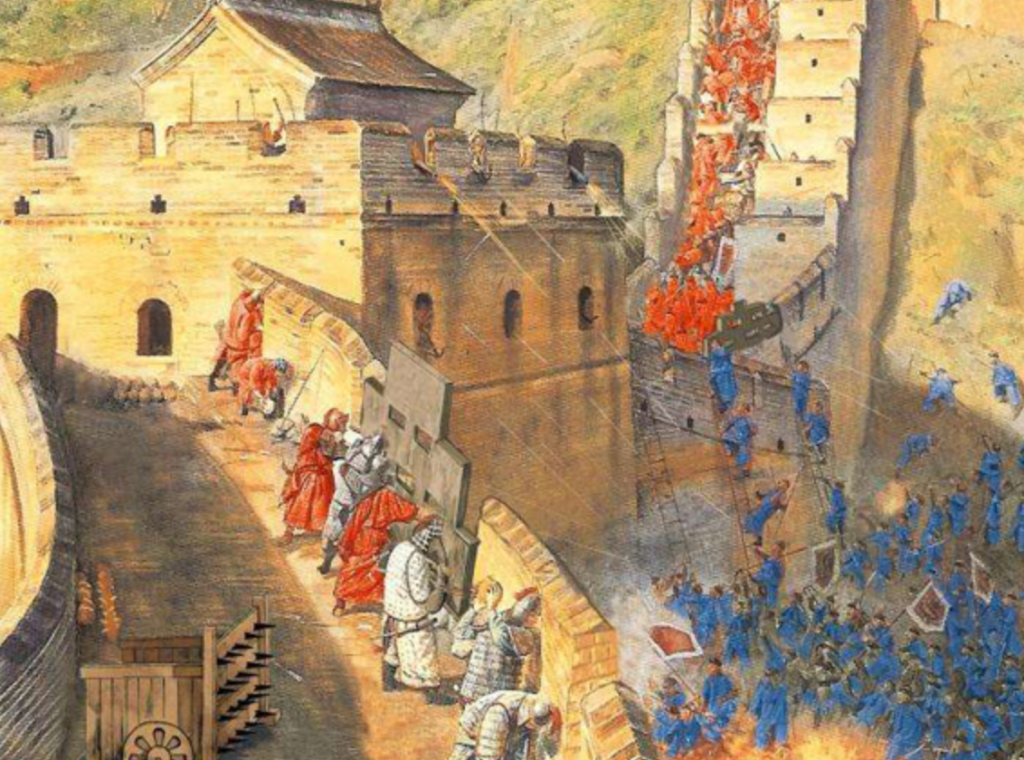
The Great Wall was defended as a system, not as a passive line of stone. Walls, passes, towers, beacon signals, garrisons, patrols, terrain, supply routes, and local command structures all mattered. A wall without people, food, communication, and maintenance would not have protected a frontier for long.
Quick planning snapshot
- Best for: visitors who want to understand what towers, passes, and ridgelines were for.
- Main point: the wall worked with soldiers, terrain, signals, and logistics.
- Travel context: useful for Mutianyu, Badaling, Jinshanling, Juyongguan, Shanhaiguan, and hiking routes.
Watchtowers and visibility
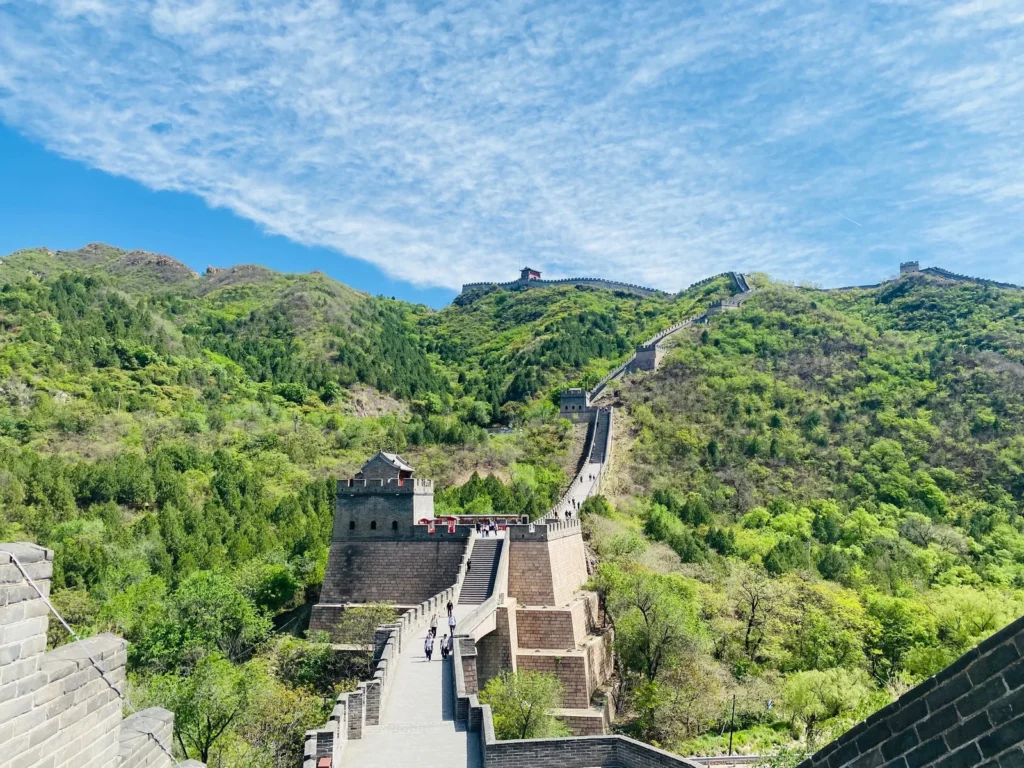
Watchtowers gave defenders shelter, observation points, and communication positions. They were often placed where sightlines mattered: ridges, bends, passes, and high points. When you stand in a tower at Mutianyu or Jinshanling, the view is not just scenic. It explains why the wall follows the ridge and why towers appear at intervals along the route.
Passes and controlled movement
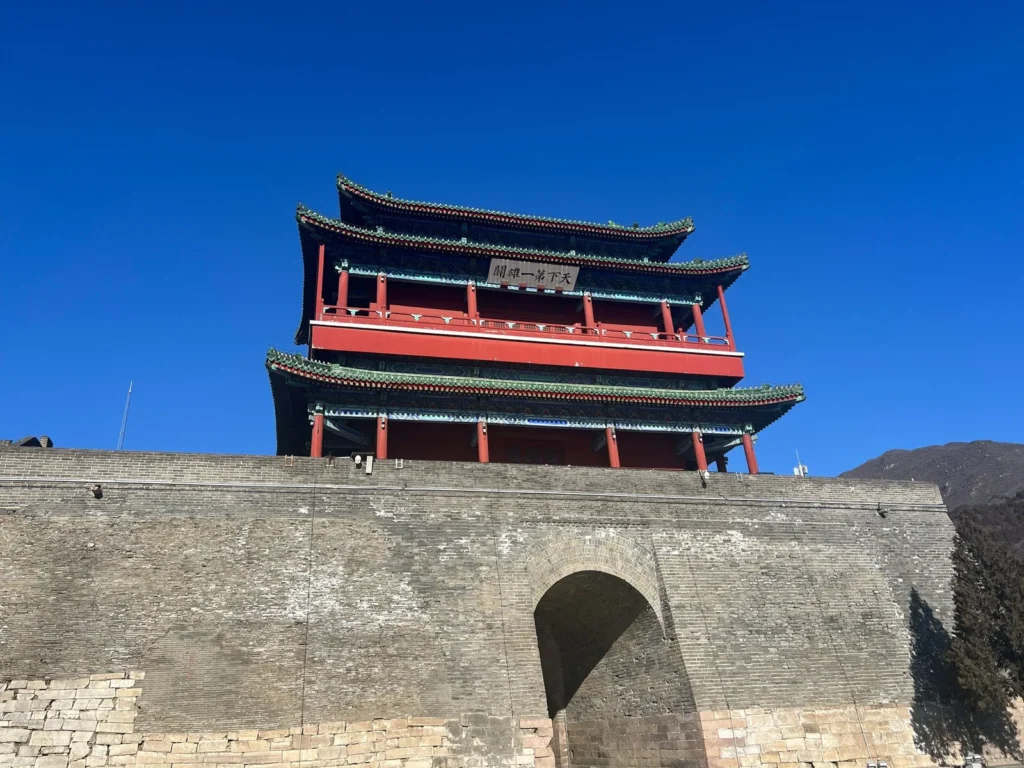
Passes were strategic choke points. Juyongguan guarded a key approach near Beijing. Shanhaiguan controlled an eastern corridor and coastal endpoint. Badaling became famous partly because of its pass geography and later accessibility. A pass could regulate roads, taxes, military movement, and civilian travel. This is why wall history is often pass history.
Signals and response time
Beacon systems helped transmit warnings across distance. Smoke, fire, flags, drums, and other signals varied by time and context, but the principle was simple: shorten response time. A signal line could alert nearby garrisons before attackers reached a key pass. The wall’s height alone mattered less than the network of observation, communication, and response.
Why defense sometimes failed
The Great Wall did not make China invulnerable. Attackers could cross weak points, capture passes, exploit politics, or bypass certain lines. Defense depended on maintenance, morale, command, supplies, and strategy. This is why the wall should be described as a military system that could help control frontiers, not as a magic barrier.
How to read this on a visit
At Mutianyu, look for tower spacing and ridge visibility. At Badaling, notice the pass-like geography and restored masonry. At Jinshanling, long ridgelines make signal and observation logic easier to feel. At Shanhaiguan, the relationship between wall, sea, and corridor shows route control. This makes the site’s section guides more useful because each route can be understood through defense function.
Sources and next reads
For background, compare UNESCO World Heritage Centre, Britannica’s Great Wall history, and Britannica’s Han-through-Yuan Great Wall overview. Then read Why Was the Great Wall Built?, Who Built It?, and Which Sections Are Recommended?.
Garrisons and supply
Defense required people and supplies. Garrisons needed food, weapons, water, horses, repairs, and command structures. A watchtower on a ridge could not defend itself. Soldiers had to be stationed, rotated, paid or provisioned, and connected to nearby forts and passes. This logistics layer is often invisible to visitors, but it was essential to the wall’s military value.
Terrain as a weapon
The wall often follows steep ridges because terrain made defense easier. A mountain slope slows attackers before they even reach the wall. A narrow pass forces movement through a controllable space. A high tower expands visibility. This is why the wall’s dramatic scenery is also military design. The landscape was part of the defense system.
How to avoid the “impenetrable wall” myth
The Great Wall was never impenetrable. It could be crossed, captured, negotiated around, or undermined by politics. Its real purpose was to improve frontier control, buy time, signal danger, and channel movement. That makes it more historically interesting than the simple myth of a wall that could stop every invasion.
How this page should connect internally
This defense page should be a shared reference for section guides. Mutianyu, Badaling, Jinshanling, Juyongguan, and Shanhaiguan articles can link here when they mention towers, passes, signal lines, or ridge routes. That reduces repeated generic paragraphs and gives readers one strong explanation of how the Great Wall worked as a military system.
Bottom line
The Great Wall was defended by organization, not stone alone. Towers created visibility, passes controlled movement, signals bought time, garrisons supplied manpower, and terrain made defense more efficient. A visitor who understands this will read every section more clearly.
Section-by-section reading for visitors
At Mutianyu, defense is easiest to understand through ridge visibility and tower spacing. At Badaling, the broad pass area and restored masonry show why major routes mattered. At Jinshanling, longer walking lines help visitors feel how towers could communicate across distance. At Shanhaiguan, the wall’s relationship with the sea and corridor makes route control especially clear. At Jiankou or Gubeikou, rougher terrain shows why unrestored walls require caution.
What not to assume
Do not assume every tower had the same role, every wall section was equally strong, or every part was guarded at the same level. Defense changed by period, threat, terrain, and available resources. Some lines were heavily maintained; others were repaired, abandoned, or reused. The Great Wall was a living military landscape, not a static object frozen in one dynasty.
For travel writing, this page should mainly help readers interpret real sections: towers, passes, ridges, and restored walls all had defensive functions before they became visitor scenery.
This makes each section guide more useful because visitors know what to look for beyond the view.