
The (1115–1234) incorporated several that reflected the unique challenges of its time and the needs of the Jin state. While the Jin’s approach was influenced by earlier dynasties (e.g., the Tang and Song), it also introduced tailored to its military and environmental context. Here are the key innovations:
1. Integration of Ditches and Subsidiary Walls
- Ditches (Trenches):
The Jin Dynasty’s Great Wall (gullies or trenches) as a primary defensive mechanism, rather than solid stone or brick walls. This was a for covering vast distances, especially in remote or difficult terrain.- Purpose: Ditches acted as natural barriers to slow down invaders, making it harder for enemy forces to advance.
- Adaptability: This method was particularly suited to the , where the terrain often included open plains and forests, and where digging trenches was easier than constructing solid walls.
- Subsidiary Walls:
In critical sections, were added to reinforce the ditches. These walls were shorter and less elaborate than those of the Ming Dynasty but served to by creating layered obstacles.
2. Strategic Use of Beacon Towers and Fortresses
- Beacon Towers (烽火台):
The Jin Dynasty into its defensive system, a feature later expanded by the Ming. These towers were used for across the vast network of the Great Wall.- Function: They allowed for the rapid transmission of signals (e.g., smoke or fire) to alert garrisons of approaching threats.
- Placement: Towers were strategically located along the to monitor trade routes and control movement across the frontier.
- Fortresses (城塞):
The Jin built at key points along the wall, such as . These fortresses served as for garrisons, storage, and command centers.- Design: Some fortresses were built with , reflecting the Jin’s reliance on in response to the nomadic threats of the Mongols and other steppe tribes.
3. Terrain-Specific Adaptation
- Natural Barriers:
The (near the Heilongjiang River) (e.g., rivers, mountains) to minimize construction efforts. This was a , as it reduced the need for extensive fortifications in areas where the land itself provided protection. - Variable Construction Methods:
The was built over , crossing diverse terrains (mountains, plains, forests). The Jin adapted their techniques accordingly:- Mountainous regions: Solid walls and fortresses were prioritized for stability.
- Plains: Ditches and beacon towers were emphasized for mobility and surveillance.
4. Use of Local Materials and Labor
- Material Efficiency:
The Jin likely used (e.g., earth, wood, and stone) to reduce costs and construction time. This approach was particularly effective in remote northern regions, where transporting large stones or bricks would have been impractical. - Labor Organization:
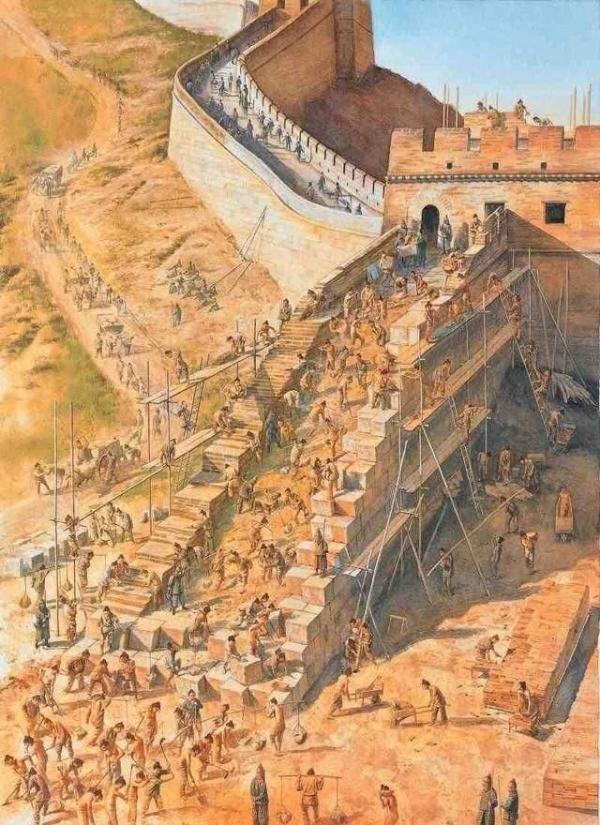
The Jin may have (e.g., soldiers and peasants) for construction, a common practice in ancient China. This system allowed for of resources across the frontier.
5. Early Use of a Multi-Layered Defense System
- Networked Defense:
The was part of a that combined walls, ditches, fortresses, and beacon towers. This approach allowed for and control of movement across the frontier, a concept later refined during the Ming Dynasty. - Strategic Depth:
The Jin’s system was designed to through multiple obstacles before engaging them in direct combat, a tactic that would become a hallmark of later Great Wall construction.
Conclusion
The introduced innovations such as the , the , and . These features reflected the Jin’s need to defend against while managing in a vast and diverse territory. While not as monumental as the Ming’s later walls, the Jin’s approach laid the groundwork for the evolution of Great Wall technology in China.