
When people talk about China’s Great Wall, the magnificent Ming Dynasty sections—like Badaling and Mutianyu—often steal the spotlight. Yet long before the Ming emperors fortified the northern borders, the Jin Dynasty left its own indelible mark on this iconic defensive system. Built to fend off the relentless threat of Mongol invasions, the Jin Great Wall was a labor of decades, blending unique construction techniques with strategic ingenuity. Its story is one of conflict, adaptation, and the quiet resilience of a dynasty fighting to protect its lands.
Defensive Precedents: Walls Before the Jin
The Jin Dynasty’s focus on border defense did not emerge in a vacuum; it was shaped by centuries of northern dynastic history. After the short-lived Sui Dynasty collapsed, the Tang Dynasty (618–907) rose to become one of China’s most prosperous eras. With a thriving economy, flourishing culture, and relative peace along its borders, the Tang rulers saw little need to invest in massive fortification projects. For over three centuries, the northern frontier remained largely unfortified, a testament to the dynasty’s stability and diplomatic strength.

The tide turned with the fall of the Tang and the rise of the Song Dynasty (960–1279). Unlike the Tang, the Song faced constant pressure from powerful neighboring states: the Liao (907–1125), Western Xia (1032–1227), and eventually the Jin themselves. Curiously, though, the Song never built large-scale defensive walls to counter these threats, relying instead on military alliances and mobile troops to safeguard their territories.
It was other northern powers that laid the groundwork for the Jin’s later defenses. Historical records note that in 908, the Liao Dynasty constructed a section of wall near Nanguanling Town in present-day Liaoning Province. Decades later, in 1026, the Jurchen—an ethnic nomadic group from northeastern China—began occupying lands in the region and built a network of beacon towers and fortresses. These structures, simple yet effective, were designed to alert troops of incoming raids and soon became the backbone of a nascent defensive system. By this period, the earliest stretches of what would later be the Jin Great Wall extended south from modern-day Baicheng Village in Heilongjiang Province to Nongan County in Jilin Province, marking the northernmost reach of such fortifications at the time.
The Jin Great Wall: A Dynasty’s Last Line of Defense
In 1115, the Jurchen established the Jin Dynasty, uniting much of northern China under their rule. But their ascent brought a new and formidable enemy: the Mongols, whose raids on Jin territories grew increasingly frequent and destructive. To stem this threat, the Jin launched one of the largest wall-construction projects of its era—a decades-long endeavor that began around 1123 and was not completed until 1198, spanning 75 years of meticulous work.
What set the Jin Great Wall apart from its predecessors was its innovative design. Unlike the solid stone or earth walls of earlier dynasties, the Jin system centered on deep ditches, often paired with auxiliary walls to maximize defensive capability. This approach was practical for the region’s terrain: the ditches slowed down cavalry charges (the Mongols’ greatest strength), while the accompanying walls provided a platform for archers and soldiers to repel invaders. It was a clever adaptation to the challenges of fighting a nomadic army, blending static defenses with tactical flexibility.
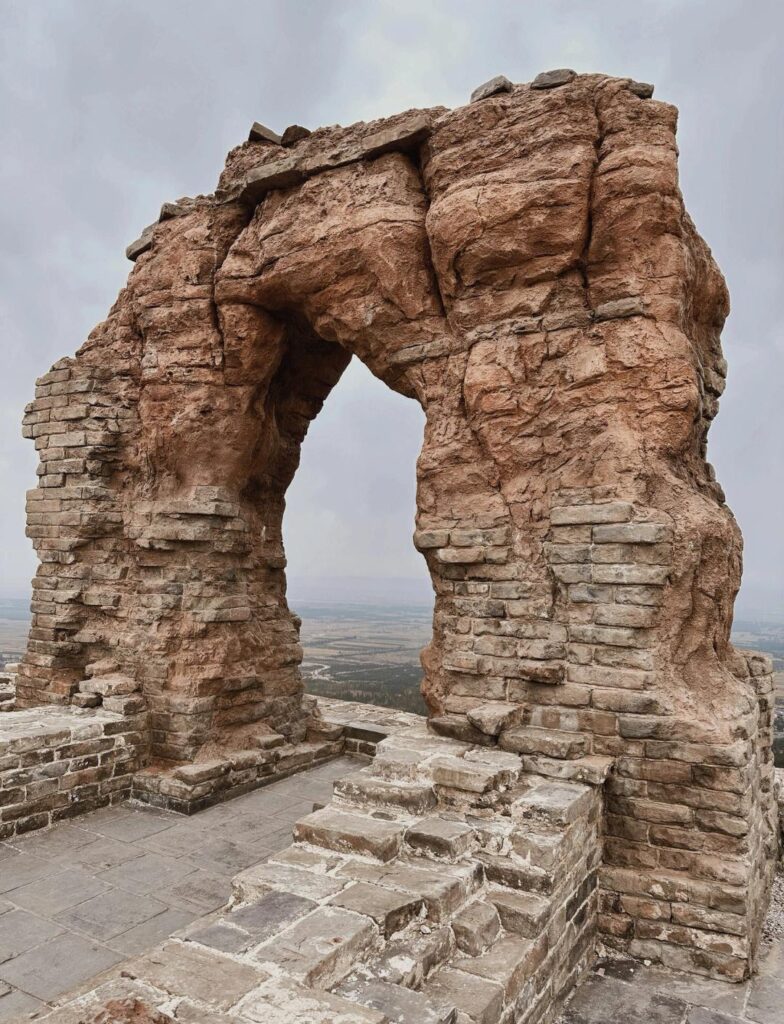
Historical records identify two key sections of the Jin Great Wall, each serving a distinct strategic purpose: the Mingchang Old Great Wall and the Mingchang New Great Wall, named for the Jin emperor under whose reign much of the construction took place.
Mingchang Old Great Wall
Also known as the Jin Border Fortress, this section lies near the Heilongjiang River in the Greater Khingan Mountains of present-day Heilongjiang Province. Stretching approximately 500 kilometers, it formed the dynasty’s northernmost defensive barrier, guarding against Mongol incursions from the Siberian steppes. Today, little remains of this remote section, but its ruins offer a glimpse into the Jin’s efforts to secure their farthest territories.
Mingchang New Great Wall
Often referred to as the Jin Inner Wall, this longer, more ambitious section was the centerpiece of the dynasty’s defense strategy. Extending some 1,500 kilometers, it wound its way from the Hetao region in Inner Mongolia in the west, cutting through Shaanxi, Shanxi, and Hebei provinces, before looping back through Inner Mongolia, Liaoning, and finally reaching the Songhua River in Heilongjiang Province. Unlike the Old Great Wall, traces of the Mingchang New Great Wall are still visible today, most notably near Xilinhot City in Xilingol League, Inner Mongolia. These weathered remains—low earthen mounds, faint ditch lines, and scattered stone foundations—stand as silent reminders of the Jin’s struggle to hold back the Mongol tide.
The End of an Era, and a New Beginning
The Jin’s defensive efforts ultimately proved futile. By the 13th century, Genghis Khan’s Mongol forces had overwhelmed the Jin Dynasty, which fell in 1234. With the rise of the Yuan Dynasty (1271–1368)—a Mongol-led empire that spanned much of Asia and parts of Europe—border fortifications became obsolete. The Yuan ruled over a vast, unified territory, and there was no need to build walls to defend against external threats.
It was not until the Ming Dynasty (1368–1644) that Great Wall construction experienced a revival. The Ming emperors, seeking to protect their realm from renewed northern invasions, rebuilt and expanded the wall on an unprecedented scale. The Great Wall we know today is largely a product of this Ming-era construction, overshadowing the earlier work of the Jin. Yet the Jin Great Wall deserves recognition: it was a bold adaptation to a unique military challenge, a testament to the dynasty’s ingenuity, and a vital link in the long history of China’s iconic defensive architecture.