
The Northern and Southern Dynasties (420–589) was one of the most turbulent and fragmented eras in Chinese history. While political power frequently shifted between rival states, this period also witnessed some of the most ambitious Great Wall building since the Qin and Han dynasties. Unlike the southern regimes, the northern states—Northern Wei, Eastern Wei, Northern Qi and Northern Zhou—built extensive defensive walls to protect their borders from powerful nomadic groups such as the Rouran, Tujue (Turks) and Khitan.
For modern travelers, this lesser-known chapter of the Great Wall offers a deeper look into China’s early medieval history and the strategic efforts that shaped the northern frontier.
Historical Background: An Era of Division and Conflict
After the Han Dynasty collapsed under waves of internal rebellions, China fragmented into the Three Kingdoms. Centuries of warfare followed, leading to the rise of the Western and Eastern Jin dynasties. By the early 5th century, China was divided between northern kingdoms ruled largely by non-Han ethnic groups and southern dynasties ruled by Han elites.
This long period of division, known as the Northern and Southern Dynasties, lasted 169 years. Constant military pressure from nomadic states forced the northern rulers to construct, rebuild and extend Great Wall fortifications on a scale rivaling earlier imperial eras.
The Great Wall of the Northern Wei Dynasty
Founded by the Tuoba clan of the Xianbei people, the Northern Wei established its capital in present-day Datong in 389. When Emperor Mingyuan ascended the throne in 409, the powerful Rouran confederation posed a serious threat along the northern border.
To secure the frontier, the Northern Wei built an impressive defensive line stretching nearly 1,000 kilometers from today’s Chicheng County in Hebei across northern Shanxi to Wuyuan in Inner Mongolia. Emperor Taiwu later expanded the defense system by establishing six key military towns and constructing an additional 500-kilometer wall to protect the Datong region and the Yellow River basin.
The Short Wall of the Eastern Wei Dynasty
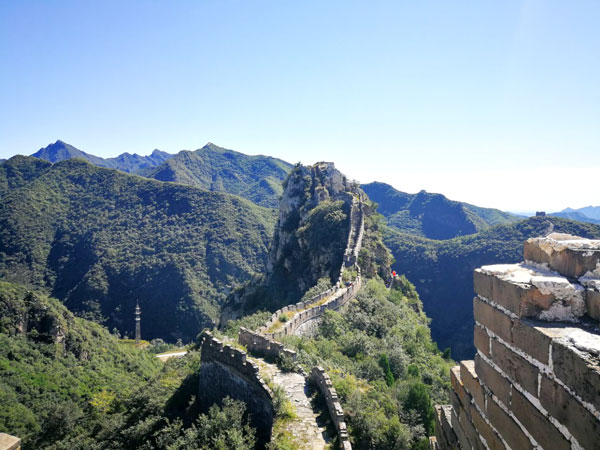
Although Eastern Wei ruled for only a brief period, it continued earlier defense efforts. In 543, a 75-kilometer wall was built between modern-day Jinle and Chunyang counties in Shanxi. This short but strategic section strengthened defenses against rival northern states.
The Ambitious Walls of the Northern Qi Dynasty
The Northern Qi Dynasty (550–577) undertook one of the most extensive Great Wall construction campaigns in Chinese history. Over three decades, they built and rebuilt several major fortification lines to guard against both northern nomadic forces and their western rival, the Northern Zhou.
Key constructions include:
• 552: A 200-kilometer wall running across northwest Shanxi between Lishi and Shouxian.
• 555: Reconstruction of a 450-kilometer Northern Wei wall from Nankou (near Beijing) to Datong.
• 556: A monumental 1,500-kilometer eastern extension reaching all the way to Shanhaiguan Pass and the Bohai Sea—the longest wall built since the Qin and Han dynasties.
• 557: A 200-kilometer inner defense line running through famous mountain passes such as Yanmenguan and Pingxingguan.
• 563: A 100-kilometer wall along the Taihang Mountains with 12 military posts.
• 565: Repairs and extensions of earlier walls, reinforcing the inner defensive systems after attacks by the Tujue.
These achievements made Northern Qi one of the most active wall-building regimes in China’s early medieval history.
The Great Wall of the Northern Zhou Dynasty
When Northern Zhou replaced Western Wei in 557, tensions with Northern Qi quickly intensified. By 579, Emperor Jing ordered a complete restoration of the Great Wall sections built by Northern Qi, strengthening defenses along the northern frontier as the two states struggled for dominance.
Visiting the Northern and Southern Dynasties Great Wall Today
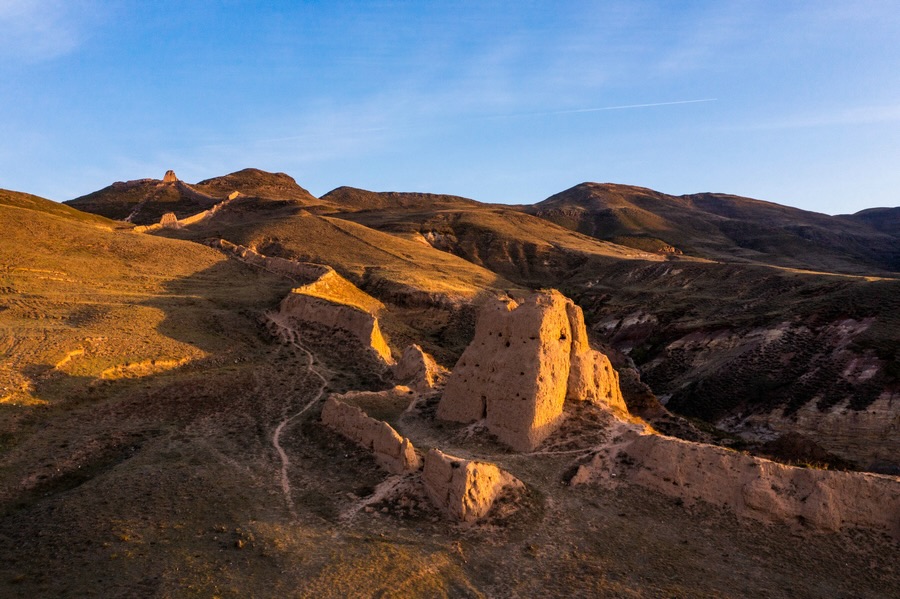
Much of the Great Wall from this era survives as earthen ramparts, beacon towers and scattered ruins across Shanxi, Hebei and Inner Mongolia. While less restored than the Ming-era sections near Beijing, these ancient remains offer a rare opportunity to explore the more remote, authentic and historically rich landscapes of China’s frontier.
Travelers seeking untouched history and dramatic natural scenery will find this period’s Great Wall an unforgettable window into China’s past—silent witnesses of an age marked by upheaval, resilience and remarkable engineering.